Vitamin C (ascorbic acid) is an essential antioxidant for human health, yet humans cannot synthesize it and must obtain it from fruits and vegetables. Many fruit crops, despite being rich sources of vitamin C, show a gradual reduction in its concentration as fruits mature. Previous studies have identified key enzymes controlling vitamin C biosynthesis, but how plant hormones influence this process during fruit development has remained unclear. Abscisic acid, a major plant hormone regulating growth and stress responses, has been implicated in vitamin C regulation, but its molecular targets were unknown. Based on these challenges, deeper investigation into hormone-mediated regulation of fruit vitamin C biosynthesis is required.
Researchers from Wuhan Botanical Garden, Chinese Academy of Sciences, together with collaborators from Zhongkai University of Agriculture and Engineering, Nanchang University, and The New Zealand Institute for Plant and Food Research, report new insights into fruit vitamin C regulation. Published (DOI: 10.1093/hr/uhaf111) on 24 April 2025 in Horticulture Research, the study dissects how abscisic acid signaling suppresses vitamin C biosynthesis during kiwifruit development. By combining physiological measurements, gene expression analysis, and molecular interaction assays, the team identified a hormone-responsive transcription factor that acts as a central brake on vitamin C accumulation in fruit tissues.
The study tracked vitamin C and hormone levels across multiple stages of kiwifruit development and observed a clear inverse relationship: vitamin C levels were highest early in fruit growth and declined as abscisic acid levels increased. Transcriptome analysis revealed that a specific abscisic acid–responsive transcription factor, AcABI5a, was strongly induced during later developmental stages when vitamin C biosynthesis slowed.
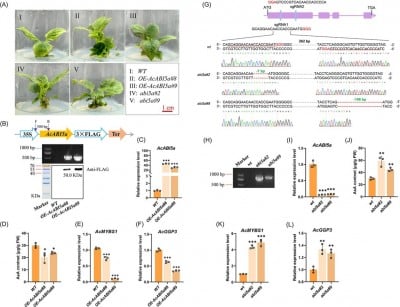
Functional experiments showed that AcABI5a represses vitamin C accumulation through multiple coordinated mechanisms. First, AcABI5a directly binds to the promoter of AcMYBS1, a transcription factor known to activate a key vitamin C biosynthetic gene, AcGGP3, thereby suppressing its expression. Second, AcABI5a physically interacts with the AcMYBS1 protein, weakening its ability to activate vitamin C biosynthesis even when AcMYBS1 is present. Third, AcABI5a enhances its own expression by binding to its own promoter, creating a self-reinforcing inhibitory loop.
Genetic manipulation confirmed this regulatory role: overexpression of AcABI5a reduced vitamin C levels, while gene-edited plants lacking functional AcABI5a accumulated significantly more vitamin C and became largely insensitive to abscisic acid treatment. Together, these results demonstrate that AcABI5a acts as an integrator of hormonal signals and developmental timing to fine-tune fruit vitamin C biosynthesis.
“This work provides a clear molecular explanation for why vitamin C levels often decrease as fruit matures,” said one of the study’s senior authors. “We found that abscisic acid does not simply correlate with vitamin C changes—it actively controls them through a specific transcriptional regulator. By repressing both gene expression and protein activity within the vitamin C pathway, this mechanism ensures tight developmental control. Understanding this regulatory logic opens new opportunities to manipulate fruit nutritional quality without disrupting overall plant growth.”
These findings have important implications for fruit breeding and crop improvement. By targeting hormone-responsive regulatory nodes rather than individual biosynthetic enzymes, it may be possible to enhance vitamin C content while preserving normal fruit development and stress responses. The mechanism described here may also operate in other fruit species, helping explain natural variation in vitamin C content across cultivars and developmental stages. Beyond nutrition, the study highlights how plant hormones coordinate metabolic pathways during organ development, offering broader insights into how crops balance growth, stress adaptation, and nutritional quality under changing environmental conditions.
###
References
DOI
Original Source URL
https://doi.org/10.1093/hr/uhaf111
Funding information
This project was supported by the National Natural Science Foundation of China (32302474), Hubei Province Natural Science Fund Project of Outstanding Youth Project Awarded to D.L. (2023AFA075), National Natural Science Foundation of China (32302474), China Postdoctoral Science Foundation (2023 M743738), Postdoctoral Fellowship Program of CPSF (GZB20230824), National Key Research and Development Program of China (2024YFE0214500), and Hubei Hongshan Laboratory.
About Horticulture Research
Horticulture Research is an open access journal of Nanjing Agricultural University and ranked number one in the Horticulture category of the Journal Citation Reports ™ from Clarivate, 2023. The journal is committed to publishing original research articles, reviews, perspectives, comments, correspondence articles and letters to the editor related to all major horticultural plants and disciplines, including biotechnology, breeding, cellular and molecular biology, evolution, genetics, inter-species interactions, physiology, and the origination and domestication of crops.