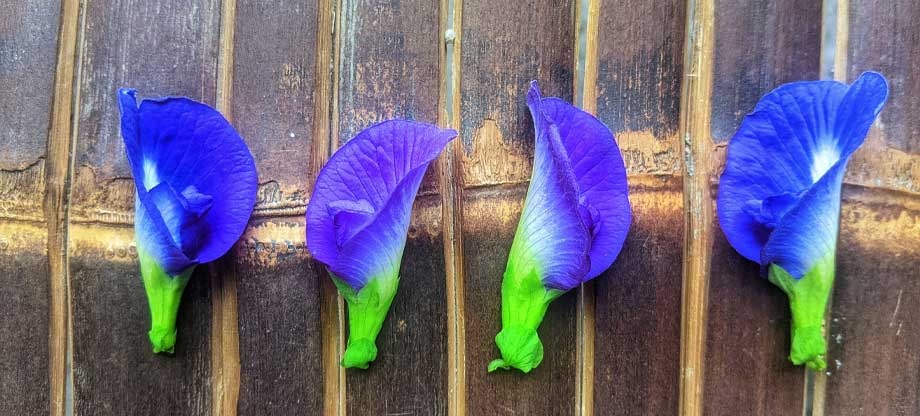
Across India, a humble flower long known in home gardens and Ayurvedic texts is finding a new lease of life in global markets. Walking through neat rows of climbing vines, one can spot vivid, deep blue blossoms opening to the sun. Today, the aparajita or butterfly pea is carefully plucked, shade-dried, and packed for buyers at cafés and cosmetic stores.
Known formally as Clitoria Ternatea, the butterfly pea has become a sought-after ingredient in teas, natural food colourants, skincare products, and herbal supplements. At the centre of this blue revolution are women cultivating it, processing it, and also consuming it as part of wellness routines.
Rooted In Tradition
Butterfly pea’s striking indigo hue has made it an Instagram favourite. From colour-changing teas in Bangkok cafés to blue lattes in New York and natural food dyes in Europe, the flower has emerged as a global wellness phenomenon. When lemon is added to butterfly pea tea, the liquid shifts from blue to purple, a natural chemical reaction that has turned the flower into a visual spectacle as much as a health drink.
But in India, aparajita is hardly new. Mentioned in Ayurveda, it has traditionally been used to support memory, reduce stress, and promote skin and hair health. For generations, women have used it in home remedies as well, washing hair with its infusion, applying it to the skin, or drinking it to calm the mind.
Change Of Scale
According to industry estimates, the global market for natural food colours and botanical ingredients is growing at over 7–8 per cent annually, driven by consumer demand for clean-label, plant-based products. Butterfly pea fits perfectly into this trend because it is natural, caffeine-free, antioxidant-rich, and visually dramatic.

Why Women Are Central To The Aparajita Economy
In rural India, women already shoulder much of the work in small-scale farming, kitchen gardens, and medicinal plant cultivation. Aparajita is a hardy climber that thrives in tropical conditions, requires relatively low investment and can be grown on small plots, fences, or backyard trellises, spaces that women often manage. This is not a crop that needs large landholdings or heavy machinery. Women can grow it alongside vegetables, dry the flowers at home, and sell them collectively. For many women, especially those with limited mobility due to caregiving responsibilities, aparajita offers a source income.
In parts of Tamil Nadu and Karnataka, women-led SHGs have begun supplying dried butterfly pea flowers to herbal tea brands and ayurvedic manufacturers. Earnings may seem modest at first, with the rates being anywhere around ₹200–₹400 per kilogram of dried flowers. But for households dependent on irregular farm or construction wages, this supplementary income can be transformative. Research on women’s livelihoods consistently shows that even small, regular incomes controlled by women lead to better outcomes in nutrition, education, and healthcare spending. Aparajita fits neatly into that pattern.
From Farm To Formulation
The economic potential doesn’t end at cultivation. Processing involves cleaning, drying, grinding, and packaging, which creates additional opportunities where women dominate. In Kerala, women-run enterprises produce butterfly pea tea blends combined with lemongrass and tulsi, marketed through local wellness stores and online platforms. In Rajasthan, artisans are experimenting with butterfly pea as a natural dye for textiles, responding to growing demand for eco-friendly fashion.
Natural dyes, once sidelined by synthetics, are making a comeback as fashion brands respond to sustainability pressures. Butterfly pea’s stable blue pigment is particularly attractive, as natural blues are rare and difficult to produce. For women involved in dyeing, weaving, and handicrafts, this resurgence opens new markets and reconnects craft traditions with modern demand.
A Wellness Ally
Beyond livelihoods, butterfly pea has found a devoted following among women seeking gentler, holistic approaches to health. Scientific studies have identified high levels of anthocyanins in butterfly pea, powerful antioxidants also found in blueberries. Research published in food and nutrition journals suggests these compounds may help combat oxidative stress, support cognitive function, and promote skin health.
In an era where burnout, hormonal stress, and sleep deprivation are common, butterfly pea tea has been embraced as a calming ritual. Skincare brands, too, are taking note. Butterfly pea extracts are now featured in serums and masks. For women wary of harsh chemicals, the flower’s traditional roots offer reassurance.
What’s striking is how seamlessly aparajita bridges ancestral knowledge and modern self-care, something women, often the custodians of home remedies, instinctively understand.
The flower’s colour-changing magic may seem like novelty, but it plays a deeper role. In wellness markets crowded with claims, experience matters. Women, who drive a significant share of wellness and beauty spending globally, are choosing products that align with values such as sustainability and cultural authenticity. For Indian women producers, this is a rare opportunity, since what they grow is suddenly desirable to the world.
Challenges Of The Bloom
Quality control, consistent drying methods, and fair pricing remain hurdles. Without proper support, women risk being pushed to the lowest rung of the value chain while intermediaries reap the biggest profits. Experts stress the need for training, certification, and direct market access. Linking women growers to cooperatives, startups, and export channels can ensure they benefit from the flower’s growing popularity. There is also the question of recognition. Much of women’s work in cultivating medicinal plants is still considered supplementary or invisible in official data, despite its economic value.
The butterfly pea may be delicate, but its impact is huge. It represents a model of growth for women who run small-scale and sustainable businesses that rooted in traditional knowledge, yet connected to global trends.