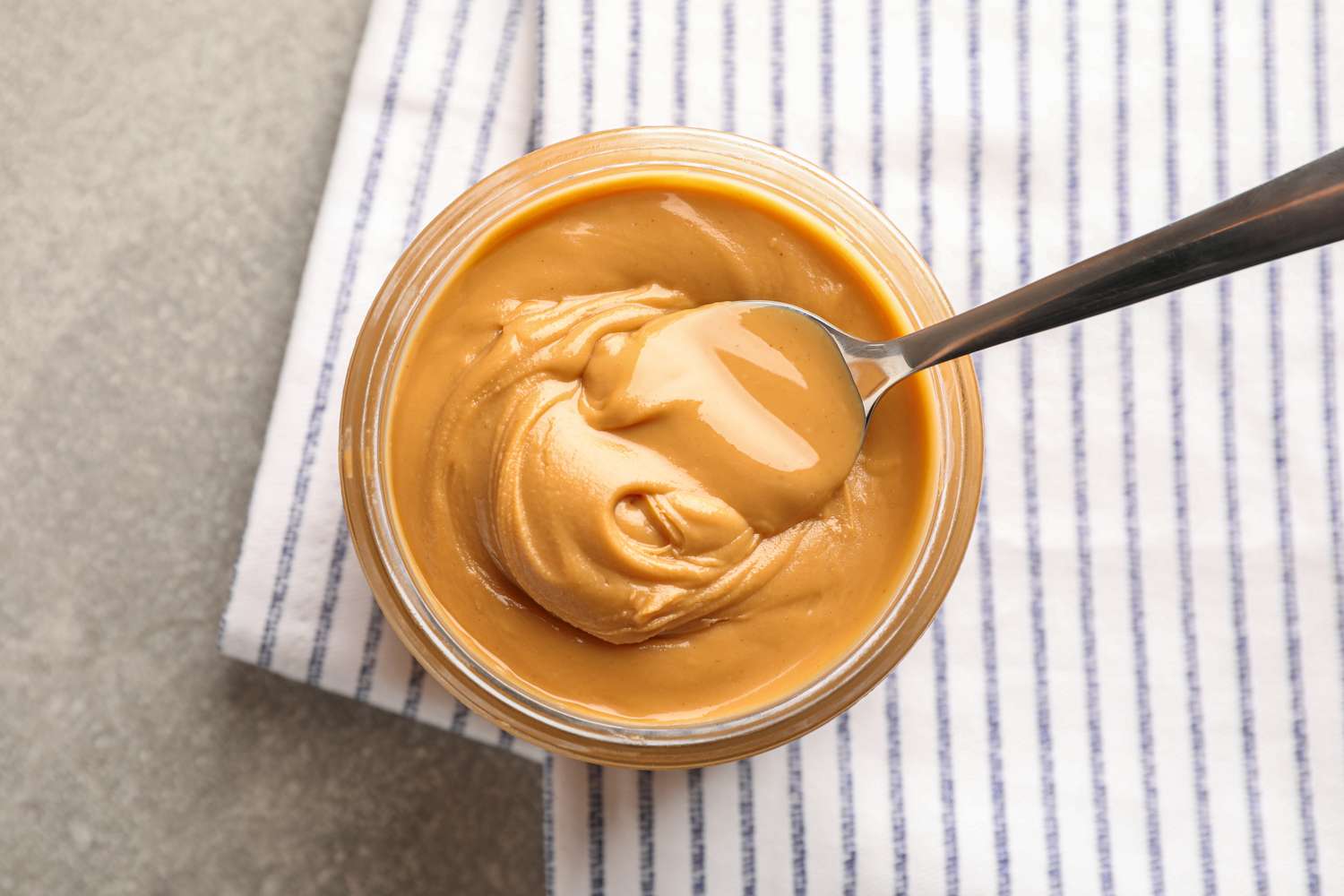
The healthiest peanut butter has a short ingredient list. Ideally, it contains just peanuts (and maybe a touch of salt) without added sugars, hydrogenated oils, or fillers. Checking nutrition labels for sodium, protein, and fiber helps ensure your peanut butter choice supports overall health and satiety.
1. Decide What’s Important to You
One of the best ways to choose healthy peanut butter is to have an idea of what you’re looking for before heading to the store. Consider your priorities, such as:
Allergen-friendlyNo added saltNo added sugarNo high-fat stabilizers (e.g., palm oil)
Non-GMO, organic ingredients
There are plenty of healthy peanut butter varieties that meet these needs.
2. Check the Ingredient List
The ingredient list is the best place to start when comparing food products because it tells you everything that’s inside.
The ideal product should only contain peanuts since peanut butter is just ground-up peanuts. Many will also contain salt.
The shorter the ingredient list, the less room there is for unnecessary additives like stabilizers, sweeteners, or fillers that diminish the natural nutrition of the peanuts themselves.
3. Watch Out for Added Sugar
Added sugar is one of the most common ingredients in peanut butter—even the unflavored types. While a bit of sweetness tastes good, it adds empty calories without any nutritional benefit.
If you’re looking for a healthy peanut butter option, consider varieties labeled “no sugar added” or check the nutrition label to ensure sugar isn’t one of the first few ingredients.
The ingredients listed first comprise the most significant portion of the product, while those listed later are present in smaller amounts.
4. Compare Protein and Fiber Content
Peanut butter is a classic source of healthy fats and can contribute to your overall heart health. Peanuts are legumes, which are also a great source of protein and fiber. Still, the nutrition can vary depending on the brand.
A healthy peanut butter should give you between 7 and 9 grams of protein and 2 to 3 grams of fiber per serving.
These nutrients help keep you fuller longer and support muscle repair, energy, and digestion.
5. Skip Hydrogenated Oils
Food manufacturers use hydrogenated (or partially hydrogenated) oils to improve texture, extend product shelf life, and prevent oil separation.
Unfortunately, hydrogenated oils also create unhealthy trans fats, which are associated with an increased risk for heart disease.
When choosing a healthy peanut butter, look for one that doesn’t contain hydrogenated oils. Visible oil separation is normal and often a sign of a less processed, healthier peanut butter.
6. Pay Attention to Sodium Per Serving
Sodium intake can quickly add up from multiple sources, and consuming it in excess is associated with an increased risk of high blood pressure and heart disease.
Unsalted or lightly salted peanut butter options let you control how much sodium you’re adding to your overall diet.
If you want a heart-healthy option, look for peanut butters with no added salt or fewer than 140 milligrams (mg) of sodium per serving.
7. Consider Texture
Peanut butter is available in various textures, such as:
CreamyCrunchyNaturalWhipped
Any of these textures can be included in a healthy diet; the key is how much the product has been processed.
Natural peanut butter is usually the least processed and closest to the food’s natural state, even if it feels less uniform or requires little stirring.
You can find creamy and crunchy varieties of natural peanut butter at most stores. They’re often pre-jarred, but some stores have machines that allow you to grind your own peanut butter.
Verywell Health uses only high-quality sources, including peer-reviewed studies, to support the facts within our articles. Read our editorial process to learn more about how we fact-check and keep our content accurate, reliable, and trustworthy.
Sun Y, Neelakantan N, Wu Y, et al. Palm oil consumption increases LDL cholesterol compared with vegetable oils low in saturated fat in a meta-analysis of clinical trials. J Nutr. 2015;145(7):1549-1558. doi:10.3945/jn.115.210575
NIH. How to read food and beverage labels.
Rippe JM, Angelopoulos TJ. Relationship between added sugars consumption and chronic disease risk factors: current understanding. Nutrients. 2016 Nov 4;8(11):697. doi:10.3390/nu8110697
Parilli-Moser I, Hurtado-Barroso S, Guasch-Ferré M, et al. Effect of peanut consumption on cardiovascular risk factors: A randomized clinical trial and meta-analysis. Front Nutr. 2022 April 1;9:853378. doi:10.3389/fnut.2022.853378
Polak R, Phillips EM, Campbell A. Legumes: health benefits and culinary approaches to increase intake. Clin Diabetes. 2015;33(4):198-205. doi:10.2337/diaclin.33.4.198
USDA FoodData Central. Peanut butter, chunk style, without salt.
Clark MJ, Slavin JL. The effect of fiber on satiety and food intake: a systematic review. J Am Coll Nutr. 2013;32(3):200-211. doi:10.1080/07315724.2013.791194
Oteng AB, Kersten S. Mechanisms of action of trans fatty acids. Adv Nutr. 2020;11(3):697-708. doi:10.1093/advances/nmz125
Tian Y, Lin C, Zhong H. et al. Associations and mediators of estimated sodium intake with cardiovascular mortality: data based on a national population cohort. BMC Med, 2025:23, 392. doi:10.1186/s12916-025-04206-8
American Heart Association. How much sodium should I eat per day?
Albuquerque TG, Bragotto APA, Costa HS. Processed food: nutrition, safety, and public health. Int J Environ Res Public Health. 2022 Dec 7;19(24):16410. doi:10.3390/ijerph192416410

Panoff is a registered dietitian, writer, and speaker with over a decade of experience specializing in the health benefits of a plant-based lifestyle.
Thanks for your feedback!
What is your feedback?
Helpful
Report an Error
Other