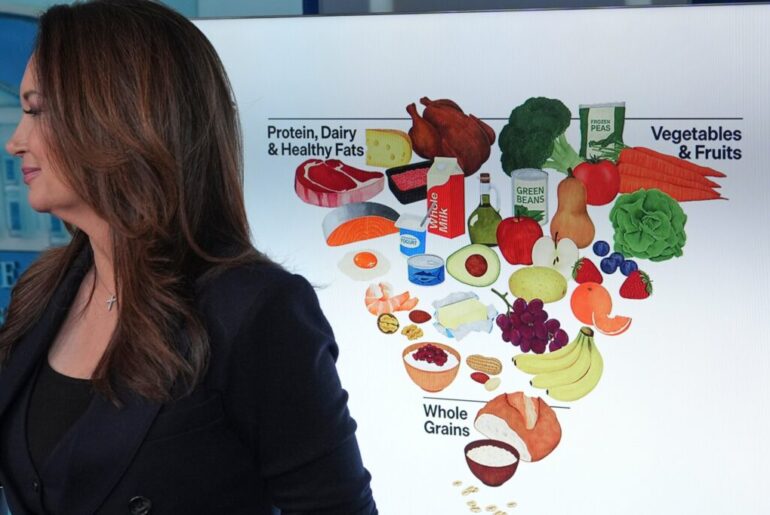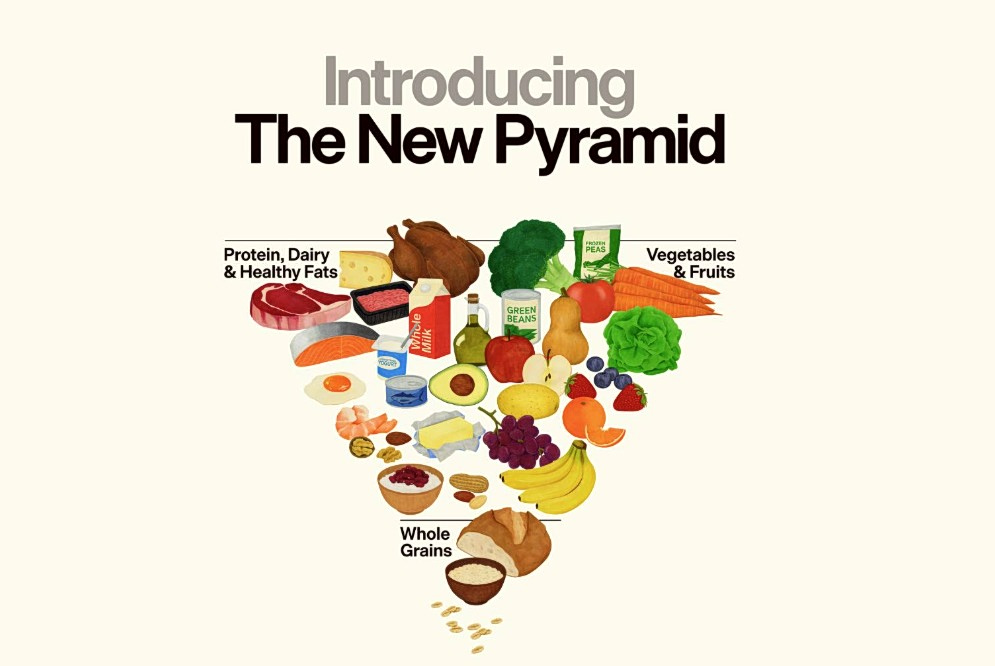
The U.S. government has unveiled a bold revision of its dietary guidelines, presenting an inverted nutrition pyramid under the “Make America Healthy Again” initiative. The new model places red meat, cheese, and full-fat milk at the top, while grains now occupy the base.
The updated pyramid prioritizes whole, unprocessed foods, protein, and fats, reflecting the philosophy of Health Secretary Robert F. Kennedy Jr. and his allies, who have criticized previous federal guidelines for contributing to poor health outcomes.
Proteins and Dairy Take Center Stage
High-protein foods such as red meat, ground beef, and poultry dominate the upper tiers. Adults are now encouraged to consume 1.2 to 1.6 grams of protein per kilogram of body weight daily, a significant increase over prior recommendations.
Full-fat dairy also receives a prominent position in the pyramid, challenging long-standing advice that favored low-fat options to reduce saturated fat intake linked to cardiovascular risk.
Fats and Oils
The pyramid highlights familiar sources of healthy unsaturated fats, including olive oil, avocado, seafood, and nuts. At the same time, it endorses cooking with butter and beef tallow, both high in saturated fats. Notably, seed oils like soybean and canola, previously recommended, are largely omitted. Kennedy has repeatedly argued, without strong scientific evidence, that seed oils may be harmful to health.
Vegetables, Fruits, and Grains
Fruits and vegetables remain central, with a recommendation of five servings daily, in line with longstanding public health guidance. However, processed grains are now largely discouraged, and whole grains are reduced to a minor role in the new pyramid. Where past guidelines suggested three daily servings of whole grains, the updated recommendations offer a range of two to four servings per day.