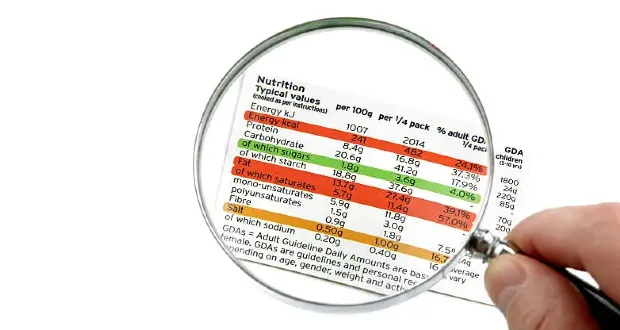
Research by consumer champion has found that the government-recommended ‘traffic light’ nutrition labelling scheme is applied inconsistently, causing confusing among shoppers.
Which? said some retailers and brands don’t use colour-coding, meaning you can’t immediately if something is high in fat and sugar or not, while others don’t display it on products at all.
Which? called on the government to take action with a “better approach” to helping people make healthier choices.
The group’s research found that shoppers like ‘traffic light’ labelling but said it could be improved with more prominent placing and increased size.
This form of labelling on food packaging was introduced in 2013 and uses green (low), amber (medium), and red (high) colours to show fat, saturated fat, sugar, and salt content, plus calories.
It is voluntarily used by major manufacturers and retailers in the UK.
A third of consumers polled (33%) said that the nutrition label was the first thing they looked at on the front of a pack.
People most used the ‘traffic light’ system when choosing snacks (56%), dairy products (33%) and breakfast cereals (27%).
Almost half (47%) said they found this labelling easy to understand.
Sue Davies, head of food policy at Which?, said: “The UK is in the midst of an obesity crisis and it’s clear that a better approach to front-of-pack labelling is needed to help shoppers make healthier choices.
“Which? is calling on the government to ensure that all manufacturers and retailers use front of pack nutrition labelling, ideally by making this mandatory.
“Our research shows that people still prefer traffic light nutrition labelling, but that the current scheme needs updating so that it is clearer and simpler and works better for consumers.
“The new system should be backed up with effective enforcement and oversight by the Food Standards Agency and Food Standards Scotland, so shoppers have full trust in the labels on their food.”