
Almost half of US adults over the age of 30 have some form of gum disease. And the repercussions can expand far beyond the mouth. Gum disease can actually be linked to over 50 systemic conditions, like diabetes, lung cancer, and Alzheimer’s. So how can we prevent oral inflammation and bacteria from taking over our entire body?
On this episode of On Nutrition, dentist Dr. Alex Silvia explains the importance of healthy gums, which nutrients can help slow the spread, and whether or not you should buy that tongue scraper.
Powered by RedCircle
Listen to Whole-body care, Starting with a smile
Read the Transcript:
Dr. Alex Silvia: I like gum. One out of one dentist recommends gum.
Tara Schmidt: This is “On Nutrition,” a podcast from Mayo Clinic where we dig into the latest nutrition trends and research to help you understand what’s health, and what’s hype.
I’m Tara Schmidt, a registered dietician with Mayo Clinic in Rochester, Minnesota.
This episode — the oral-systemic connection.
Almost half of US adults over the age of 30 have some sort of gum disease, whether it’s gingivitis or a more advanced condition. And the repercussions can expand far beyond the mouth. Gum disease can actually be linked to over 50 systemic conditions, like diabetes, lung cancer, and Alzheimer’s.
Here to explain that link is Dr. Alex Silvia, a dentist — and family friend — in Mequon, Wisconsin. Dr. Silvia has a background in nutrition and has developed a protocol at his practice to identify and treat all levels of gum disease, so patients can minimize the risks before it’s too late.
Tara Schmidt: Hey, Dr. Alex.
Dr. Alex Silvia: Tara, how are you doing?
Tara Schmidt: Good. How are you?
Dr. Alex Silvia: I’m great. Happy to be here.
Tara Schmidt: We’re talking oral systemic connection today, which I think we might need to define eventually, but let’s start with the mouth. I think we all biologically understand the phrase, “The mouth is the gateway to the body,” but what does that mean biologically?
Dr. Alex Silvia: Simply put, it’s the only intentional entry point into our bodies. It’s designed to help us take in good things like nutrients, water, air — but it’s also there to protect our bodies from harmful things, like bad microorganisms and other substances that shouldn’t be entering our bodies.
I liken it to a warm welcome greeter at Walmart, but also like a tough security guard, rolled into one, but, if you think about it, when those aren’t functioning appropriately, you got yourself a mean greeter at Walmart and a sleepy security guard, which can really throw off the entire body.
Issues with chewing food, helping break down nutrients — but you also have, back there, tonsils, and things really protecting you. It’s there as a primary means of defense and making sure that only the good stuff gets in.
Tara Schmidt: We’re going to learn so much more about the mouth today and the critical factor that it plays in our health. I don’t think people know, clearly, as much as you do, as a dentist. But even I have seen tooth decay become brain infections, right? And just really scary, kind of crazy things happen in the hospital with patients.
Let’s learn. What is the oral systemic connection? Or some people will say the oral systemic link.
Dr. Alex Silvia: Yeah, of course. I don’t think it would come as much of a surprise to anyone that your body, or your systemic health, has an impact on your oral health.
But I think for some reason, as a society, we’re just now starting to accept the fact that there is a reverse effect also — that our oral health has an impact on our systemic wellbeing also.
Our bodies and our mouths don’t operate independently of each other. And issues with one of these systems have big impacts on the other.
Tara Schmidt: Yeah, and especially when we talk about how oral bacteria can end up in the gut microbiome. Our organ systems are a lot more closely linked than I think people realize.
Dr. Alex Silvia: It is scary how much these bacteria can travel, and where do they start popping up? You’ll see oral bacteria down in your colon, which makes some sense. But when it starts going into other places, like arteries or brains, even, you start saying, well, why are these here? And obviously they’ve got to be connected, because if they’re not connected, then they wouldn’t be there.
There’s over 50 diseases that are readily correlated with periodontal disease and its impact on their severity, so it means something.
Tara Schmidt: Brush your teeth, y’all.
Dr. Alex Silvia: Right? Well, they used to just be teeth. They’re just teeth. But there’s so much more.
Tara Schmidt: Mm-hmm. Is periodontal or gum disease the only factor on the oral health side of disease, or are there other oral conditions associated with poor physical health?
Dr. Alex Silvia: Periodontal disease or gum disease is a huge factor. The overall theme is really going to be the role that inflammation plays in systemic health, because periodontal disease and gum disease are contributing a lot towards inflammation, and then inflammation’s impact on everything else really just takes its toll.
Inflammation does play a huge role in systemic health. Even moderate cases of things like gingivitis, especially when given time to act, can have large impacts on inflammatory burdens in the body, and especially any progression or severity of any associated inflammation-based diseases.
Tara Schmidt: Anything else to consider?
Dr. Alex Silvia: We also have to consider the role that chronic infections of teeth, not just gum tissue surrounding them, can play, like you were talking about cavities leading to infections and the number of times when there’s true brain infections is really pretty small, but those infections and the bacteria that are in the bottom of chronically infected teeth — they travel like we talked about.
The real crazy thing about those is, a lot of times those types of infections occur without people having much pain because they’re chronic. And so without the presence of pain, they often go undiagnosed for a lot longer period of time, which means they have a longer period of time to act on our bodies — and counteract that with a more acute tooth infection situation that we think about acute pain. Most people are rushing to the dentist to have it fixed just because it hurts so bad.
It’s the chronic stuff that really becomes problematic.
Tara Schmidt: Yeah. And same with chronic inflammation. Acute inflammation is really not a big deal — sometimes protective — but it’s the chronic inflammation that we worry about.
Dr. Alex Silvia: Right.
Tara Schmidt: I want to talk about some of these links between our oral health and other systems in the body.
What’s the connection between oral health and lungs? I saw this in my research and this was one that really surprised me.
Dr. Alex Silvia: The primary area of concern with lung function has a lot to do with bacterial buildup, especially in an older population as well, where brushing becomes a challenge — bacterial burden becomes an issue. The bacteria builds up, and it forms that sticky film in your mouth that we know as plaque. It builds up to levels where we start getting concerned about aspiration risks. And that aspiration of that plaque into your lungs can lead to pneumonia issues.
There are correlations between gum health and even lung cancers as well.
Tara Schmidt: Lung cancer is what I had seen.
Dr. Alex Silvia: Yeah. Lung cancer and smoking — that link is well established and we know that. But most of the research that I’ve seen supports the idea that smoking in the presence of periodontal disease has about a twofold increase in the risk for developing lung cancer, versus the same amount of smoking in a patient who doesn’t have periodontal disease.
If you’re a smoker and you have periodontal disease, your risk for lung cancer doubles, essentially.
Tara Schmidt: Wow. What about oral health and heart health?
Dr. Alex Silvia: I don’t know if you’ve been exposed to Dr. Brad Bale and his book Beat the Heart Attack Gene, but he describes a lot about inflammation and the role that it plays in heart attack risk, heart health, and stroke risk.
One notion is this idea that most people think about, heart attack and stroke issues as being plumbing issues, where you have these tubes and fat builds up inside these tubes, and so much fat builds up that the tube gets closed off. Then you go in and you have your rotor rooter procedure done, and your blood vessels open back up, and we’re good.
Tara Schmidt: Welcome to the cath lab.
Dr. Alex Silvia: Exactly. But really, what was interesting is this idea that there are patients who have 70% occlusion of an artery or blood vessel.
Tara Schmidt: Occlusion, meaning blockage — right?
Dr. Alex Silvia: Yeah. Which you’d think makes it pretty small, just sneaking through that space. But patients with 70% occlusion and no inflammation often have a lower heart attack or stroke risk than patients that have 30% occlusion — where the inside is twice as wide, but have a really high inflammatory rate because those plaques build up in the layers in between your blood vessels.
And when those get inflamed and ruptured, you then have a very similar kind of clotting process, like you would when you form a scab. And then when those clots break off. Those are what travel and lead to your coronary incidences, where you have that ischemic type stroke, and your blood supply is cut off.
Tara Schmidt: Super scary.
Dr. Alex Silvia: Super scary, for sure. Overall, if you don’t have inflammation, those plaques don’t become like pimples that want to pop and want to create clots. They just stay as plaques in the arteries. But when they become inflamed and they rupture, that’s when you start having issues.
And so, gum disease — periodontal disease, that’s that inflammation’s that’s the underlying theme. It’s why gum disease and oral health, it’s so important that we take it seriously, is because it’s really pretty silent for a lot of people.
That’s a disease process that’s able to be there present for decades, chronically, without patients having symptoms. So they don’t really know that they’re having this inflammatory burden. They don’t really know their risk because they don’t feel the pain. If there’s pain, they would get it taken care of.
Tara Schmidt: Exactly. Silent killers, which are scary.
Dr. Alex Silvia: Silent killers, exactly. “Cats in the gutters” is what he calls it. That was a weird reference, but I guess they hop out and they…I don’t know.
Tara Schmidt: I don’t have a cat.
Dr. Alex Silvia: I don’t have a cat, and I don’t have gutters. I guess I have gutters, but I don’t know.
Tara Schmidt: We’ll Google it.
Dr. Alex Silvia: Yeah, for sure.
Tara Schmidt: Any connection with low birth rate? This one intrigues me.
Dr. Alex Silvia: Low birth rate, where that can come from is another area where I think it’s a great way that I get my male patients’ attention. It is just the fact that gum disease does have an impact on erectile dysfunction…
Tara Schmidt: It does?
Dr. Alex Silvia: And the rate of sexual performance. For sure, hands down. It definitely does.
That has a lot to do with blood flow — inflammation, blood flow, and all that sort of stuff. Where it tends to impact babies the most is really going to be inflammatory cascades that cause preterm birth issues, where fetuses are just born too soon, and so they’re often underdeveloped or underweight.
They end up spending more time in the NICU and stuff like that. Those are always concerns when we see pregnant mothers with periodontal diseases.
We really want you to get this baby to full-term, and part of that is going to be reducing the bacterial load that you got in your mouth, so that you have less inflammation, so that baby can stay in longer and fully develop.
Tara Schmidt: These, I feel like, are the connections that people would just not draw unless they had experience with it, or had seen it or had heard about it. This is one that was just mind-blowing for me.
Dr. Alex Silvia: It’s a deep rabbit hole.
Tara Schmidt: Now, we’ve mentioned lung cancer. Are you aware of any other cancers with a link to oral health?
Dr. Alex Silvia: Yeah. Someone one time told me the bodies are just a series of tubes, and that’s really what the GI system is.
The mouth is at the top of it — you have your esophagus, your stomach, then goes into your intestines, and your colon. It’s all plumbing.
There’s a big affinity for gum disease implications on GI-related cancers. Oral cancer, obviously esophageal cancer, colon cancer, even pancreatic cancers. What happens is those bacteria build up in the mouth. They don’t get cleared out of the system through brushing or flossing appropriately.
And then, bacteria will travel, they make their way down, and they’re causing inflammation the entire way. Some of these bacteria are what we call acidophils. They love real, real acidic places. They thrive in the stomach and cause issues.
You have other ones that make it past the stomach and then generate an inflammation in your gut. And, inflammation, what it’s really doing on a cellular level, is it’s decreasing the junctions between all of your cells, and so your body just becomes leaky.
We hear about leaky gut syndrome and stuff like that, and so those bacteria, just as much as nutrients, may pool their way out. Bacteria just slide right in, and then your blood system’s right there, and then your blood vessels are the highway for your body, so any place is fair game for these bacteria once they make it through that barrier.
Tara Schmidt: Yeah, tight junctions are what we’re looking for.
Dr. Alex Silvia: Yeah.
Tara Schmidt: Are there any other conditions I did not list that you think of when you think about this oral systemic connection?
Dr. Alex Silvia: I’ve got two huge ones for sure. Chronic kidney disease is one. Not such a huge surprise because of the bacteria and the bloodstream and the kidneys or blood filters — but more and more research is coming out. I just saw an article a month or two ago in a dental publication that was starting to talk about chronic kidney disease and periodontal disease.
Diabetes is a massive one in my opinion. Diabetes is a great example of what I would call a bidirectional relationship. Diabetes, especially when poorly controlled, increases your risk for periodontal disease because diabetes impairs healing and it impairs an immune response.
Conversely, the inflammation generated from periodontal disease impairs your ability to regulate your blood sugar. And what you and I know is glycemic control, how much that level of sugar in your blood fluctuates. The cycle just continues.
Another big issue in diabetics is often they’re really dehydrated because their bodies are trying to flush out all of that sugar. That means that there’s less water available for saliva production.
Saliva is one of the primary ways that we combat issues in our mouth. People who are on lots of medications, see it also. You get that Xerostomia is what we call it. And when that sets in, it’s a rapid decline if you’re not intervening quickly,
Tara Schmidt: So this is not just about bad breath or a discomfort in your mouth — this is, “Dry mouth is a problem.”
Dr. Alex Silvia: Right. Those are great reasons to treat it. Bad breath and discomfort are things that no one wants to be around. But it has massive implications. I’ll see cancer patients that have had head and neck radiation, and they have less saliva production because of that. And you’ll go from having no cavities to having cavities everywhere in like months.
It’s a real short term, just because saliva has a lot of great stuff in it that allows us to neutralize acids, to remineralize teeth so that they’re strong again.
It slicks teeth so the bacteria don’t stick as well.
Tara Schmidt: Starts the breakdown of food already in your mouth.
Dr. Alex Silvia: Sure. Amylases, all those kinds of enzymes. Really, when that is removed from the protective layer, it’s like, well, how are your immune cells going to get into those places that your blood vessels don’t go?
It’s just a major level of protection that, when it’s absent, the decline just happens so quickly. Yeah, salivary flow and diabetics can be a real issue.
Tara Schmidt: What about Alzheimer’s disease?
Dr. Alex Silvia: Researchers have actually isolated oral bacteria in the amyloid plaques in Alzheimer’s patient brain tissue, and those plaques are what contribute to the brain’s functional decline.
When we think about it, we were talking about leaky guts, and guts are supposed to have tight junctions like you were talking about. But there’s only one area in the body that I’m aware of that has a tighter junction than your gut, and that’s your brain. It is the tightest. That is like Velcro with super glue on it. Glucose can make it through, and that’s it.
So the idea that these bacteria create so much inflammation and are riding on the highways of our blood vessels, up to our brain, that cause these junctions to start to break down, and then they just punch their way into and are actually causing inflammation in our brain tissue. It’s kind of mind blowing, just how detrimental it can be.
It’s not to say that everyone who has periodontal disease is going to develop Alzheimer’s disease. There’s other risk factors and things that are involved. But just the fact that they’re there is scary.
Tara Schmidt: The mouth is way more than just your tongue, teeth, and gums. Because of the oral-systemic connection, it’s actually a gateway for bacteria to enter your system. When that system isn’t working well, harmful bacteria slip through and start causing problems far beyond the mouth. And inflammation in the gums can quietly spread to another part of your body, or vice versa – sometimes without you even noticing.
The main culprit is periodontal — or gum — disease. Gum disease is linked to lung cancer — especially in smokers — heart attacks, and strokes. It can even go as far as leading to pregnancy complications and erectile dysfunction.
Other surprising implications include conditions like diabetes and Alzheimer’s disease. Diabetes and gum disease feed into each other, leading to a vicious cycle of uncontrolled blood sugar and lower immune response. And oral bacteria has been found in the brains of patients with Alzheimer’s, suggesting that chronic oral inflammation may break down the brain’s defenses over time.
Now let’s talk about the nutrients and foods that are — and aren’t — important for your gum health.
Tara Schmidt: Let’s dive a little bit into nutrition. Welcome to “On Nutrition.”
Dr. Alex Silvia: Yeah. There’s that.
Tara Schmidt: I know that you have an interest in this. Did you minor in nutrition? Do I remember that correctly?
Dr. Alex Silvia: No, I minored in chemistry. I majored in nutrition.
Tara Schmidt: You majored in nutrition.
Dr. Alex Silvia: It was me and dieticians, sitting side by side.
Tara Schmidt: I promise you, you have a bigger paycheck, so be glad you’re on that side of the microphone today.
Dr. Alex Silvia: I just didn’t want to do the research, honestly. I looked at nutrition, and I was like, man, I got a lifetime of research ahead of me. I’ll stick with dental care.
Tara Schmidt: You’re doing it right now. You’re doing the research.
Let’s talk about a few of the links between nutrition and gum disease because I’m hearing that gum disease or periodontal disease is really the gateway or is the risk factor that we’re talking about when we’re talking about all of these other oral systemic connections and risk of disease or worsening of disease, like we said with diabetes.
Okay. Obvious one, everyone knows to hide after Halloween from their dentist: sugar.
Dr. Alex Silvia: I think processed foods, that’s where you start getting these really unrefined sugars, these undesirable fats inside of them, and they’re just devoid of nutritional value. But processed foods, the simplest way of thinking about it, is they’re pre-broken down.
They’re already in some of their smallest components, which means they’re also some of the most readily available energy sources for bacteria in your mouth or microorganisms in your mouth.
If you really want to do a good job of feeding the bacteria that are there, I think that sugar and processed foods are the ticket. It’s a mouthful of easy nutrients that they’re going to take advantage of, and there’s some good bacteria that’ll use it, but it’s more the bad bacteria that are going to take advantage of that and start causing problems.
Tara Schmidt: When you say easily digestible, I’m already thinking about how quickly some of these things already start to digest in the mouth because of the salivary amylase — that enzyme in our saliva that breaks down starches.
Think about a really delicious, ultra-processed buttery cracker. That thing’s broken down before you even swallow it. There’s hardly anything even to swallow.
Dr. Alex Silvia: I was going to go, Twinkies. They just go into nothing. But yeah, crackers for sure. They’re so quickly sugar, just instantly in your mouth.
Tara Schmidt: But if you have foods that have to be broken down in the stomach, in the intestines, they’re not high-sugar, ultra-processed foods. These are going more likely of course, to be foods that have fiber, which needs to be broken down, protein, which needs to be broken down, which is also why they help you feel fuller longer.
Are there any risks or links when we talk about things like protein or fiber?
Dr. Alex Silvia: I wouldn’t say protein has as much of a direct impact orally, like on site, the way that fibers impact and certainly the avoidance of sugar or processed foods have, directly in the mouth. Protein is vital to the ability for the body to maintain and repair tissues. That includes gum tissue and bone.
In general, protein deficiency tends to have a greater impact on systemic health, which in turn, the thought is that secondarily, those oral implications come from a declining systemic health.
It kind of goes hand in hand with malnutrition as an overall theme for elderly populations, especially. They just can’t bounce back as well. Protein deficiency is one part of it.
I think that fiber has a huge impact on gum disease I do remember, you know, NHANES studies — The National Health and Nutrition Examination Survey. Back in 2009, 2012, they established an inverse relationship between fiber intake and periodontal disease.
More fiber ended up resulting in less periodontal disease. And that thought is largely due to fiber’s ability to regulate blood sugar.
Tara Schmidt: Okay.
Now we mentioned protein deficiency, which isn’t very common, especially in America. It’s pretty rare in a general healthy population. But as a dentist, are there certain nutrient deficiencies that you come across most often?
Is it the calcium and the vitamin D and impacting the bone health of teeth, et cetera? Or are there other deficiencies that you come across or are concerned about?
Dr. Alex Silvia: There’s definitely vitamin deficiency-type presentations in the mouth. There’s not a lot of people running around with scurvy these days either, but that used to be a very well-established issue of vitamin C deficiency and periodontal disease. Vitamin D comes a lot into play with how children’s teeth develop.
The completion and the strength of which their teeth develop, as well as bone health and bone healing. I could go on and on when we start talking about how well people heal from surgery or implant surgeries and stuff like that. Vitamin D levels are something that we also do try and pay attention to, or at least be cognizant of.
Really what we also end up seeing with things like B vitamin deficiencies are increased inflammation in gum tissue, which can, in turn, progress into gingival gum diseases.
Other things that I know of vitamin deficiencies can sometimes do, just like unpleasant things like burning mouth syndromes, swollen tongue issues.
Tara Schmidt: You have talked a lot about gum disease, and so I’m really concerned and nervous about getting gum disease in the future. What factors are within my control, outside of staying hydrated, brushing, flossing, and not lying to my dentist about it.
Dr. Alex Silvia: Just lie. It’s fine. We’ll know anyway.
Tara Schmidt: Do you know? Okay. That was actually one of my questions. If I tell you that I floss, you’re like, “Uh-huh, Tara, sure you do.”
Dr. Alex Silvia: From here on a Zoom call, it looks like you do, so we’re in good shape.
Tara Schmidt: Thank you.
What do I have control over in prevention of gum disease?
Dr. Alex Silvia: Gum disease is a bacterial control issue. Okay. So to a degree, yes, patients are very much in control of whether or not they present with gum disease.
It really comes down to how well you control those levels in your mouth and if you’re doing appropriate brushing, appropriate flossing, and home hygiene. When home hygiene starts to become neglected or the technique is not what it needs to be, that’s when disease processes take advantage.
I tell patients all the time, bacteria don’t care. They’ll find a spot that you miss and that’s where they’ll set up. They’re opportunistic, they take advantage of the situation that’s presented to them.
But I think it would be wrong to say that all of the factors are within a patient’s control, especially with respect to periodontal disease, because periodontal disease — there’s a lot more than five bacteria that contribute to it, but there are five big main players that are there. The presence of those is not directly genetic or hereditary.
Those bacteria aren’t part of our DNA. What does happen though is you acquire those bacteria. You acquire it from your parents when your children, or when parents kiss you, or all this sort of good stuff, or partners when we’re adults. You can actually have situations where a partner has. Gum disease and one doesn’t, and the bacteria are transmissible, and given enough contact time, this person will start showing up with gum disease.
Or we’ve seen situations where one partner is treated for gum disease and the other isn’t, and it’s usually the wife that shows up, and the husband doesn’t come in, and then all of a sudden the wife’s control is slipping. Or the spouse’s control is slipping. And you’re doing everything you’re supposed to…
Tara Schmidt: You’re swapping bacteria.
Dr. Alex Silvia: Yeah, you’re getting re-inoculated every single night behind the bleachers.
You’re getting re-inoculated with the bugs that are causing your issues. Unfortunately, not a lot you can do about them being around. It’s just how well can you control it.
Tara Schmidt: Is excess weight a risk factor in developing gum disease? Have you heard this?
Dr. Alex Silvia: The most direct impact excess weight or weight gain would have on, development of gum disease would be increased association with mouth breathing.
Tara Schmidt: Oh, okay.
Dr. Alex Silvia: To me, when people put on excess weight, what I see most often is that we don’t just expand outward. We also expand inwardly. Tissues in your mouth become puffier. Inflammatory-wise, if things are more swollen, that’s a general state of inflammation, and certainly inflammatory cascades can build upon each other — and a little bit here and a little bit there forms an inflammatory tower.
And so when we think about our mouth and if that area, what’s there is becoming constricted or narrower, we have more resistance to air flowing into our mouth. As a result of that, most people adapt into mouth breathing as a way of getting more air in and opening up that throat — dries out the mouth.
You start having, with mouth breathing, huge implications on oral inflammation. Periodontal disease risk, cavity risk, sleep apnea type issues.
Tara Schmidt: This is not just people with sleep apnea; this is just mouth breathing period.
Dr. Alex Silvia: This is mouth breathing, period.
Tara Schmidt: Now I have to ask you, Dr. Alex, what do we think of mouth taping?
Dr. Alex Silvia: Well, you’re lucky, you have an adventurous dentist that you’re talking to, because I’ve taped my mouth at night for sure.
Tara Schmidt: Did you make a TikTok about it?
Dr. Alex Silvia: I did not TikTok about it.
Tara Schmidt: “Wake up and get ready with Dr. Alex,” and take off your mouth tape on your hair curlers.
Dr. Alex Silvia: It is well-documented that nasal breathing is what we’re supposed to be doing. The nose warms, filters air, is a great kind of defense mechanism for the top of the GI system.
Also, the nose is the only place that I know in the body to readily form nitric oxide, which has a huge impact on blood pressure, vascular dilation, and that sort of stuff.
When we start breathing through our mouth, there’s a whole bunch of things that happen. And honestly, that could be like an entire other episode.
Tara Schmidt: I know.
Dr. Alex Silvia: But I think that mouth taping for certain individuals can make sense.
It certainly would help with decreasing any oral disease risk from a dryness standpoint because when you breathe through your mouth, bacteria stay because they’re not getting cleaned off by the saliva, like we talked about.
I think there’s some merit to it. I don’t think it’s for everyone.
Tara Schmidt: Once someone has established gum disease, is it reversible? What language would you use? Like this is reversed, this is managed, this is in remission…
Dr. Alex Silvia: Maybe I should have done this earlier. It’s important to distinguish that there are two primary categories of gum disease.
Tara Schmidt: Okay.
Dr. Alex Silvia: One of them being periodontal disease, and the other being gingivitis. I think most people don’t know to consider gingivitis as being gum disease.
But gingivitis’s strictest definition is inflammation of your gums without bone loss around it. The more we learn, the more we begin to understand we got it wrong as a dental profession when we downplayed it as a “gingivitis as just a little bit of bleeding and that you should floss more” kind of scenario.
The good news is gingivitis is reversible and can be controlled in conjunction with a good dentist and dental hygienist. The bad news is periodontal disease is not. Aggressively treating gingivitis, in my opinion, to prevent it from becoming periodontal disease is a huge concept that as a general population, we need to start embracing.
Tara Schmidt: Okay. Floss your teeth, everyone.
Dr. Alex Silvia: Exactly.
Tara Schmidt: What are the symptoms of gum disease?
Dr. Alex Silvia: When I think about symptoms of gum disease and like, what maybe you could pick up on before your dentist is picking up on something would be to say, “Hey, you know, I do notice a little bit of bleeding when I brush or floss.”
I have some patients who have never noticed any bleeding, but have inflammation that’s 60% of their gum tissue.
It’s highly variable. Just because you’re not seeing bleeding, maybe your technique is not right. Or maybe it’s deeper than the surface level of the tissue, where it wouldn’t bleed, but it’ll bleed when we’re measuring down low.
In really bad cases of periodontal disease, you may notice bad breath, and what we call halitosis, or swollen and puffy gum tissue — even just kind of random bleeding or pus. It’s way late in the game to be receiving a formal diagnosis at that point.
What’s kind of interesting is we stage and grade periodontal disease almost like cancer at this point in time. It takes a while for a profession to catch up, for things to make it from literature —
Tara Schmidt: Position statement.
Dr. Alex Silvia: Exactly — all the way into where everyone’s doing it.
Most patients don’t know until it’s in a pretty bad state, and it underscores the need for dentistry to really buckle down and adhere to guidelines that we’ve had released. Because we have an opportunity to identify stage one or stage two disease levels. Why should we be waiting until it’s stage three or stage four for it to become a blatantly visible issue? We can do so much better now with the appropriate kind of screening, you just have to make sure you’re in the right place to have it done.
Tara Schmidt: And you have to show up.
Dr. Alex Silvia: You do have to show up. That’s the annoying thing about taking care of periodontal disease. It really is a situation where you can’t treat periodontal disease, but you can get it into remission. It stinks that cancer is such a great example for it, but it would be like a long-term cancer you can live with, but can’t get rid of.
You would undergo therapy to obtain lower levels. You go a long time and you get your levels measured until you start to see an increase in the levels, and then you get therapy again. The levels go down, and you keep measuring your levels until you see that you need therapy again.
Our goal is to just increase the time between when you have to have that therapy in order to keep your disease under control. But if you have good control of your periodontal disease, there’s no reason for you to lose teeth. There’s no reason for it to have a massive inflammatory impact and affect your overall systemic health.
But you do have to show up for it. And that often means seeing a dentist every three months, or sometimes two months. And it means out-of-pocket expenses, which is frustrating, and I sympathize with that. But the converse of that is chronic disease.
Tara Schmidt: It’s important to know how the food on your plate is impacting your gum health. Ultra-processed foods, which are already broken down, basically become instant fuel for bad oral bacteria the moment they hit your mouth. They start digesting almost immediately, feeding bacteria and driving inflammation.
Protein, Vitamin D, and Vitamin B are important for your gum and bone health, but fiber is your biggest ally. High fiber intake is linked to lower rates of gum disease, mostly because it helps blood sugar stay steady, and stable blood sugar means less inflammation overall.
Good brushing, flossing, and hygiene matter a lot, but that’s not enough, especially for advanced periodontal disease. You can still pass gum disease bacteria between kids, parents and partners. And mouth breathing is also a sneaky risk factor, often due to airway issues or weight gain. Mouth breathing dries out the mouth and ramps up inflammation. But if you catch it early, stay consistent in your oral hygiene, and check in with your dentist regularly, you can make all the difference.
Now let’s get a dentist’s perspective on the latest tools available, and whether it’s worth it to buy that pH-balanced water.
Tara Schmidt: Let’s wrap up with some rapid fire questions for Dr. Alex, dentist of the day here.
This is actually one that people have asked me before and I’ve done a little bit of research, but now I have you here. When it comes to regular soda versus diet sodas made with artificial sweeteners, how do you compare the impact of the sweetener on the teeth?
Dr. Alex Silvia: Getting nerdy, we would call them fermentable sugar — the things that bacteria can use for energy. And then the bacteria produce acids, which are what break down teeth and contribute to inflammation. I don’t mind artificial sweeteners for the most part. They can be quite helpful if they come from a group called polyols.
Polyols are just sugar alcohol derivatives like xylitol that actually have antibacterial properties and can reduce cavity risk. Like mom says, “Everything in moderation.” You will get situations where you have people who just love it so much, and they’re a little — “More must be better.” And then, the bad side about artificial sweeteners from the polyol group is that it’ll give you diarrhea if you have too much of it.
Tara Schmidt: Yes. Sugar-free.
Dr. Alex Silvia: It’s also toxic to dogs, so you have to watch that one.
Tara Schmidt: Okay — sugar-free gum. Do you like it when people chew gum? I’ve heard that chewing gum is good for your teeth because it gets some of the food particles out, but it — I’m assuming it needs to be sugar free, what’s our verdict on chewing gum?
Dr. Alex Silvia: I like gum. One out of one dentist recommends gum.
I think if you have jaw joint issues, I’ll tell you not to, but your teeth really aren’t touching each other when you’re chewing gum, so you’re not really damaging teeth or anything like that. I think gum can be really good, especially for xerostomia patients who need something to stimulate salivary flow.
For a dry mouth person to be chewing gum, especially one that’s got xylitol in it, I’m all for it. The only people who may not really benefit from that would be people with Sjogren’s, where you can’t produce saliva — or certain diabetics, in which case we call them sialogogues, or salivary substitutes — start becoming important things that help lubricate a mouth.
People with dry mouth, they’ll just be drinking water all the time. But water is such a transient solution for them, because it doesn’t contain all of the same protective enzymes, proteins, and minerals that saliva has. And so the water just coats it, it feels great for a couple of minutes, and then it’s like, I need more water.
That’s the thought behind gums and saliva substitutes.
Tara Schmidt: Are you concerned with carbonated beverages, or even carbonated water?
Dr. Alex Silvia: Even uncarbonated water, honestly. And that sounds weird, but if you look at…there are tables that show the acidity of water from beverage companies.
So pH balanced waters are things that I would look for, if I’m on a road trip.
Tara Schmidt: You do?
Dr. Alex Silvia: Yeah,
Tara Schmidt: I thought it was a scam.
Dr. Alex Silvia: No. Because it’s all about pH in the mouth.
When the pH gets really low, that promotes the bacteria that causes cavities, causes gum disease, and it pulls minerals out, almost like etching glass, it pulls minerals out of your teeth. But when the pH is restored to a neutral level by your saliva or externally by more basic-type water, then you kind of restore that balance and you start having a situation where minerals can be put back into teeth. And the bacteria that thrive in the acid environment don’t do as well.
Tara Schmidt: Okay. I have another TikTok one for you. Tongue-scraping. Can I just brush my tongue with my toothbrush? Or do I need a tongue scraping device?
Dr. Alex Silvia: I have a tongue scraper.
Tara Schmidt: You do?!
Dr. Alex Silvia: Yeah.
Tara Schmidt: Because you got it for free?
Dr. Alex Silvia: No, they’re not expensive. I think they’re like 12 bucks on Amazon.
Tara Schmidt: Okay — but you believe in it? Not just because you had one lying around the office?
Dr. Alex Silvia: I think as long as you’re not drawing blood, it’s fine. What you’re doing is you’re essentially exfoliating your tongue. You’re getting rid of dead cells and the bacteria that are associated with them. If halitosis, bad breath, is an issue that you have, tongue scraping can be a great solution.
Tara Schmidt: Every time you brush your teeth?
Dr. Alex Silvia: Morning, mainly, because you wake up, you got that dragon breath.
Tara Schmidt: Scrape away the dragon breath.
Dr. Alex Silvia: Just a bit. I may be revealing too much about myself. It’s an extremely disgusting process. Because you’ll be surprised, the amount of stuff that comes off your tongue, and you’re like, “That came from me?” And if no one else experiences that, well, that’s embarrassing.
Tara Schmidt: Okay, we’ll end on a nutrition question. Any foods you would want people to consume for oral health benefits, to clean the teeth, to strengthen the teeth, to reduce gum inflammation — what are the foods that you’re going to promote?
Dr. Alex Silvia: Fiber containing foods are some of the best foods for your oral health. Just even the process of chewing will clean teeth. It’s how a majority of the top surfaces of our teeth actually get cleaned. If it works for cows, it’s probably going to work for us.
High-fiber food, I think, is great. Honestly, it comes down to low-glycemic index foods — things that take some time to process. Things that are high in nutrients and high in protein are all going to be really beneficial things for people to be consuming.
The only caveat and things that I would think about would be, there is some link between nightshade and those kinds of vegetables with inflammation in the body. Most bodies can tolerate pretty well, but you’ll have some people that have certain situations with lichen planus in their mouth, where it’s an autoimmune or inflammatory-based issue.
Things like tomatoes, that are highly acidic, or eggplants, tomatillos, all that kind of fun stuff, where they can actually cause some increase in inflammation in the mouth.
You might actually see worse gum tissue as a result of that.
Tara Schmidt: There we go.
Dr. Alex Silvia: That’s my food spiel.
Tara Schmidt: Dr. Alex, Thank you. I actually know that you — assuming you have a patient waiting for you, because someone knocked on the door.
Dr. Alex Silvia: I gave him the hand. I said, “No, not right now.”
Tara Schmidt: Thank you for taking, likely your lunch hour, to chat with me and to give us all of your amazing, both health and TikTok advice. Now I have to go buy a tongue scraper. What else do I have to buy? Oh, and tape for my mouth. Okay.
Dr. Alex Silvia: Tape your mouth, nasal breathing strip, tongue scraper…
Tara Schmidt: My husband’s going to be like, “What’s happened to you today?”
Dr. Alex Silvia: You’re going to have no counter space left with me.
Tara Schmidt: That’s already a problem.
Dr. Alex Silvia: Yeah.
Tara Schmidt: Thank you for sharing your expertise with us.
Dr. Alex Silvia: Yeah, you’re most welcome. Thanks for having me.
Tara Schmidt: There are so many ways to keep your mouth clean, whether you’re using a tongue scraper, or avoiding certain mouthwashes, or tracking the pH balance of your water.
But what really matters is that you’re doing everything you can to avoid inflammation — in your gums and anywhere else in your body. Gum disease doesn’t necessarily mean you’re going to develop another condition as a result. But considering the many possibilities that can happen through the oral-systemic link, it definitely doesn’t hurt to keep flossing regularly, even if you don’t have a dentist appointment coming up.
Tara Schmidt: That’s all for this special episode. But if you’ve got a question or topic suggestion, you can leave us a voicemail at (507) 538-6272 — we might even feature your voice on the show!
For more “On Nutrition” episodes and resources, check us out online at mayoclinic.org/onnutrition. And if you found this show helpful, please subscribe, and make sure to rate and review us on your podcast app — it really helps others find our show.
Thanks for listening! And until next time, eat well, and be well.
Sign up to receive Mayo Clinic Press emails.
Find us online at Mayo Clinic Press for more health and wellness articles, podcasts and books.
Do you have feedback, questions or topic suggestions? Email us at mcppodcasts@mayo.edu.
Relevant reading
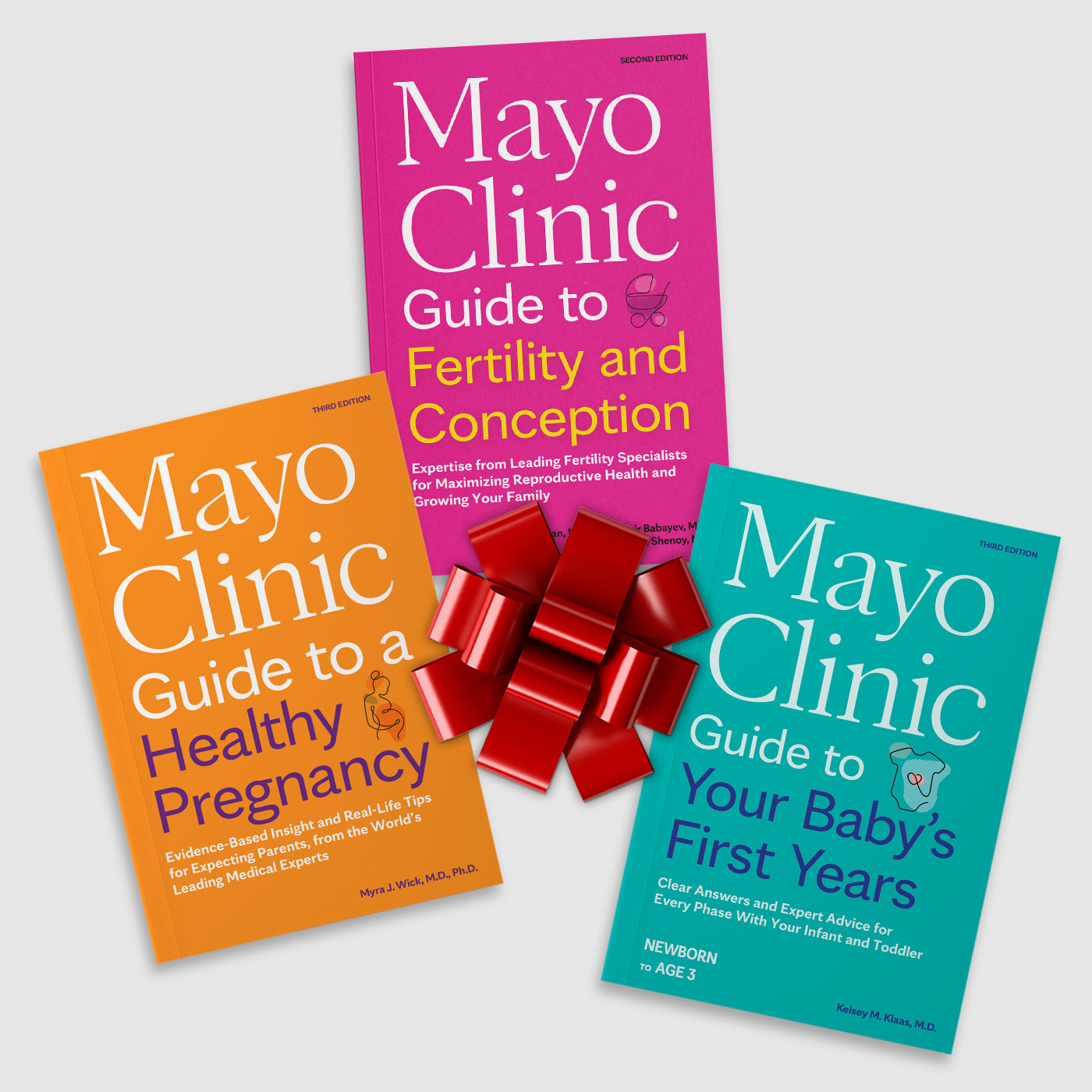
Parenthood Essentials Bundle
The Parenthood Essentials Bundle is a compassionate, expert-driven trio of guides that supports families through every stage of the parenting journey — from preparing for conception, to navigating pregnancy, to confidently caring for a growing baby and toddler. Written by leading Mayo Clinic specialists who combine medical expertise with real-life…