State agencies announced a new referral process that will link the Supplemental Nutrition Assistance Program with the Special Supplemental Nutrition Program for Women, Infants, and Children to identify families who may qualify for WIC but are not yet enrolled. Under the change, SNAP will share monthly referrals with WIC, and WIC staff will follow up within a few business days by phone, text, or email to offer a brief appointment by phone or in person.
The partnership targets pregnant and postpartum women and children under age 5, aiming to make it easier for eligible families to access nutritious foods, breastfeeding support, nutrition education, and referrals to other health and social services. Participation remains voluntary and is not tied to citizenship; eligibility is determined by income and risk factors.
For Kauai County, where geography and high living costs already shape access to care, the referral link could close an important gap. Families on SNAP who live in Kapaa, Hanalei, Waimea or on the remote north shore may now receive a direct outreach that connects them to WIC services without having to navigate multiple enrollment processes. The phone and text follow-ups may be especially useful for keiki and their caregivers who face transportation, work scheduling, or childcare barriers.
Public health experts emphasize that early childhood nutrition and breastfeeding support have outsized impacts on long-term health, school readiness, and chronic disease prevention. By increasing WIC enrollment among income-eligible families, the program could reduce food insecurity and support developmental outcomes across Kauai communities that have been disproportionately affected by economic instability.
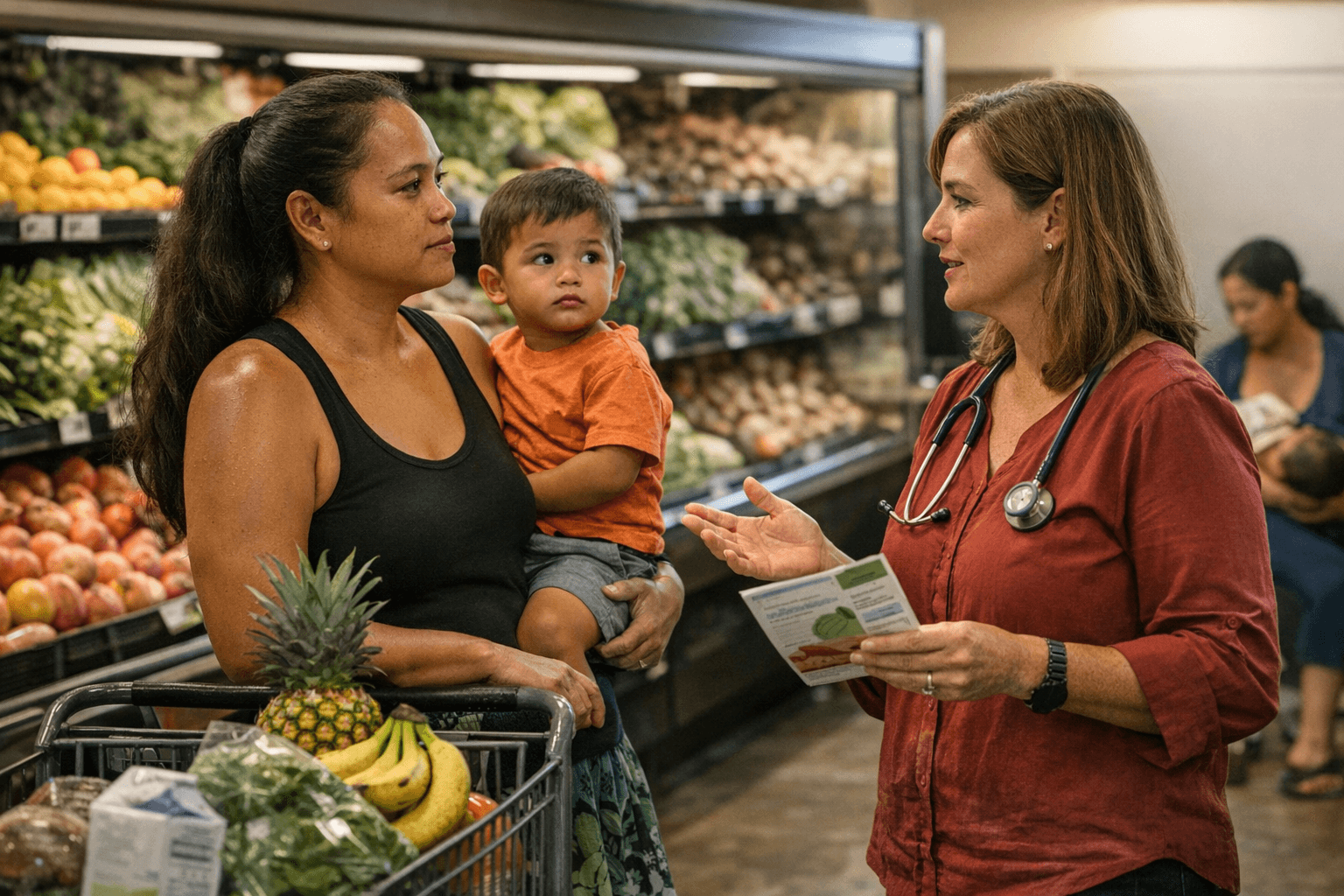 AI-generated illustration
The referral system also raises policy and operational questions local leaders will need to monitor. Effective implementation will depend on WIC staffing capacity to conduct timely outreach, culturally competent communication for Native Hawaiian and immigrant families, and safeguards around data privacy as SNAP and WIC share information. Community-based organizations and health clinics can help by amplifying outreach, offering space for brief appointments, and helping families understand voluntary participation and eligibility criteria.
On the ground, families should expect WIC to reach out if they are receiving SNAP, and they can ask about phone appointment options, breastfeeding resources, and links to other supports like maternal health services. Providers and advocates should track whether follow-up contacts reach rural households and non-English speakers, and push for flexible appointment times and translation services where needed.
The takeaway? This referral move could make a real difference for Kauai ohana by simplifying access to food and health supports, but its success will hinge on responsive outreach and local partnerships. Our two cents? Answer that call, ask questions, and lean on neighborhood providers to help turn a referral into real help for your keiki.