The world watched as Minneapolis police officer Derek Chauvin killed George Floyd. Floyd’s family, while it could never be made whole, obtained some accountability.
The family sued under the federal civil rights statute Section 1983, which allows constitutional claims to be brought against those acting under color of state law, and secured a landmark $27 million pre-trial settlement. Chauvin was prosecuted and convicted for Floyd’s murder.
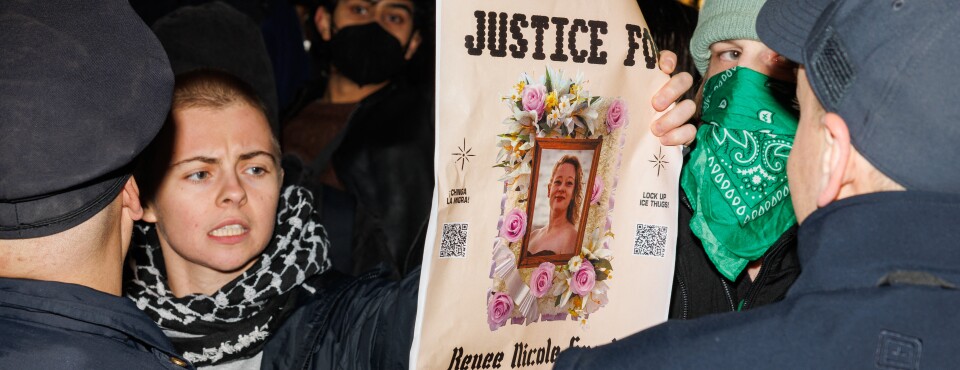
These two avenues to accountability—a civil suit and criminal prosecution—were available because Floyd’s killer was a local officer. By contrast, the ICE officer who shot Renee Nicole Good in Minneapolis last week stands in the shadow of federal protection.
Federal officials enjoy near-complete immunity from conventional lawsuits:
Bivens remedies—which once allowed Americans to sue federal officers directly, the way Section 1983 does when it comes to state and local officers—have largely been eroded. Courts now reject new Bivens actions—especially so in an immigration context. The Federal Tort Claims Act, or FTCA, offers a waiver of sovereign immunity only in narrow circumstances, but it excludes “discretionary function” cases, which the Department of Homeland Security has invoked. The Constitution’s Supremacy Clause immunity generally protects federal agents from state-law-based prosecutions.
The result? Families like Good’s are stranded without legal avenues for suit. This is starkly different from the Minnesota police officers in Floyd’s case.
Assuring accountability for federal officers shouldn’t be a partisan issue. In 2024, agents from the Bureau of Alcohol, Tobacco, Firearms, and Explosives botched the execution of an arrest warrant and killed a gun owner—Arkansas airport executive Bryan Malinowski—in his home. Just like Good’s family, Malinowski’s family deserves a day in court.
Rep. Jim Jordan (R-Ohio) seemed to agree. At the time, he stated that Malinowski “exercised his Second Amendment rights and was a firearms enthusiast” and that even if Malinowski violated federal law, it didn’t justify the ATF’s actions that led to using deadly force.
In either case, if the families filed a lawsuit, there would be disputes of fact to sort out—and the officers could prevail. But at least the Good family and Malinowski family would be able to open the courthouse door and have a judge or jury consider the evidence.
Some states are fighting back. In Illinois, Gov. JB Pritzker (D) signed a bold reform dubbed the Illinois Bivens Act, creating a private cause of action allowing individuals to sue federal officers—including ICE—who violate the state or federal constitutions during immigration enforcement. The DOJ has sued to stop this law under the Supremacy Clause—but Pritzker argues it’s necessary to protect civil rights.
California has taken parallel steps. Its legislature held a hearing on Jan. 13 on a bill that would allow lawsuits against any government official who violates the US Constitution. New York, Maryland, and Oregon are taking notice and working on this, too. A Republican state legislator in Maine, prompted by the Biden-era expansion of IRS powers, attempted something similar in his state in 2023.
Members of Congress have introduced the Bivens Act of 2025 to include federal actors under Section1983, allowing private lawsuits for constitutional violations. If enacted, the Bivens Act would overturn decades of judicial restrictions on constitutional claims and empower families nationwide to seek justice.
Until such a law passes, the states are essential innovators.
That brings us back to Minnesota. Like Illinois and California, Minnesota should pass state-level remedies empowering survivors and families to sue federal officers. It could even make the statute retroactive, so the reforms could apply to those Minnesotans who are hurt by federal officers today, and also to those who will be hurt by them in the future.
Minnesota legislators have a golden opportunity to take decisive action. In holding local officers accountable, George Floyd’s case offered precedent and catharsis. It showed the power of Section 1983 and criminal system to bring justice.
The killing of Renee Nicole Good spotlights an accountability void. Federal agents operate with impunity under Bivens, FTCA, and Supremacy Clause immunities. Without action, ICE, ATF, the IRS, and other federal agencies could continue to act without consequences.
Illinois and California have reminded us in their resistance to federal military presence that states are critical to civil rights enforcement when the federal structure fails. Congress is taking promising steps but is far from the finish line.
In the meantime, Minnesota must act and pass a state Bivens-like cause of action, apply it retrospectively, and bring justice within reach.
This article does not necessarily reflect the opinion of Bloomberg Industry Group, Inc., the publisher of Bloomberg Law, Bloomberg Tax, and Bloomberg Government, or its owners.
Author Information
Anya Bidwell and Patrick Jaicomo are senior attorneys at the Institute for Justice and co-leads of IJ’s Project on Immunity and Accountability.
Write for Us: Author Guidelines