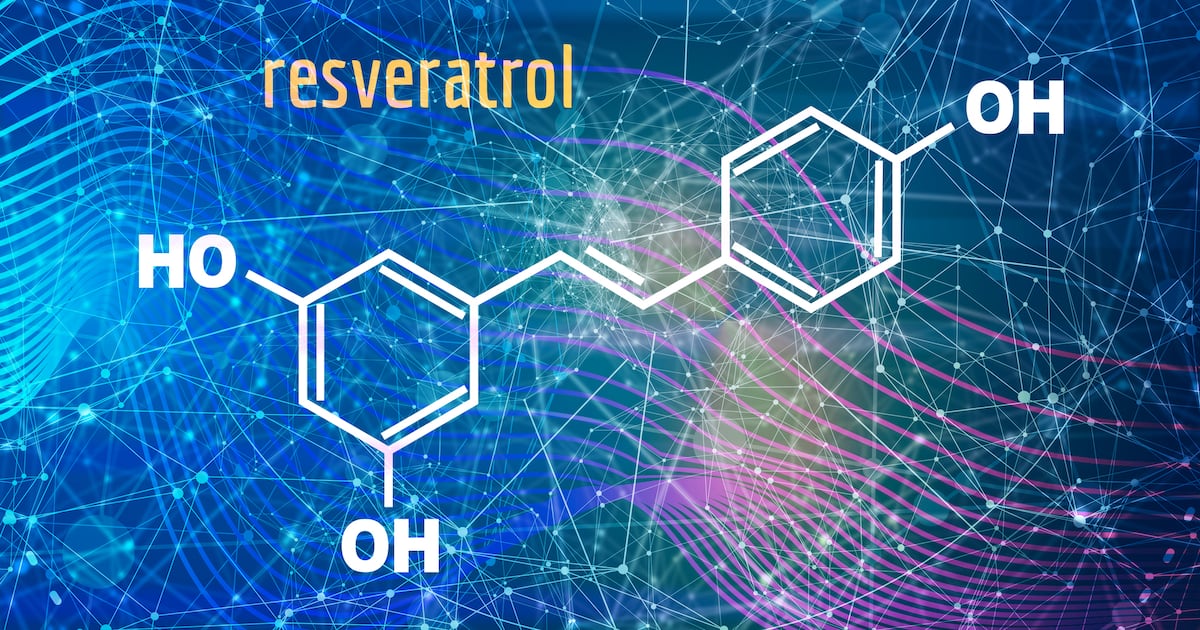
Data from over 120 study participants revealed that trans-resveratrol delivered orally (150 mg per day) combined with a topical application (two grams of cream with 1.5% trans-resveratrol per day) led to significant reductions in wrinkles compared to placebo after eight weeks.
“While all groups showed an improvement in wrinkle scores over the 8-week treatment period, the group that used the combination of the Veri-te capsule and applied the Juneo cream had the greatest improvement in wrinkle scores,” wrote researchers in Frontiers in Nutrition. “This suggests that the combination of topical and oral trans-resveratrol treatment was more effective at reducing wrinkle appearance than the dual placebo group or either trans-resveratrol treatments [oral or topical] alone.”
Marcia da Silva Pinto, PharmD, PhD, category manager for Lallemand Bio-Ingredients, told NutraIngredients that, when designing the clinical study, the research team’s main question was whether resveratrol (as the only active ingredient in an oral or topical formulation) influence signs of skin aging.
“This question had not been answered before as most previous studies combined resveratrol with other bioactive compounds,” she said. “Therefore, this is the first clinical study that shows the benefits of resveratrol as a single active for skin aging. The results are particularly exciting for beauty-from-within applications as now we can clearly say that resveratrol works from within.”
Resveratol and aging
One of the first ingredients to gain widespread attention as a longevity or geroprotective agent was resveratrol, a molecule found in red wine that was linked to the ‘French Paradox’. The phrase was coined in 1992 by Dr. Serge Renaud from Bordeaux University to describe the low incidence of heart disease and obesity among the French, despite their relatively high-fat diet and levels of wine consumption.
Interest in the polyphenol exploded in 2003 when Dr. David Sinclair and his team at Harvard reported that resveratrol was able to increase the lifespan of yeast cells. The research, published in Nature, was greeted with international media fanfare and ignited flames of hope for an anti-aging pill.
According to Sinclair’s findings, resveratrol could activate a gene called sirtuin1 (Sirt1 – the yeast equivalent was Sir2), which is also activated during calorie restriction in various species, including monkeys.
Dr. da Silva Pinto said the science around resveratrol is evolving, noting that in the past, resveratrol was only considered to be antioxidant, and after a few studies on bioavailability, there was a question on its efficacy.
“In more recent years, we have learned that resveratrol has benefits beyond those of an antioxidant, and it acts through different mechanisms which are complementary to each other (such as activation of Sirtuins, AMPK and improving blood flow),” she added. “The newest research is revealing that when it comes to bioavailability, the metabolites produced by our gut microbiota, after breaking down polyphenols and resveratrol, may be the “missing link” that helps explain the positive results seen in clinical studies, including our latest work on skin health.
“As we continue to invest in new research, we anticipate that 2026 will be a breakthrough year for resveratrol, with many exciting scientific discoveries ahead.”
Study details
Scientists from RDC Clinical and the University of Queensland in Australia, Lallemand Bio-Ingredients (Canada) and Evolva AG (Switzerland) recruited 132 women aged 40 and older to participate in their double-blind, randomized, placebo-controlled clinical study. The women were randomly assigned to one of four groups: double placebo, placebo plus the topical treatment (one grams of cream with 1.5% trans-resveratrol two times per daily), placebo plus oral supplementation (75 mg trans-resveratrol two times per daily) or a combination of the oral and topical.
Data from the 122 women who completed the study indicated that the combined intervention led to significant reductions in wrinkle scores compared to the double placebo group after eight weeks.
In addition, despite all the groups displaying increased sebum levels after eight weeks, the sebum levels in the U-zone were significantly higher in the two topical groups (topical plus placebo and topical plus oral).
“Increased U-zone sebum production for those over 40 years old may indicate skin function to be regenerating and providing better protection due to sebum production reducing with age that can lead to drier skin and the development of wrinkles,” the researchers wrote.
“[…] topical application may be more effective at protecting the skin compared to a standard moisturizing cream. The beneficial effect of increased sebum production is through sebum’s role in maintaining skin health by forming a barrier on the skin’s surface, reducing water loss and keeping the skin hydrated. Sebum also contains compounds that have antimicrobial and pro- and anti-inflammatory functions, helping to regulate the activity of xenobiotics and can both repair and protect the skin.”
No significant differences were found in other skin parameters.
“Given that skin aging is influenced by both local and systemic processes, future trials incorporating senescence-related biomarkers may help delineate whether the observed improvements reflect localized skin effects or broader biological modulation,” the researchers concluded.
Source: Frontiers in Nutrition. 2025, Vol 6. doi: 10.3389/fragi.2025.1727244. “Trans-resveratrol reduces visible signs of skin ageing in healthy adult females over 40: an 8-week randomized placebo-controlled trial”. Authors: A. Rao, et al.