National rates of diet-related chronic disease continue to climb. The release of the 2025–2030 Dietary Guidelines for Americans has sparked conversation from the nation’s capital to Central Indiana about what, how and why Americans should eat.
The updated guidelines, unveiled Jan. 7 by the U.S. Departments of Health and Human Services and Agriculture, mark the most significant overhaul in decades and could affect everything from school meals to community nutrition programs in Indianapolis.
At a Washington, D.C., press event, HHS Secretary Robert F. Kennedy Jr. said the new guidance delivers “a clear, common-sense message to the American people: Eat real food,” emphasizing whole, nutrient-dense foods over highly processed options.
“These Guidelines return us to the basics,” Kennedy said in a statement. “American households must prioritize whole, nutrient-dense foods — protein, dairy, vegetables, fruits, healthy fats, and whole grains — and dramatically reduce highly processed foods. This is how we make America healthy again.”
 U.S. Health Secretary Robert F. Kennedy Jr. reads the nutrition label on the back of a jar of food while touring the Osher Center for Integrative Health at the University of Utah, Monday, April 7, 2025, in Salt Lake City. (AP Photo/Melissa Majchrzak)
What’s new
The latest federal guidance recommends Americans:
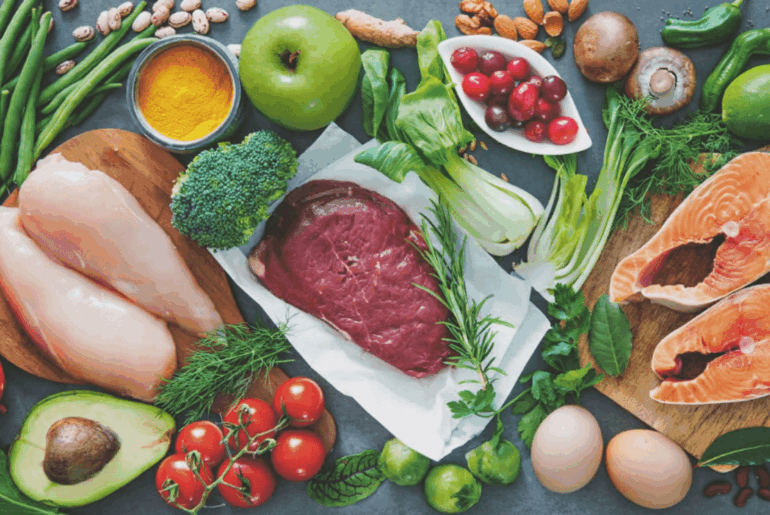
Prioritize protein at every meal and consume full-fat dairy without added sugars,
Eat vegetables and fruits throughout the day,
Incorporate healthy fats from whole foods such as meats, seafood, eggs, nuts, seeds, olives and avocados,
Sharply reduce refined carbohydrates and highly processed foods, and
Limit added sugars, artificial additives and alcohol.
The guidelines also raise the recommended protein intake to 1.2–1.6 grams per kilogram of body weight — a notable increase from previous advice — and strongly discourage “ultra-processed” foods, although they do not yet offer a formal federal definition of the term.
While federal guidance does not carry the force of law, it shapes nutrition standards for programs like the National School Lunch Program, which serves millions of children daily and traditionally adheres to the Dietary Guidelines.
 This photo was taken at the meat counter in the Publix grocery story in Ansley Mall, Atlanta, Georgia.
Local policy reactions in Indiana
In Indianapolis and across Indiana, lawmakers and public health advocates are already reflecting on how the guidelines could influence local nutrition policy.
A bill currently under consideration in the Indiana General Assembly would prohibit certain food dyes and preservatives commonly found in ultra-processed products from school lunches, aligning with the federal emphasis on reducing highly processed foods. Supporters say such changes could improve children’s health, while opponents warn that broad restrictions could complicate school meal planning.
State Rep. Julie McGuire (R-Indianapolis), who authored the bill to ban ultra-processed foods in Indiana schools by 2027, said during committee discussions that the proposal aims to “start where children eat every day, at school cafeterias,” as a preventative step against chronic disease later in life.
The Indiana Department of Health has expressed support for the bill, noting that it aligns with broader statewide efforts to combat chronic disease through nutrition, including Governor Mike Braun’s “Make Indiana Healthy Again” initiative.
However, local agricultural interests have pushed back. Josh Trenary, executive director of the Indiana Pork Producers Association, told WFYI that a static list of banned additives does not “properly account for how those additives could be used,” arguing that certain processed proteins still play a role in balanced diets.
 Doctor holding fresh fruit and vegetable, Healthy diet, Nutrition food as a prescription for good health. (Selective Focus)
Mixed expert opinions nationally
Experts outside Indiana have offered mixed reactions to the new guidelines. Some praise the emphasis on whole foods and reduced added sugar, while others question the prominence of animal fats and red meat — a departure from decades of nutrition consensus.
Dr. Joseph Varon, president of the Independent Medical Alliance, called the focus on nutrient-dense foods and stricter limits on added sugars a “science-backed approach that prioritizes real nourishment.”
Yet nutrition researchers have raised concerns that increased guidance on saturated fats could confuse consumers and contradict long-standing evidence linking saturated fat to cardiovascular risk.
What this means for Indianapolis families
For Indianapolis families, the new nutritional framework could mean changes in school meal offerings in the years ahead and renewed community engagement around food access. Local health providers and educators may also revisit how they talk about nutrition with patients and students in light of the updated federal priorities.
As cities and states interpret the federal guidance through policy decisions and public education, Indianapolis stands at the intersection of national recommendations and local action — a place where what families eat might soon reflect both national trends and community priorities.
This reporting is made possible by a grant from the Indianapolis African-American Quality of Life Initiative, empowering our community with essential health insights. https://iaaqli.org/
Contact Health & Environmental Reporter Hanna Rauworth at 317-762-7854 or follow her on Instagram at @hanna.rauworth.