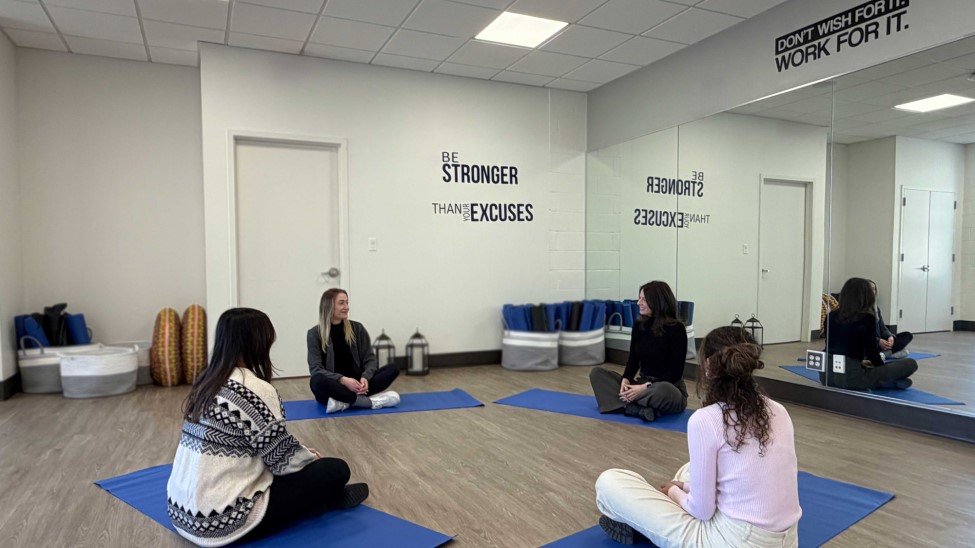
At the Elisabeth Haub School of Law at Pace University, the eight-Week Group Wellness Coaching Workshop represents a sustained, skills-based approach to student wellbeing where wellness is a key component of a law students’ professional formation. Launched in 2023 and offered each semester, the Wellness Coaching Workshop is open to all Pace Haub Law students, with priority given to 3Ls preparing to enter professional practice. Through guided reflection, goal-setting, and peer collaboration, the program equips students with practical tools to navigate the demands of law school and the transition into the legal profession.
The Workshop was developed through a partnership between Dean for Students Angie D’Agostino and Adjunct Professor Lauren H. Breslow, a nationally certified Health and Wellness Coach. Funded by the Dean of Students Office, the program was intentionally designed to move beyond short-term wellness initiatives and toward a model that supports lasting change.
“Our aim was to create something deeper and more durable than a one-time program,” Dean D’Agostino explains. “We wanted students to leave with an awareness of their own personal wellbeing and concrete skills and tools they can carry with them not only through law school, but into their professional lives.”
Grounded in evidence-based behavior change strategies, the Workshop emphasizes intentional reflection, individualized goal-setting, and personal accountability. The program encourages students to define wellbeing on their own terms.
“Wellness in this context isn’t about achieving perfection,” Adjunct Professor Lauren Breslow, who leads the Workshop, explains. “It’s about cultivating self-compassion, making intentional choices, and building habits that support focus, motivation, and resilience over time.”
Wellness in this context isn’t about achieving perfection. It’s about cultivating self-compassion, making intentional choices, and building habits that support focus, motivation, and resilience over time.
—Adjunct Professor Lauren Breslow
Research and experience across legal education show that even the most capable law students often report, by midyear, feeling exhausted, anxious, and unsure how to sustain their wellbeing. Their experience reflects a broader challenge in the legal profession: how to cultivate excellence without sacrificing wellbeing.
Professor Breslow notes that, “research and experience across law schools consistently show that even high-performing students often experience significant stress, anxiety, and exhaustion and are unsure how to sustain their wellbeing.” In response, the American Bar Association and the New York State Bar Association have urged law schools to make wellbeing integral to legal education. “Many schools, including Pace Haub Law, have responded with professional responsibility courses, drop-in mindfulness sessions, and other short-term initiatives,” shared Professor Breslow. “Seeking to go further, the Dean for Students Office set out to pioneer a more sustained, skill-building program to equip students with practical tools and coaching to create lasting wellbeing.” The launch of the Wellness Coaching Workshop is reflective of a growing recognition within legal education that student wellbeing is essential to a successful professional life and sustainable legal career.
For students, the Workshop has been integral as they bridge the time immediately before their professional journey begins. Alumna Gabriela Hasaj ’25 chose to participate during her 3L year as she prepared to enter professional practice.
“I wanted to be intentional about how I approached this next chapter rather than letting it happen to me,” Gabi explains. “I knew that having space for reflection and support would help me navigate that transition successfully.”
Throughout the eight-week program, Gabi found the Workshop’s structure and emphasis on accountability transformative. “We reflected on our goals, how we show up for others, and how we show up for ourselves,” she says. “I left with a clearer understanding of my strengths and a practical roadmap for growth.”
The impact extended beyond the Workshop itself. In a reflection later published in The Balance, the New York State Bar Association’s Attorney Well-Being Newsletter, Gabi described how a course exercise prompted her to reconsider her digital habits, including deleting Instagram, and to reflect on how technology shapes focus, creativity, and connection. Her piece appeared in an issue dedicated to law student wellness, in the same issue with an article written by Professor Breslow on prioritizing wellbeing in law school.
“I think law students and attorneys are exceptionally hard workers, often focused on solving other people’s problems and putting ours on the back burner,” shared Gabi. “We’re in the people business, and that can mean neglecting our own needs until we’re overwhelmed and the pot starts to boil over. As a food law attorney that makes sense to me. You can’t cook the rest of the meal when one pot is spilling over and making a mess. That’s what burnout looks like. This workshop helped me realize that I have to turn the heat down sometimes, take a step back, and make sure I’m tending to everything on the stove. When we take care of ourselves, we show up more focused, compassionate, and effective for the people we serve.”
When we take care of ourselves, we show up more focused, compassionate, and effective for the people we serve.
—Gabriela Hasaj ’25
Current students echo these same themes. Pace Haub Law student Christopher Hulbert joined the Workshop seeking both new wellness strategies and opportunities to refine existing routines.
“The experience was amazing and eye-opening,” Christopher says. “What stood out was how practical everything was. From goal-setting frameworks, breathing techniques, and daily self-focus tools – it all helped me manage stress and build forward momentum.”
Christopher also emphasized the program’s broader relevance. “Lawyers are statistically at high risk for burnout and substance abuse,” he said. “This workshop offers students an outlet and a guide to build healthier habits before those patterns take hold.”
For Pace Haub Law student James Robles, the Workshop offered a rare opportunity to speak openly about the realities of law school. “Many students approach law school without fully understanding the toll it can take,” James explains. “Having time each week to slow down, reflect, and connect with others experiencing the same challenges was incredibly important.”
James identifies the emphasis on small, achievable goals as particularly impactful. “Breaking big goals into manageable steps helped me feel less overwhelmed,” he says. “This class changed my perspective and helped me believe I can become the lawyer and person that I want to be.”
As Professor Breslow observes, “When students recognize how much control they have over their habits and choices, it’s empowering and those mindset shifts extend far beyond law school.”