Key Takeaways
Black sesame seeds are a nutrient-dense ingredient believed to have heart, bone, skin, and hair health benefits.While research on black sesame is limited, there is strong scientific evidence for the nutrients found in black sesame seeds.Experts say adding black sesame to salads, smoothies, and other meals can be an easy way to incorporate these nutrients into your diet.
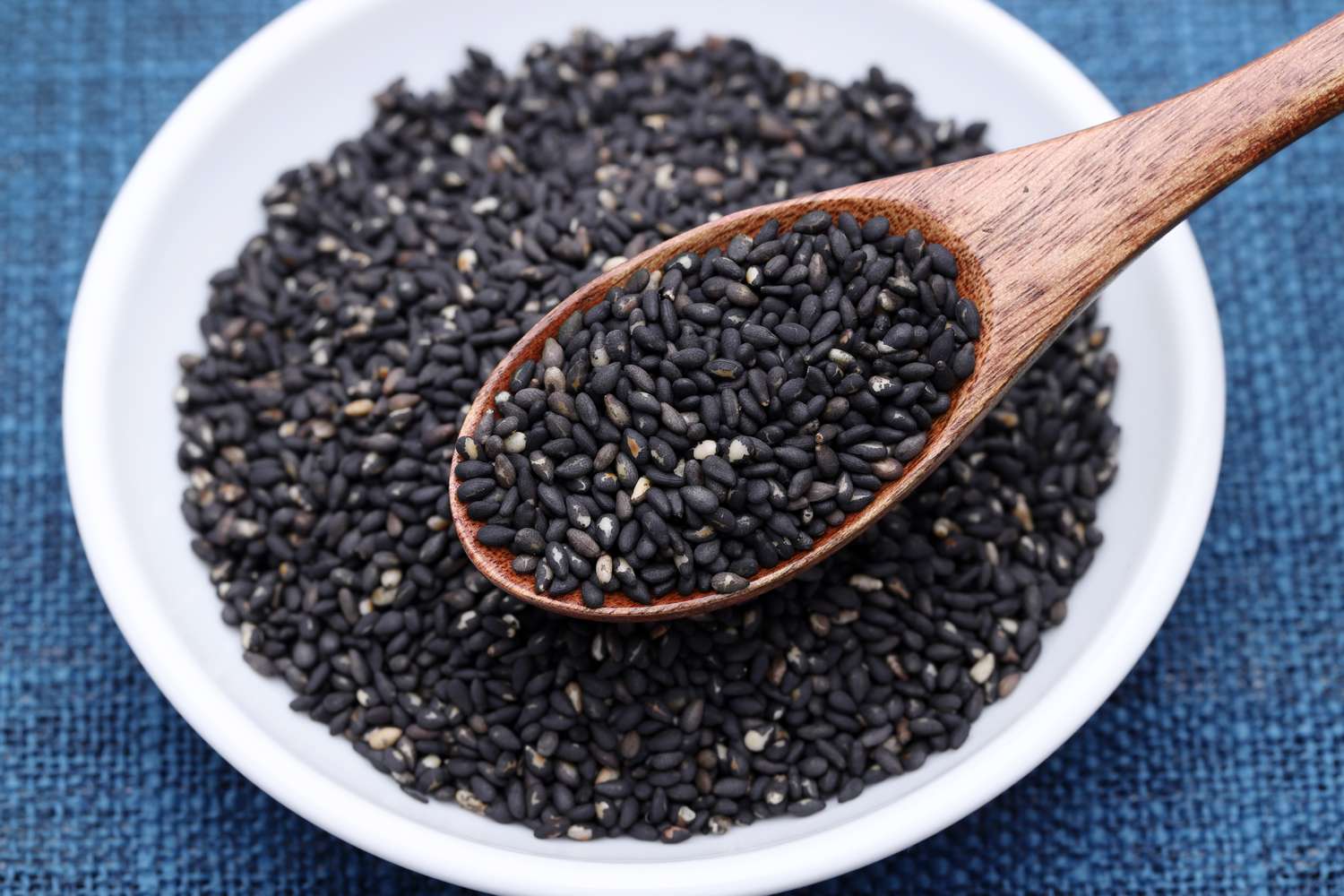
Black sesame seeds are small, teardrop-shaped seeds that contain a variety of nutritional compounds, including vitamins, minerals, healthy fats, and even antioxidants.
They Contain Lots of Nutrients
Sesame seeds come in all shapes, sizes, and flavors, but black sesame seeds are most well-known for their history as a traditional health food.
“Black sesame seeds are nutrient-dense and contain healthy fats, fiber, plant protein, calcium, magnesium, iron, zinc, and antioxidant compounds, which may have many health benefit,” Lauri Wright, PhD, RDN, LDN, director of Nutrition Programs and associate professor at USF College of Public Health, told Verywell.
When compared to white sesame seeds, research has shown that black sesame seeds are higher in protein, amino acids, vitamin E, and antioxidants.
These nutritional differences are why black sesame is linked to potential benefits such as supporting blood pressure control and reducing oxidative stress.
They May Support Heart Health
Even though black sesame seeds have been used for thousands of years as a functional food, there isn’t much actual research on the benefits of black sesame.
“One very small study saw an improvement in blood pressure and antioxidant activity with four weeks of black sesame seed meal capsule supplementation,” Diana Guevara, MPH, RD, nutritionist supervisor at UTHealth Houston, told Verywell.
In this study, daily black sesame supplementation was associated with lower systolic blood pressure measurements and higher vitamin E levels. However, Guevara pointed out that this was a short study with a small sample size, so more research is needed.
Outside of this study, most of the reported benefits of black sesame are related to the nutrients themselves—many of which have robust scientific evidence behind them.
Black sesame seeds are high in compounds like phenols and heart-healthy fats, which research shows can support cardiovascular health. “The unsaturated fats and antioxidants may help support healthy cholesterol levels and reduce oxidative stress,” said Wright.
They May Improve Bone Health
Black sesame seeds also contain essential minerals for bone health. “Black sesame provides calcium, magnesium, and phosphorus, which contribute to bone structure,” noted Wright, warning that black sesame shouldn’t necessarily replace other calcium sources.
Wright shared that those same nutrients may also be beneficial for your skin and hair, too. However, there is one caveat.
“Claims about preventing hair graying are largely based on folklore rather than strong clinical evidence,” said Wright.
How to Add Black Sesame to Your Diet
Black sesame seeds can be found in most grocery stores alongside other types of sesame seeds, all of which can be easily added to meals as an ingredient or condiment.
“To get the most nutrients out of black sesame seeds, they can be lightly toasted, ground, or crushed, and sprinkled over salads, bowls, stir fry, yogurt, or oatmeal,” Guevara said.
If you are thinking of incorporating black sesame into your diet, there’s no need to overload your dishes. According to Wright, a little goes a long way, and moderate use is more than sufficient to see the nutritional benefits.
“Overall, black sesame can be a supportive food for general health—but it is not a cure-all,” Wright said.
Verywell Health uses only high-quality sources, including peer-reviewed studies, to support the facts within our articles. Read our editorial process to learn more about how we fact-check and keep our content accurate, reliable, and trustworthy.
Xu Z, Li M, Jiang N, et al. Black sesame seeds: Nutritional value, health benefits, and food industrial applications. Trends in Food Science & Technology. 2024;153:104740. doi:10.1016/j.tifs.2024.104740
Wei P, Zhao F, Wang Z, et al. Sesame (Sesamum indicum L.): A Comprehensive Review of Nutritional Value, Phytochemical Composition, Health Benefits, Development of Food, and Industrial Applications. Nutrients. 2022;14(19):4079. doi:10.3390/nu14194079
Wichitsranoi J, Weerapreeyakul N, Boonsiri P, et al. Antihypertensive and antioxidant effects of dietary black sesame meal in pre-hypertensive humans. Nutr J. 2011;10:82. doi:10.1186/1475-2891-10-82
Ha TJ, Lee M-H, Seo WD, et al. Changes occurring in nutritional components (phytochemicals and free amino acid) of raw and sprouted seeds of white and black sesame (Sesamum indicum L.) and screening of their antioxidant activities. Food Sci Biotechnol. 2017;26(1):71–78. doi:10.1007/s10068-017-0010-9
U.S. Department of Agriculture. [HISTORICAL RECORD]: BLACK SESAME SEEDS.
Iqbal I, Wilairatana P, Saqib F, et al. Plant Polyphenols and Their Potential Benefits on Cardiovascular Health: A Review. Molecules. 2023;28(17):6403. doi:10.3390/molecules28176403
Sacks FM, Lichtenstein AH, Wu JHY, et al. Dietary Fats and Cardiovascular Disease: A Presidential Advisory From the American Heart Association. Circulation. 2017;136(3):e1-e23. doi:10.1161/CIR.0000000000000510
Ciosek Z, Kot K, Kosik-Bogacka D, et al. The Effects of Calcium, Magnesium, Phosphorus, Fluoride, and Lead on Bone Tissue. Biomolecules. 2021;11(4):506. doi:10.3390/biom11040506
Assaf S, Kelly O. Nutritional Dermatology: Optimizing Dietary Choices for Skin Health. Nutrients. 2024;17(1):60. doi:10.3390/nu17010060

Eleesha Lockett is a nutrition professional, meal prep expert, and writer.
Thanks for your feedback!
What is your feedback?
Helpful
Report an Error
Other