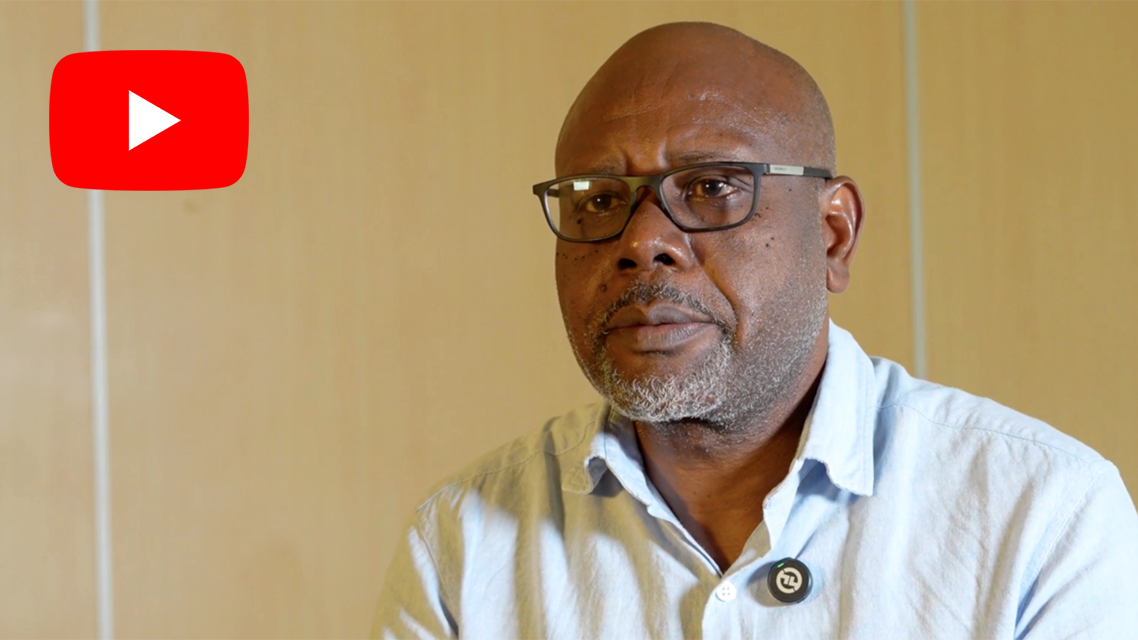
My name is Francis Ndungu and I’m an Associate Professor in Immunology. My research is in malaria immunology, with the interest of providing a better understanding of naturally acquired immunity to malaria. So, we have ironically used controlled human malaria infections in order to try and understand the naturally acquired immunity to malaria. So, in these studies, we recruit Kenyan adults from areas with high transmission and areas with low transmission, so that these comparisons can help us to reveal the mechanisms that control parasite growth and malaria symptoms in the highly immune individuals. So, if we identify these mechanisms, the idea is that we can try to exploit them to develop new therapies.
So, right now, we have two new malaria vaccines that have been introduced, RTS,S and R21, and these vaccines, of course their implementation will bring a lot of changes in the malaria control world, and so the questions going forward will be guided by these changes. Importantly, these vaccines are not perfect. And so, the first question is whether we can do more work to improve the efficacy of these vaccines, and also whether we can develop a new generation of vaccines that work better than the ones we have now. And once we have these vaccines in place, of course the question is whether we can use preventative vaccination to eliminate malaria in the countries where transmission is already low, while bringing malaria transmission lower in the areas with very high transmission.
Malaria is a huge problem here in Kenya, and of course in the rest of sub-Saharan Africa, and in parts of Asia. So having effective vaccines of course makes a huge difference in the lives of these people. So far, we have tested here in Kilifi the vaccines that are being rolled out. I was involved in the clinical trials for R21 and also RTS,S. And so, you could say already I’m seeing my work make a difference in malaria control. Importantly, these vaccines will hopefully bring down malaria transmission in the areas where there is malaria, and this will greatly improve the lives and health of children and pregnant mothers in those areas.
You could say malaria is intimately connected with poverty. So, we find that the countries that still have malaria are also the poorest countries in the world. And in fact, there is research previously done that showed that economic development is much faster in the countries that have eliminated malaria already. So, I believe that if we use the tools that we are developing to bring down, or even eliminate malaria in the countries where transmission persists, these countries will most likely increase their rate of economic development. So, imagine all the money that is being spent to buy antimalarial drugs to control malaria, and also the time wasted for children not going to school because they are sick, or even parents not going to work because their children are sick. If that time is spent productively then of course we would expect that these countries will accelerate in their economic development.
This interview was recorded in September 2025.