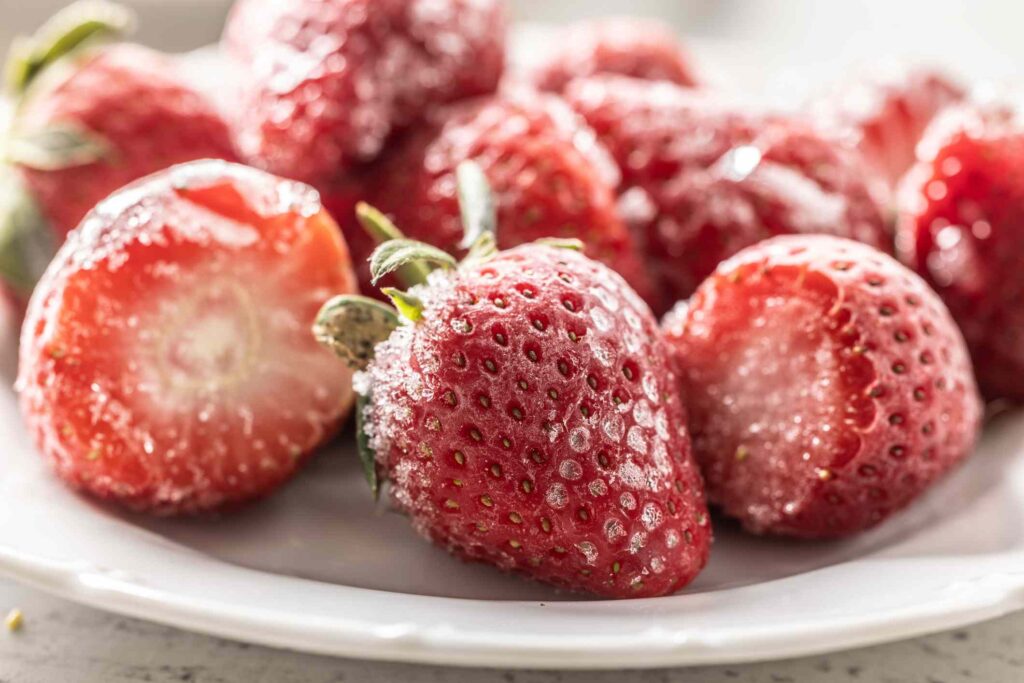
Frozen foods get a bad rap for being processed junk. But the truth is, some of the healthiest foods in the market are in the freezer section. Frozen fruits and vegetables are at their peak of ripeness, easy to use, and readily available. They can actually save you time in the kitchen because they don’t require trimming or washing. Here are important reasons to stock up on frozen products today, and all year round.
The minute a fruit or veggie is picked, it begins to lose nutrients, so when it’s plucked and how long after harvesting you eat it impacts its nutritional value.
Because most frozen fruits and veggies are frozen shortly after they’re harvested, they’re allowed to ripen fully, which means they’re chock-full of vitamins, minerals, and antioxidants, and freezing “locks in” many of their nutrients, according to the Academy of Nutrition and Dietetics.
Much of the fresh produce in your supermarket may have traveled over 1,000 miles by truck to get there. As a result, it may have been harvested before reaching its nutritional peak and then artificially ripened during transport.
In a 2015 study, researchers compared eight common fruits and vegetables stored in a refrigerator for 3 or 10 days or frozen for up to 90 days. For vitamin C, riboflavin, alpha-tocopherol (a form of vitamin E), calcium, magnesium, zinc, copper, iron, fiber, and total phenolics, the researchers concluded that fresh and frozen were highly similar, with frozen sometimes outperforming fresh.
In addition, the University of Chester published a report in 2014 in which researchers measured nutrient levels in produce that had been sitting in a fridge for three days, compared to frozen equivalents. They found more beneficial nutrients in the frozen samples, including broccoli and blueberries. In two out of three cases, frozen fruits and veggies packed higher levels of antioxidants, including polyphenols, anthocyanins, lutein, and beta-carotene. So freezing produce does not destroy its nutrients.
Because freezing preserves food, no unwanted additives are needed in bags of frozen goodies, like spinach and strawberries. In addition, “naked” produce (e.g., no added salt or sugar) is the norm, so it’s incredibly easy to find fruits and veggies with single-word ingredient lists—simply the fruit or veggie itself. To be sure, always check the ingredients.
Frozen options often don’t require any washing, peeling, or chopping. According to the U.S. Department of Agriculture (USDA), on an average day, Americans aged 18 and over spent 37 minutes in food preparation and cleanup.
Because frozen produce is prep-free, reaching for it can save you a ton of time, allowing you to make healthy dishes at home rather than opting for takeout.
You can keep your freezer stocked with a spectrum of frozen fruits and veggies and use them in various ways. In addition to adding frozen fruit to smoothies, thaw or warm it as a topping for oatmeal or whole-grain toast spread with almond butter. Frozen veggies are an excellent main ingredient in stir-fry dishes.
Keep jars of all-natural, vegan pesto and tapenade on hand to toss with steamed frozen veggies for a quick, easy side dish. Some great combos are broccoli with sundried tomato pesto, spinach with roasted red pepper pesto, and French-cut green beans with green and black olive tapenade.