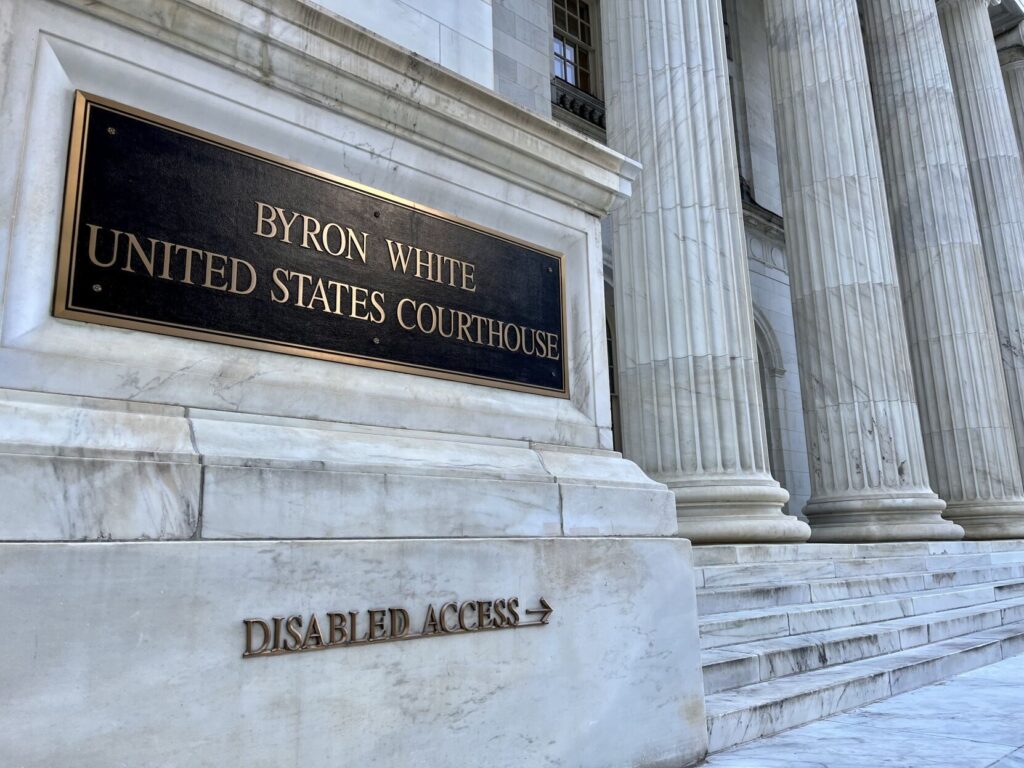
The Denver-based federal appeals court confirmed on Wednesday that it would not treat a judge’s decision to move a civil case forward as the automatic equivalent of denying immunity to governmental officials.
The order from the U.S. Court of Appeals for the 10th Circuit came one month after a trial judge deemed Jefferson County’s appeal “frivolous” and noted that the discovery of evidence in a civil lawsuit is not halted “simply at a defendant’s mention of qualified immunity.”
In the underlying case, James Purdy’s surviving family sued the county, its elected sheriff, several jail personnel, and the jail’s medical contractor. The family alleges Purdy died in custody after numerous falls that jail staff knew about, yet failed to prevent. The claims include violations of Purdy’s constitutional right to adequate medical care, the Americans with Disabilities Act, and Colorado’s constitution and laws.
The defendants in the Jeffco sheriff’s case moved in April to dismiss the claims against them. For the federal constitutional claim, they invoked qualified immunity, a judicially created doctrine that shields government employees from civil lawsuits unless they violate a person’s clearly established rights.
Government defendants can assert qualified immunity early on with a motion to dismiss, and they can later raise it in a motion for summary judgment after the discovery of evidence has run its course. Notably, unlike most orders that can only be appealed at the conclusion of a case, a defendant can immediately appeal a trial judge’s order denying qualified immunity. As a consequence, there can be a delay for months or years while the appeal is decided.
Shortly after the Jeffco defendants filed their motion to dismiss, they also asked to stay, or pause, the case until U.S. District Court Judge S. Kato Crews could determine whether the individual employees were entitled to immunity. A magistrate judge declined to do so and allowed for depositions of the defendants. Crews later upheld the order as reasonable.
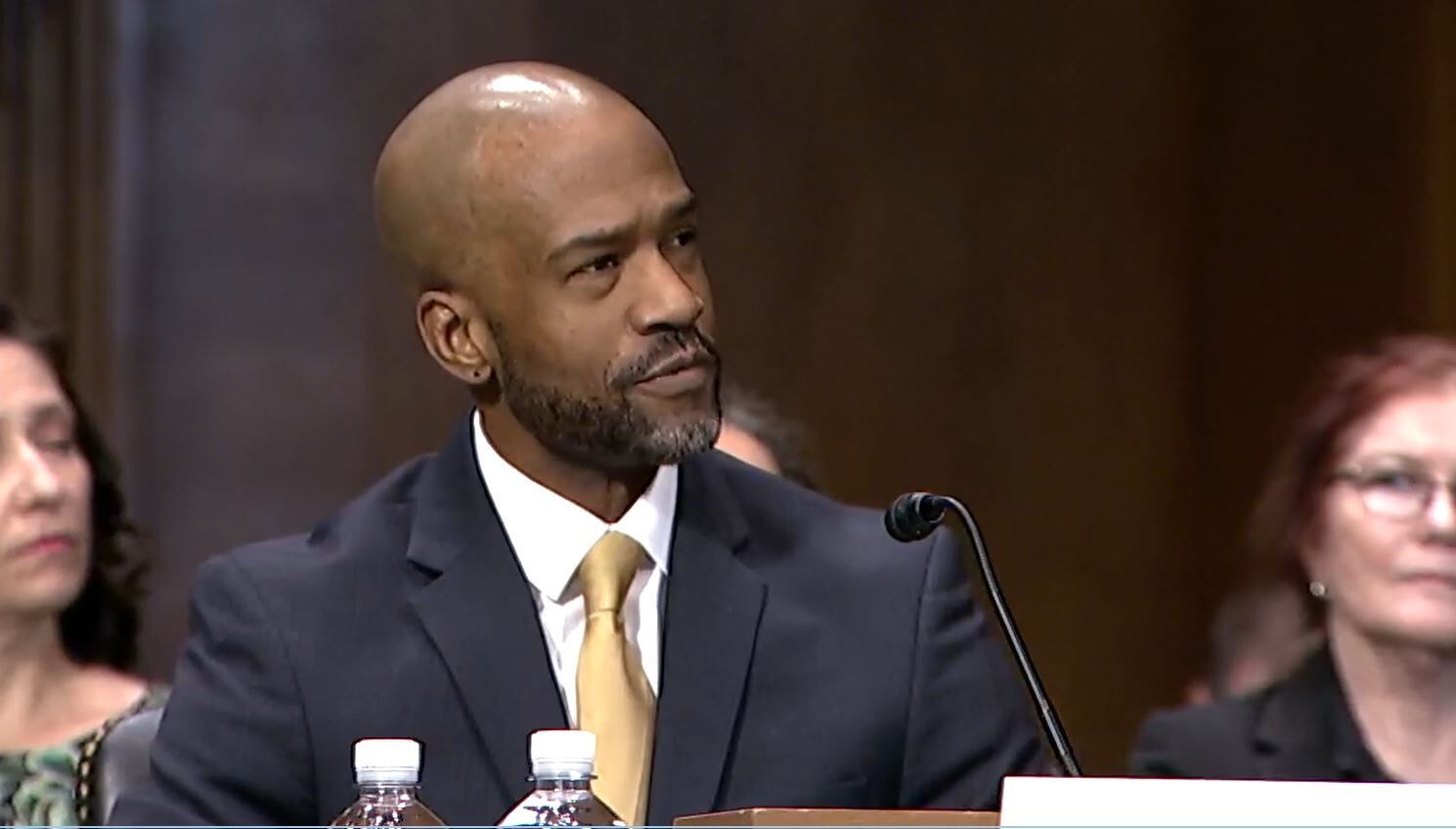 FILE PHOTO: Judge S. Kato Crews
The county then appealed to the 10th Circuit, transferring control of the case from Crews to the circuit. Despite the fact that his order fell outside the category of immediately appealable decisions, the county deployed a creative argument for enlarging the scope of that narrow class.
A key purpose of qualified immunity is to protect government employees from “the ordinary burdens of litigation,” Jeffco reasoned. If defendants have to sit for depositions, they are experiencing the burdens of litigation and, effectively, have been denied qualified immunity. Therefore, the defendants are entitled to appeal immediately.
In a Dec. 4 order, Crews decided the 10th Circuit does not allow for immediate appeals of pretrial evidentiary decisions. He declared the appeal “frivolous” and reasserted control of the lawsuit in his court.
“To be sure, the Court’s determination of the Sheriff Defendants’ entitlement to qualified immunity will be reviewable on appeal once the Court rules on their motion to dismiss,” he wrote.
Jeffco maintained on appeal that the sheriff defendants will “lose their right to be free from the burdens of pretrial discovery and trial” if Crews’ order stands, producing the same effect as denying them immunity outright.
In an unsigned Jan. 14 order, a three-judge 10th Circuit panel agreed that the order allowing for depositions to take place did not fall in the same category as an immediately appealable qualified immunity decision.
“Because the district court’s discovery order did not deny — explicitly or implicitly — County Defendants’ qualified immunity defense and the district court intends to rule on County Defendants’ motion to dismiss prior to trial, we cannot treat this appeal from a pretrial discovery order as an appeal from the denial of qualified immunity,” wrote Judges Timothy M. Tymkovich, Scott M. Matheson Jr. and Nancy L. Moritz.
They also agreed with Crews and the plaintiffs that even if Crews does grant qualified immunity on the one constitutional claim, other claims in the lawsuit would still proceed that are not subject to qualified immunity.
Crews has yet to decide on the April motion to dismiss.
The case is Estate of Purdy et al. v. Jefferson County, Colorado et al.