 7 min read
Many years ago, before a lethal combination of TikTok, Reels, and X rotted my brain, I was at a party. At one point, the man deejaying handed me his phone to add a song to the queue. I looked at it and immediately felt disoriented. “Why is your Spotify in black and white?!” I asked him. He explained to me that it was the result of a setting that makes your brain less likely to crave the endless scroll. He said something about a study that proved it (I did not fact-check him in the moment, but one from 2022 showed that using grayscale did indeed reduce screen time and social media use). I immediately handed him my own device and asked him to show me how it works.
It worked for a while, but now, as I struggle to break the cycle of “phone in bed” and do something productive with my limited free time, the black-and-white screen does nothing for me. I am like a small child who knows how to climb out of her crib. A prison that I know how to escape from cannot contain me. Even so, I’ve never craved time away from screens more. The news is depressing and my feeds are filled with AI slop and inflammatory hot takes, yet still, I doomscroll.
As my thumb flicks my screen, I think about all the things I could be doing, if only I could get off my phone. Perhaps I could write the next great American novel. Maybe I could get really good at pottery and start selling my wares on Etsy. I could definitely perfect crow pose, be the kind of person who meal-preps, or reconnect with some of my old friends who I now only see through Instagram Stories. But I’ll never know, because instead, I’m hate-watching short-form videos about influencers standing in line to sample the sometimes-raw chicken nuggets at Meadow Lane. If I’m not doing that, I’m inexplicably scrolling through the cesspool that is X, seeing posts that say “@grok context?” and ignoring the increasingly loud voice in the back of my mind that keeps reminding me I only have one life to live.
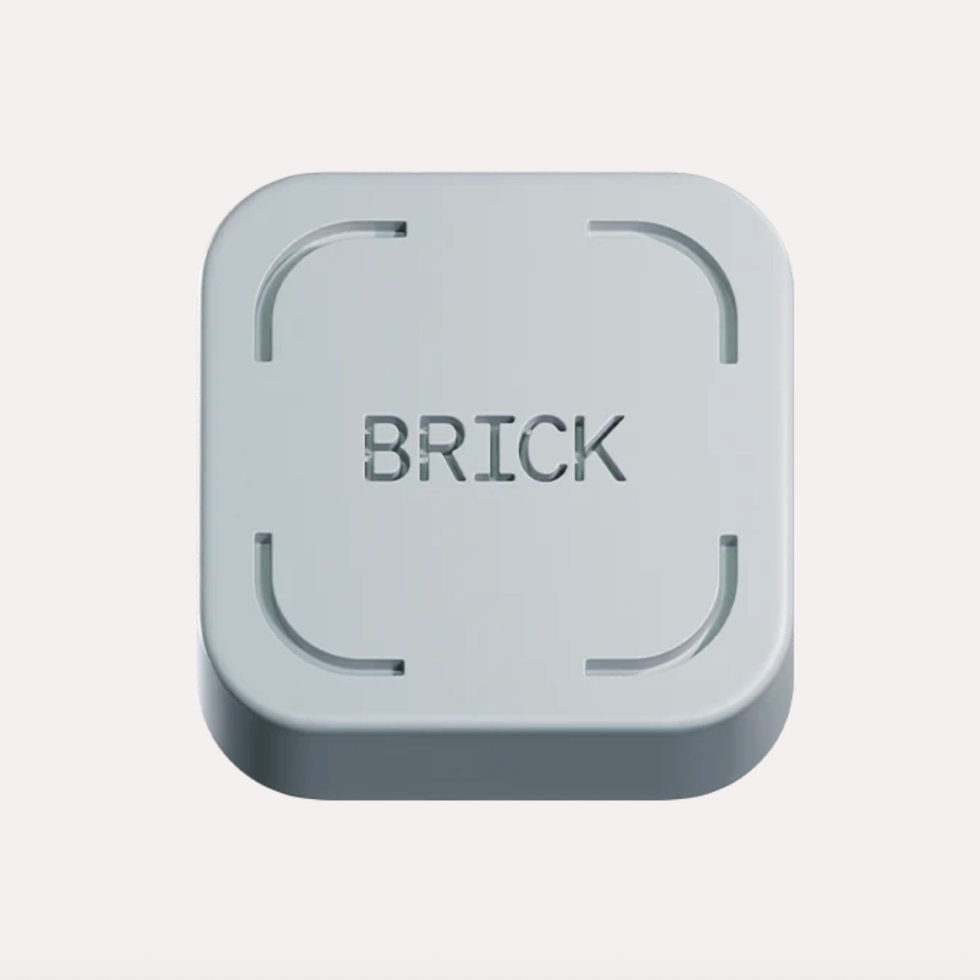
In 2026, however, I have decided to start listening to that voice. I really do only have one life to live, and I would not like to spend it online. I’ve begun to make an active effort to be present. While I have yet to perfect my time offline, here are some things I’m actively trying: I ordered a Brick, a physical device that you tap to get locked out of apps of your choice until you tap it again; I gave myself a “phone bedtime,” and I’ve been leaving it on Do Not Disturb for long stretches of the day. I’ve also been gathering advice from people who are far better at not using their phones than I am. Keep reading for insights from those who have actually been successful at decreasing screen time and their tips—from using a wrist brace to getting a landline.
“To Brick yourself is to know freedom.”
“The Brick is essentially a baby straight jacket, which is what I need. When I started Bricking, I would tell myself, Girl, you cannot access this until you come home. And there’s also something humiliating, where if you Brick yourself and go to the bathroom you’ll realize how much time you spend on the toilet scrolling. With the Brick, you’ve got to leave it at home, so you’re almost clocking in and out the way a factory worker would in the 1920s. It’s an analog product for something that is meant to hook your brain into the matrix and always be on.
“I actually got Bricks for my entire team [because] I find it to be helpful. I’ve now read four books in two weeks. I think if we all spent less time on our screens and actually consumed things that have been proven to increase our neural pathways, patience, and reading comprehension, the world would be a better place. To Brick yourself is to know freedom.”—Charlotte Palermino, co-founder of Dieux Skin
 “It’s given me complete work-life balance, and the ability to focus more and do all the hobbies I love.”
“The Brick has healed me. I think everyone who works in media needs one for sanity. A lot of people tell me that the iPhone has its own built in app-limits, but those people don’t understand the limitless depths of my social media addiction (as someone who works in it). It sounds a little bleak, to have a physical barrier to scrolling, but I don’t care anymore because it’s given me complete work-life balance, and the ability to focus more and do all the hobbies I love.”—Yusra Siddiqui, social media manager
“If I can’t use my wrist and my fingers, I can’t use my phone.”
“I just put a wrist brace on. If I can’t use my wrist and my fingers, I can’t use my phone. Also, it helps with my carpal tunnel.”—Pia Velasco, beauty and tech consultant
“I have a landline that I use to call friends.”
“I had an iPhone 6S until two or three years ago. I also have a landline that I use to call friends. I’m somebody who likes to speak rather than text. I find it to be overwhelming. I don’t like doing anything on a screen.
“I don’t think you need to spend money to stop scrolling. I don’t want to say this in a harsh or judgmental way, but [the best way to be more present is] to get hobbies or find things to do with your hands—whether it’s learning a new recipe, doing a puzzle, or just spending time amongst people. More people need to spend time in person with other people, and do things, have activities, and not just stay in the house. And even if you do stay in the house, watch a movie, read a physical book—do those kinds of things. Devices rob us of so much of our time.”—Kayla Greaves, beauty journalist
“I had a friend set a code for child lock on social media apps.”
“I have tried nearly every hack to use my phone less. I tried turning it to grayscale (I still used it, but it just made me sad), leaving it at home (it works, but then I’d get lost), and using all sorts of apps. The best way I’ve found is to make it as boring as possible. I had a friend set a code for a child lock on social media apps, so I can only use them for a set amount of time each day with no way to override it. That has seriously helped!”—Emma Seymour, associate director, Good Housekeeping Institute textiles lab
Related Story“I’ll leave my phone on the other side of the room.”
“The only way that I have been able to commit to any sort of meaningful break from screen time is to have my phone physically far away from me. If I’m in the office, I will leave my device at my desk. If I go somewhere else in the office, or go to lunch, I won’t bring it with me. It really is the only way that I won’t mindlessly check it. At home, I do the same thing. It tricks my mind [into thinking] that I’m doing something else, and I don’t want to physically get up to go look at it.”—Fran Martin, beauty publicist
“About a year ago, I deleted my Facebook app.”
“I’ve dove deep into notification settings and removed applications, especially those that are distracting. About a year ago, I deleted my Facebook app. I’ve turned off notifications for pretty much all of my social media, except for direct messages. But honestly, the most low-tech, successful thing that I’ve done is just trying to leave my phone in a different room. Having it be far enough away where I need to get up out of my chair, walk over to it, and pick it up to interact with it really helps limit the amount of time I’m on it.”—Taylor Trimarchi, Ohio resident
“I slept so much better and deeper, which was nice.”
“In 2025, I had a flip phone for nine months. I didn’t want to spend hours of my life being passively entertained or watching other people live their lives on social media. I wanted to grow more attuned to my creative sensibilities and pay careful attention to the world around me. I wanted to lean into boredom and feel comfortable not being barraged with information constantly. I found that I gained much more than I was initially expecting. I rediscovered my own taste and engaged with culture beyond what was currently trending. I slept so much better and deeper, which was nice. I felt more involved in my real life. I wasn’t looking at Instagram Stories, so I didn’t know what was going on in someone’s life, and I had to make an effort to actually build relationships. That was so much better, because Stories are a one-way thing, while a conversation, whether that’s by a call or meeting up in person, that’s actual community and intimacy. Looking back at last year, my life was so full, even though I was so offline. I still had social media, but I was only logged on to the desktop version, and I felt less inclined to scroll or check it. The desktop version isn’t as addicting.
“I did end up returning to a smartphone mainly because I missed the ease of texting. It’s just so much easier to text on, and [I like] FaceTiming. I still don’t have social media apps, and I got gifted the Brick device for Christmas. I think it helps me focus; I use it during the day when I’m working.”—Ama Kwarteng, writer and editor
“I googled what the first generation iPhone home screen looked like, and I matched my widgets to that.”
“I’ve done the black and white thing, got a second device to split work and personal [activities], and I’ve tried just letting the battery die and not charging it for the weekend. But the one thing that has worked the best was making my device more of a utility tool than an entertainment spigot. Last year, I googled what the first generation iPhone home screen looked like, and I matched my widgets to that. Also I take my social widgets off my screen a few times a year for a few weeks at a time, and that has honestly been the best thing ever.”—Emma (who chose not to share her last name), graduate student
These interviews have been condensed and edited for clarity.
Related Story