The new super-rich wellness must-have? A meditation room
, The Sunday Times
Got the party barn, basement gym and home cinema? Pah! So has everyone else. A meditation room is the hottest must-have for those with all the other must-haves. Inspired by the likes of Drew Barrymore, who recently converted a closet in her Manhattan apartment into a meditative space, and Liam Gallagher, who had a dedicated room at his former rental home in the Cotswolds, the trendiest types are now looking for spaces that centre them.
And before you roll your eyes, it’s not just celebrities. In the latest research by the Global Wellness Institute, wellness-orientated real estate is the fastest-growing category of the past five years, increasing by 19.5 per cent annually. For instance, the Round, a Foster + Partners-designed wellness village comprising swanky homes and offices in Bankside, south London, will offer guided meditations as part of the package when it opens in 2030, while the HiLight in Battersea — launching in early 2026 and featuring more than 100 waterfront homes — will have a dedicated “grounding” corner and provide residents with complimentary access to the Calm app.
• 16 of the best meditation retreats in the UK and Europe for 2026

A seat in a calming room, by Portia Fox
RICHARD PICKAVANCE

The wellness area in a Mayfair basement, by Laura Hammett

A living wall in a meditation space in a Notting Hill home, by Spinocchia Freund
FELIX SPELLER
“Interest in meditation rooms began in Covid when everyone was focused on how their homes looked and thought about creating dedicated spaces for themselves so they didn’t go crazy,” says Becky Fatemi, an executive partner at Sotheby’s International Realty UK. “Now, because these individuals are more global than ever and travelling so much more — as well as continuing to prioritise their health and wellbeing — their homes are being fully designed for time, space and mind efficiency. What used to be very big gyms in basements are now sectioned-off spaces for specific activities, whether that’s steam rooms, cold plunges or meditation rooms, and have since moved up to the ground floor or garden for natural light and ventilation.” For sale with the super-agent is a £12.95 million house in Knightsbridge, complete with a calming space featuring a central whirlpool as the crowning glory; and a £35,000-a-week rental in St John’s Wood boasting a meditative courtyard for serious alfresco “you time”.
At a recent project the interior designer Laura Hammett was given the whole of the lower-ground floor to play with for the wellness areas of a Mayfair residence. “We wanted to design something more conceptual and immersive than your typical home spa, befitting of a historical building in prime London,” she says. “There’s a wet zone featuring a steam room and plunge pool with backlit ‘stepping stones’ leading to the meditation space. It’s purposefully free of gym equipment with a view of the water through the glass so it feels more special than simply a contemplative room in the basement. The glazed wall dividing one zone from another is to contain the moisture so both can be used independently. The overall atmosphere is intentionally meditative, balancing gentle lighting, natural materials and a sense of quiet architecture to encourage slowing down and grounding.”
In Kensington, Erik Munro — the eponymous founder of his design studio — has created a different take on the trend. “The room was designed as a complete escape — a calming oasis away from the rest of the house and the city,” he says. “The client wanted it to have a dual purpose, though — a place for daily yoga and meditation, but also somewhere peaceful for guests to stay with a pull-out sofa bed. The scheme was inspired by a Japanese tatami room, complete with custom-designed traditional tatami floor mats, plus warm seagrass wallpaper for texture and softness. The colours, artwork and textiles were all chosen to evoke a sense of warmth and serenity.”
• I tried a meditation retreat for one

The entrance to a meditation and Pilates studio in a Cotswolds home, by HollandGreen

A yoga, meditation and guest room in Kensington, by Erik Munro
FREDDIE MARRIAGE

The central whirlpool in a Knightsbridge house
ALEX WINSHIP
Spinocchia Freund, the creative powerhouse at her namesake interiors practice, is no stranger to such requests either. In fact, two recent projects in Notting Hill and Chelsea boast their own meditation spaces, the former with a living wall as a grounding central backdrop for breathwork and quiet practice, and the latter crafted from sound-absorbing, body-supportive materials to feel enveloping and calming. “Our homes now carry work, family life and social rhythms, but they also need to function as places of retreat that support health, longevity and wellbeing,” she says. “Clients are increasingly seeking environments where the pace can soften, even briefly. What was once a mat in the corner has evolved into dedicated rooms that support both reflection and physical recovery. We are seeing growing interest in spaces designed for restoration as much as stillness, including hyperbaric chambers, red-light therapy and cryotherapy, sitting alongside quieter, more contemplative rooms.”
• A room-by-room guide to mindful decor to boost your mental health
Inspired to create your own? “Everything begins with intention,” she explains. “The most effective meditation spaces are defined by how they make you feel the moment you enter. Soft, controlled lighting allows the body to settle, while natural materials introduce a sense of calm. Acoustics play a role too. A room that absorbs sound helps the mind to quieten. Even a subtle natural gesture, whether a plant, stone or timber, can gently shift the atmosphere.”
Other calming spaces to covet include the separate meditation and reformer Pilates studio in the garden of a Cotswolds manor by the interior and landscape firm HollandGreen and the ground-floor meditation room at a house in Knightsbridge by Taylor Howes Design. “As someone with ADHD, I need to do meditation to keep myself grounded,” says the founder and chief executive, Karen Howes. “The great thing about the practice is that you don’t always need a designated room, although that’s the ideal. You can carve out a space that becomes a little sanctuary where you’re not disturbed, with a super-comfortable chair and the space to put your feet firmly on the ground. You don’t want anything to stimulate the senses because you’re trying to do the opposite. The more natural the materials, the better, so you can connect with Mother Nature’s energy — think timber, linen, wool, plaster and stone.”
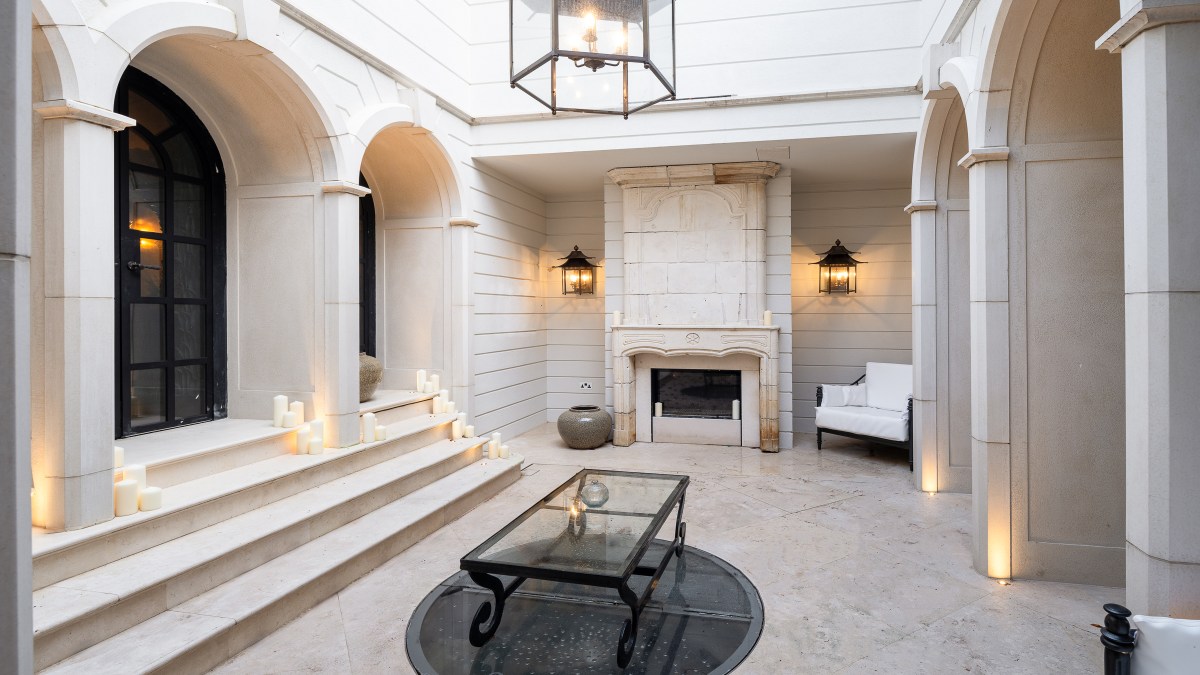
Adam Arya, a cofounder of the architecture practice Arya Douge, agrees. “A meditation space can simply be atmospheric thresholds or small pockets of stillness. To achieve that, we’ve created everything from garden-facing pavilions to secluded zen courtyards and private lightwells wrapped in natural materials.”
What are you waiting for? A closet like Barrymore’s, space under the stairs or even your forgotten loft could well have zen vibes written all over them.