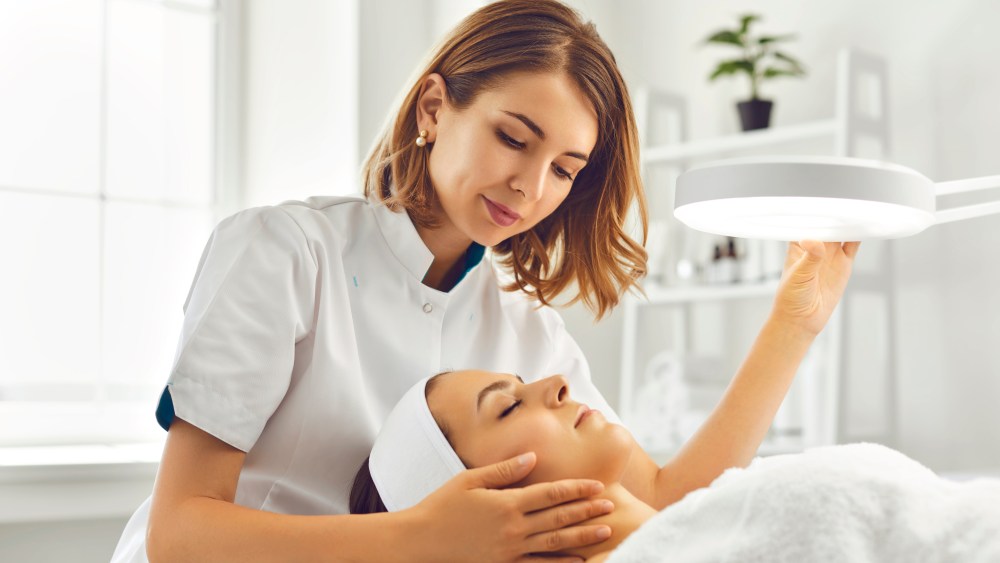
When it comes to antiaging, noninvasive treatments are on the upswing, and K-beauty services are piloting the flight.
One treatment out of South Korea has generated significant interest in recent months, following its FDA clearance in the U.S. this past August: Meet Xerf, the first monopolar radiofrequency skin tightening and toning device.
Launched in 2024 and developed over seven years, Xerf leverages the power of Wave Fit pulse and Advanced Cryogen Delivery to stimulate collagen production and minimize skin laxity, with minimal downtime and little to no pain.
Although it falls under the antiaging umbrella with other treatments such as Ultherapy, which has been around for more than 20 years, Xerf is fundamentally distinct. Where Ultherapy uses micro-focused ultrasound-based energy to target the tissue in three different depths on the forehead and around the chin, Xerf heats the surrounding tissue, uncoiling and loosening existing collagen so it can recoil tighter later.
“It’s a game changer and a great way to keep you lifted and looking sharp and fresh every year,” said Dr. David Kim, a board-certified dermatologist in New York. “The results are instant, and there’s no seasonality to it. The skin will get slightly pink or red for about three hours, but that’s it. Anyone in their mid-to-late 20s and up can benefit.”
Typically, patients with less skin laxity, ages 30 or younger, are recommended for two Xerf treatments per year, each three to four months apart. Meanwhile, dermatologists and estheticians suggest patients with “heavy jaws and a lot of skin laxity” wait one month in between their two appointments.
Ultherapy, on the other hand, should be performed only once a year, and even still, it can be too aggressive for patients under 30, resulting in swelling and tenderness around the jaw, as well as intermittent bruising.
“Some people get excited and want to do more than once a year,” Kim said. “And I will say, more isn’t always better. Multiple times a year can cause significant volume loss in the face. And so there’s a line at which you are going to not benefit from it.”
That said, anyone over 30 can combine Ultherapy with Xerf to stimulate skin cells, boost collagen and maintain a tight visage, without ever having to get injectables or fillers.
“These are the best treatments that you could do as a substitute for a facelift, too,” said Kim. “This is great for people who don’t want to do a facelift, or some people will even do it leading up to a facelift and afterwards to maintain the results as long as possible. But you should not wait until you’re in your 40s or 50s. It’s all about maintenance and continuing to keep your skin cells stimulated and healthy.”
Ideally, an individual will partake in the holy trinity: Xerf, Ultherapy and at-home microcurrent devices like the viral Medicube Age R Booster Pro and the NuFace Trinity+.