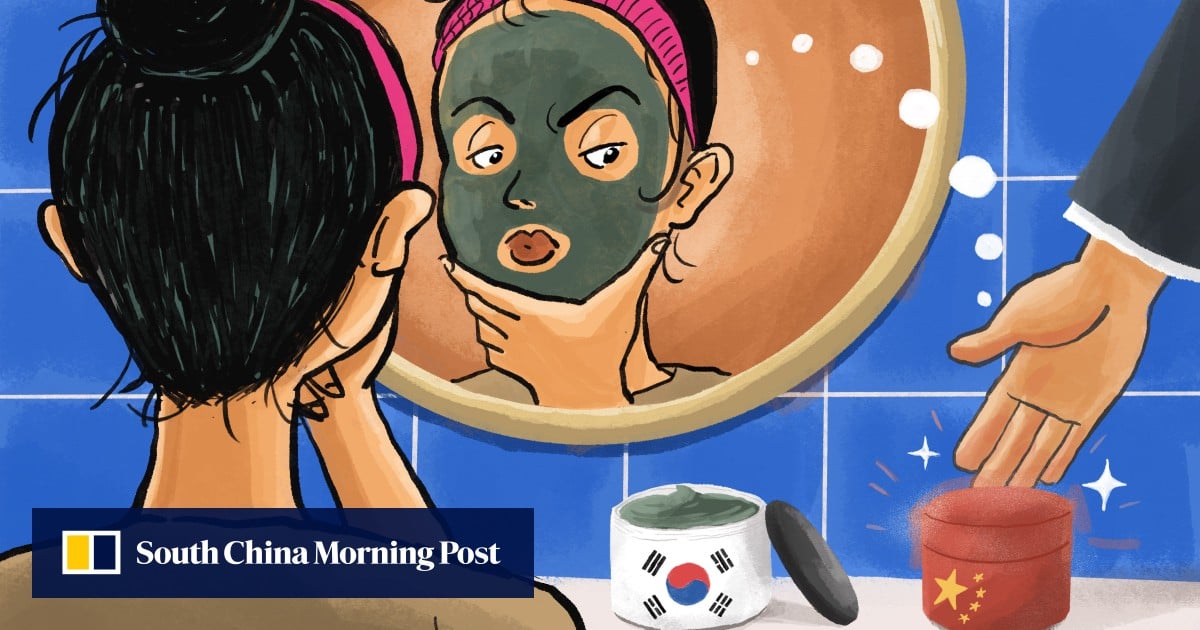
Like many of her classmates, Xie Roumei, a 28-year-old accountant from China’s Fujian province, started using South Korean cosmetics in high school – a preference she carried into her twenties.
Most of the eye make-up and beauty products she uses are still Korean, Xie said – a loyalty that has helped turn its cosmetics industry into a global powerhouse, with exports rivalling those of semiconductors and cars.Fuelled by the global appeal of K-pop, K-dramas and the “glass skin” ideal, the industry has logged record growth in recent years, making South Korea the world’s second-largest cosmetics exporter behind France.
But it may still be too early to pop the champagne. Recent data and analysis suggest that China is quietly expanding its footprint in global markets, supported by strong domestic demand in the sector and a more aggressive push overseas.
According to customs data, China’s cosmetics exports totalled US$3.99 billion in the first 11 months of 2025, an 8.7 per cent increase from a year earlier.
That still trailed South Korea’s – whose exports reached a record US$10.3 billion over the same period, up 11.8 per cent from a year earlier, official data showed – but the gap has narrowed. China’s cosmetics imports fell 3.4 per cent to US$11.63 billion, a sign that domestic brands are capturing more market share at home.
“Chinese beauty brands may arguably already exceed K-beauty in absolute value and consumer reach,” said Chloe Zhu, a consultant at Euromonitor International. “The scale of local demand provides a structural advantage that few other markets can match.”