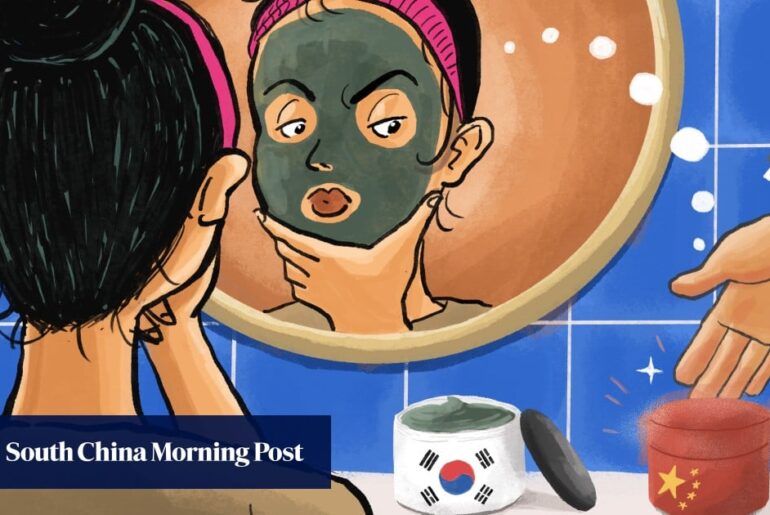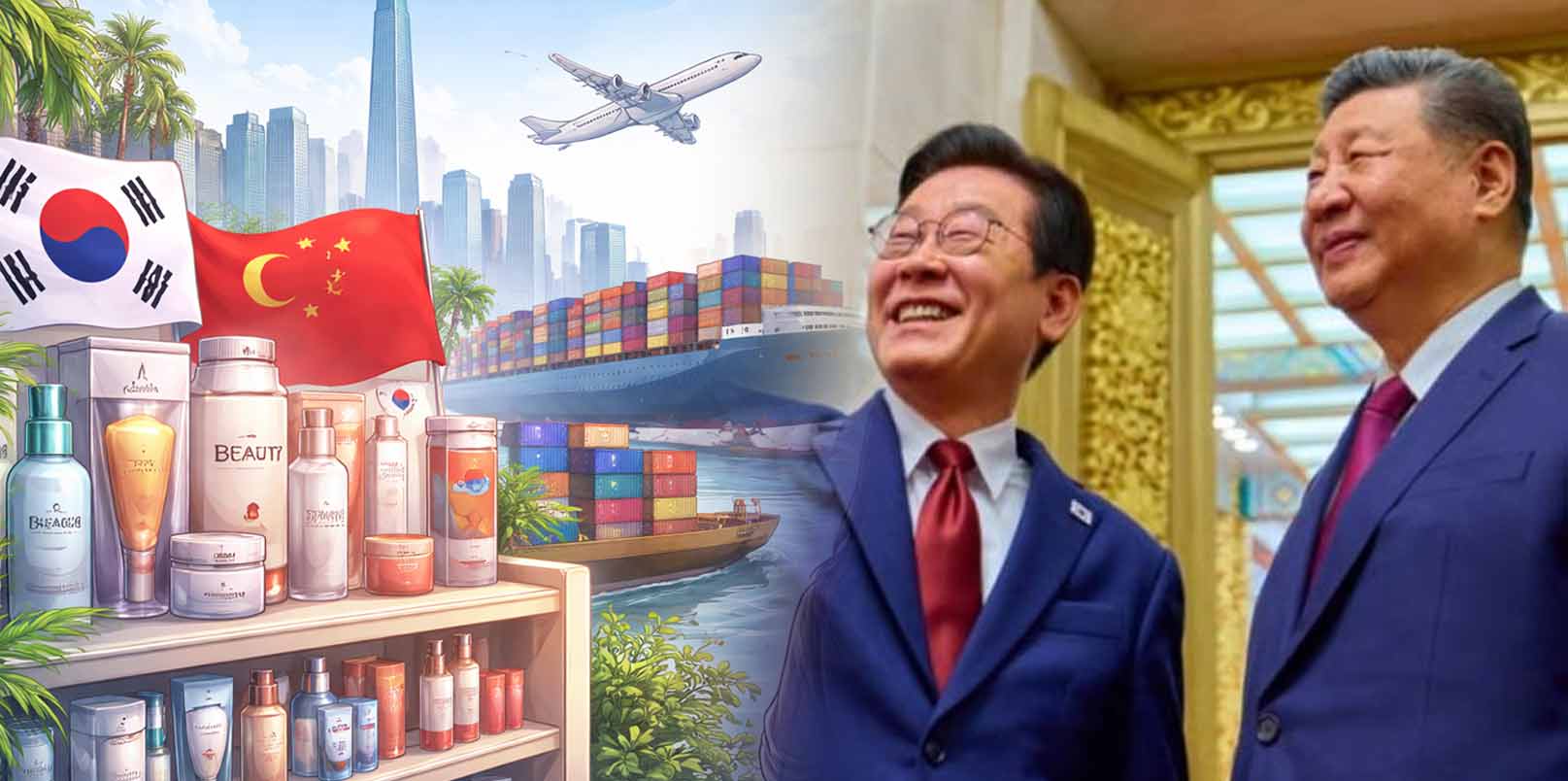
Korea’s long-frozen trade with China is showing early signs of a thaw following President Lee Jae-myung’s state visit to Beijing—the first in nearly eight years. Yet for K-beauty, the return of opportunity is not the return of the old market. In an ecosystem reshaped by C-beauty dominance, platform regulation, and shifting consumer behavior, success now depends on adaptability and innovation, not legacy appeal.
Diplomatic Reset Rekindles Hope for Korean Beauty Exports
President Lee Jae-myung’s meeting with Chinese President Xi Jinping on January 5, 2026, signaled a potential turning point in bilateral relations. The visit, which included the signing of multiple bilateral memoranda and a state dinner between the two leaders, revived expectations for the easing of China’s informal “Korean Ban” that has constrained cultural exports and consumer goods since 2017.
The optimism gained symbolic momentum when Korea’s First Lady Kim Hye-kyung attended a K-beauty event in Shanghai, engaging Chinese influencers and showcasing products from Korean small and mid-sized brands. The inclusion of APR Corporation’s Medicube beauty device among official diplomatic gifts further underlined Korea’s renewed cultural and technological outreach.
For many in the industry, these gestures raised hopes that previously restricted retail and marketing channels in China might gradually reopen. Before the THAAD dispute, China accounted for nearly 40% of Korea’s cosmetics exports, according to KOTRA data. By 2024, that figure had fallen to about 25%.
A Transformed Market: C-Beauty Dominance and Cautious Optimism
Still, the China that K-beauty hopes to re-enter in 2026 is not the same market it left behind.
Industry data from Qianzhan Intelligence show that China’s cosmetics market contracted by 2.8% in 2024, while imports fell 8.3%. In contrast, local brands grew 7.5%, capturing more than half the domestic market share.
Chinese “C-beauty” labels such as Florasis and Flower Knows have mastered influencer-driven marketing and digital retail strategies, expanding their dominance through live commerce platforms like Douyin and Xiaohongshu. Global giants such as Estée Lauder and Lancôme reported negative growth in China last year, reflecting a structural shift in consumer loyalty toward domestic brands.
A Korean industry official commented,
“China remains an attractive market in size, but the way it operates has fundamentally changed. Success now depends on localization and understanding Chinese digital ecosystems, not on the old K-beauty playbook.”
K-Beauty Optimism Tempered by Market Realities
Across Korea’s cosmetics sector, sentiment remains mixed. Industry insiders acknowledge that diplomatic gestures alone cannot reverse years of market transformation. One senior executive noted,
“The Chinese market is still unstable. For Korean cosmetics to regain momentum, the broader K-culture ecosystem needs to reactivate, and that will take time.”
Others point to rising uncertainty around Chinese consumer confidence and evolving platform regulations,
“We can be hopeful, but this is not the time for aggressive expansion. It’s about reading the new consumer logic—C-beauty has changed the rules.”
Even within China, Korean products face competition not only from global peers but from increasingly sophisticated local challengers. The visual and marketing sophistication of brands like Flower Knows—which recently opened a pop-up store in Seoul—illustrates how Chinese beauty is now exporting its aesthetics back to Korea.
The Startup Test Behind K-Beauty’s Next Chapter
The reopening of Korea–China trade channels offers not just a commercial rebound, but a stress test for Korea’s startup-driven consumer industries.
Small and medium-sized enterprises (SMEs) accounted for over 90% of Korea’s cosmetics exporters in 2025, contributing to a record USD 10.36 billion in exports between January and November. Yet experts warn that over-reliance in a single sector could expose structural vulnerabilities.
Roh Min-sun, a senior researcher at the Korea Small Business Institute stated,
“The cosmetics sector has grown quickly due to low entry barriers and the K-beauty image. But as competition intensifies, margins are tightening. Korea needs to nurture K-beauty while also expanding to new consumer categories.”
Analysts and trade officials see opportunities in combining cultural exports with consumer products—what some term “content-linked goods.” KOTRA suggests integrating K-pop, K-drama, and lifestyle branding with everyday products such as functional foods, pet goods, fashion, and compact health devices.
In an era where storytelling drives consumer connection, smaller companies can leverage agility and cultural resonance to differentiate beyond cosmetics.
A Market Reopened, but Reinvented
China’s potential reopening offers Korea’s beauty industry a second chance—but not a repeat performance. The K-beauty wave that once rode the Hallyu boom must now prove it can evolve in a data-driven, influencer-dominated marketplace shaped by domestic Chinese powerhouses.
For Korea’s startups and SMEs, the task is not to relive the past but to outthink the present: building localized, tech-integrated, and culturally adaptive models that redefine what “K-beauty” means in Asia’s most competitive consumer market.
– Stay Ahead in Korea’s Startup Scene –
Get real-time insights, funding updates, and policy shifts shaping Korea’s innovation ecosystem.
➡️ Follow KoreaTechDesk on LinkedIn, X (Twitter), Threads, Bluesky, Telegram, Facebook, and WhatsApp Channel.