“Cancer and Alzheimer’s disease sit at opposite ends of several core biological processes,” explains Jordan Weiss, a longevity researcher in the Division of Precision Medicine and Optimal Aging Institute at NYU Grossman School of Medicine who was not involved in the study. “Too much of something predisposes you to one of those outcomes, not enough of it predisposes you to the other.”
These shared biological processes have to do with the immune system and the way the body clears out proteins to keep them from building up. The new study provides additional evidence that the immune system may play a bigger role in the development of Alzheimer’s disease than we originally thought. “Now we’re seeing Alzheimer’s disease […] as a disease of failed immune homeostasis in an aging brain,” Weiss says.
An immune system that’s too active can lead to the death and destruction of neurons you see in Alzheimer’s patients, while too little immune system activity can allow cancer cells to survive. Similarly, clearing proteins too aggressively can destroy proteins that are useful for keeping your body healthy, while not clearing them aggressively enough can lead to the accumulation of proteins in the brain, known as plaques, leading to neuron damage.
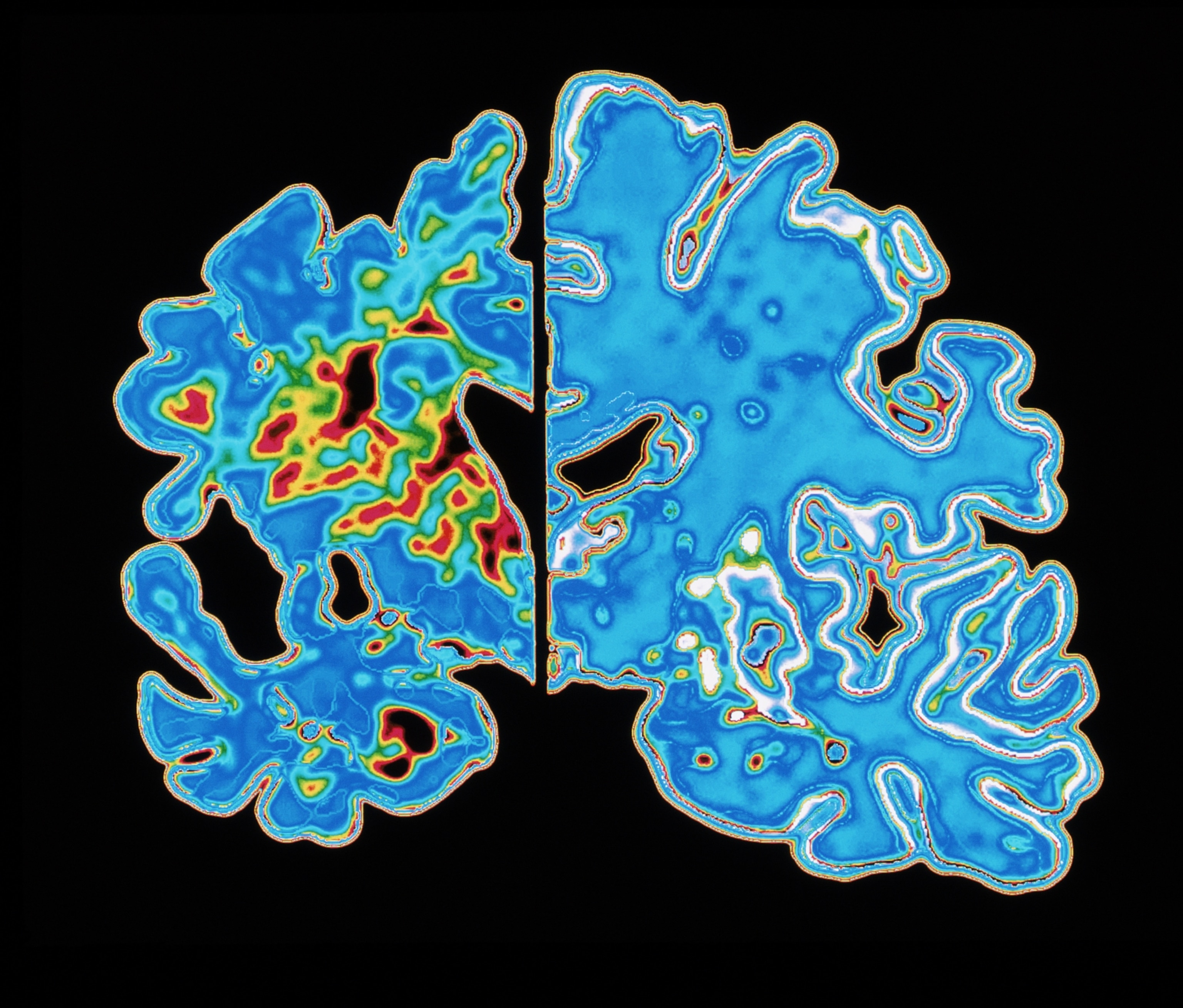
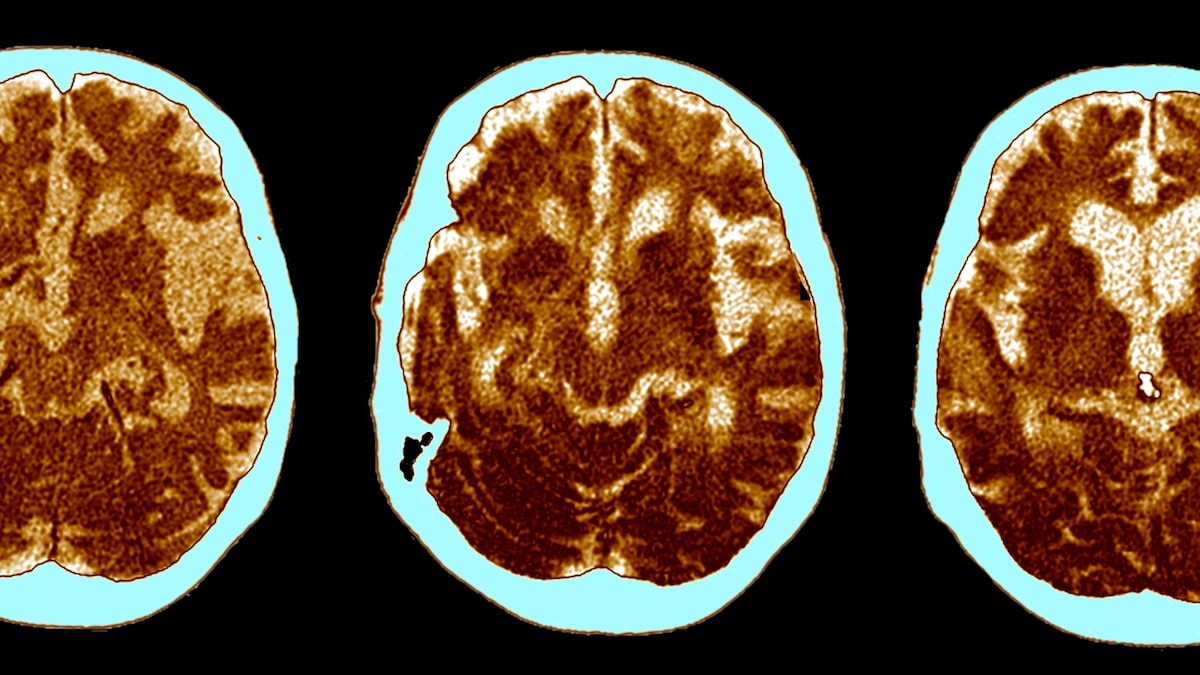
This graphic compares the brain of an Alzheimer patient (at left) with a normal brain (at right). Apart from a decrease in brain volume, the defining characteristics of Alzheimer’s are tangled protein filaments in nerve cells as well as a buildup of beta-amyloid protein called amyloid plaques.
Alfred Pasieka, Science Photo Library
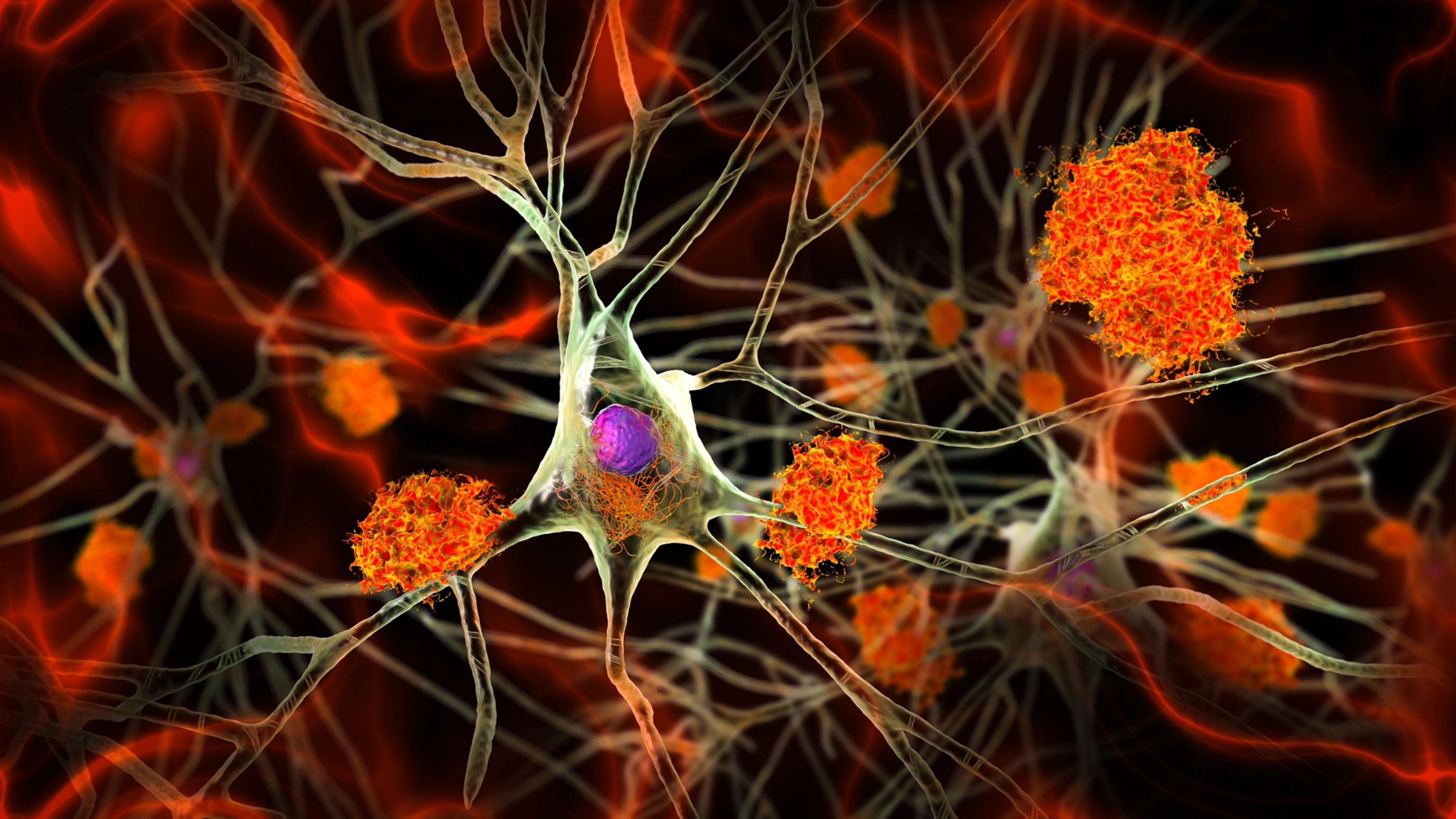
Amyloid plaques have long been thought to cause Alzheimer’s disease by damaging neurons in the brain. However, new research suggests that the immune system’s response to the plaques may be the real culprit.
Kateryna Kon, Science Photo Library
A link between cancer and a reduced risk of Alzheimer’s
The link between cancer and a reduced risk of developing Alzheimer’s has long been observed.
One study, published in 2012, found that cancer survivors had a significantly lower risk of Alzheimer’s, while people with Alzheimer’s disease had a lower risk of being diagnosed with cancer. Another major study, published in 2024, looked at over three million individuals and found that cancer survivors had a 25 percent reduced risk of developing dementia. A third study, published in 2025, found that APOE disease, a risk factor for Alzheimer’s disease, was also linked to a reduced cancer risk.