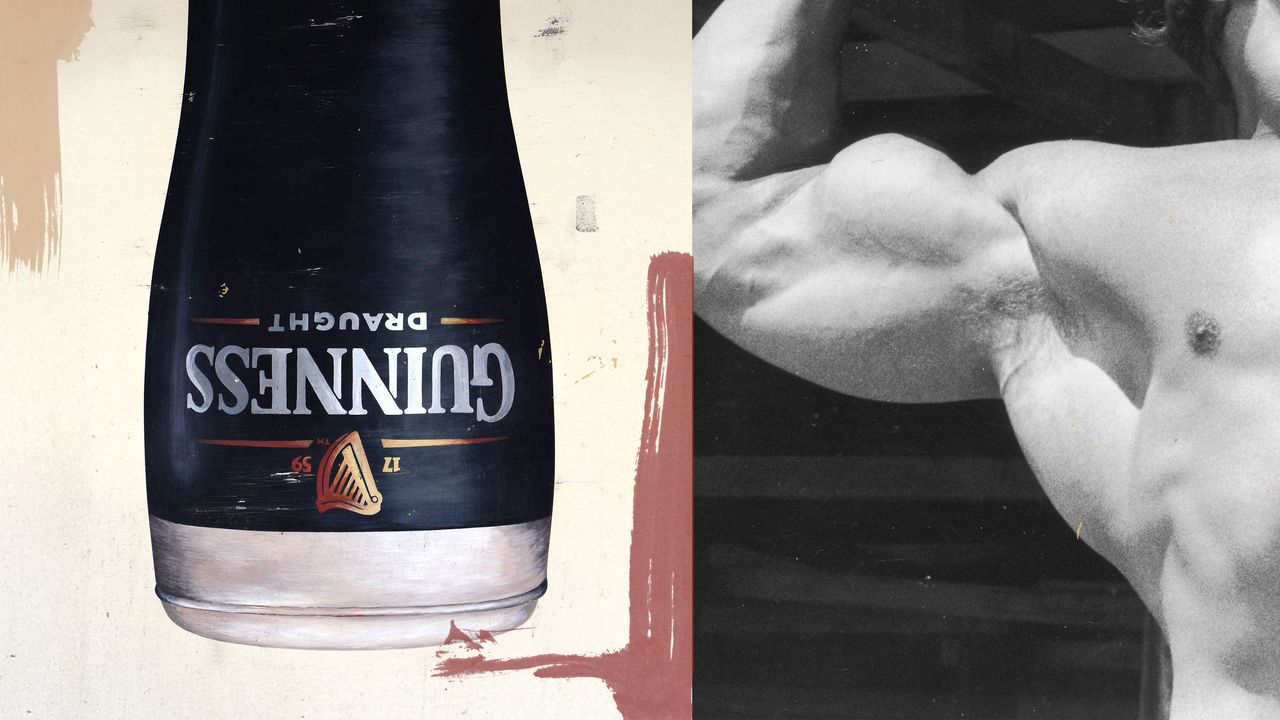
We know that drinking alcohol is probably not the best thing you can do to extend your lifespan. And research has shown that activities like strength training and improving your V02 max can help add years to your life. But if you had to focus your energy on just one of these—in other words, saying goodbye to the bar or getting underneath one a few times a week—which would do the most to extend your longevity?
That’s what a new study aimed to uncover—and the results may surprise you. In a good way! That is, if you’re not ready to give up drinking. No, alcohol is not suddenly healthy. And fitness is still the best investment you can make in your health. But the relationship between the two isn’t as simple as previously thought. And, depending on your current fitness level, hitting the gym might be a better new year’s resolution for improving your longevity than attempting to give up or cut down on your drinking.
What the study found
The Trøndelag Health Study, also known as the HUNT study, is one of the largest ongoing health studies ever conducted. Established to analyze the health and wellbeing of a large population—including the impact of various lifestyle factors like, including diet and exercise—over an extended period of time, the study began in 1984 in the Norwegian county of Trøndelag with a sample size of about 75,000 people.
Since then, researchers have reconvened every 10 years to record new data—gathered from a range of inputs, including biological samples, questionnaires, and interviews—and enlist new participants. Four decades in, the study has collected data from well over 100,000 subjects, serving as the basis for hundreds of independent research papers.
This latest study, published last month in the journal Sports Medicine, sought to investigate how changes to a person’s fitness level and alcohol consumption might increase or decrease their risk of dying from various causes. Using data from two rounds of the HUNT study, collected a decade apart, the researchers focused on a sample of about 25,000 healthy adults, which they segmented by fitness level and alcohol usage, allowing them to observe changes to both variables over the 10-year span.
While the analysis produced some expected results (namely, that subjects who increased their alcohol intake, or started drinking, raised their mortality risk, as did those who reported a decrease in fitness level), the most notable insights emerged when these behaviors were viewed together, rather than in isolation. For instance, subjects with a fitness level in the bottom 20 percent had a considerably higher risk of dying—regardless of the amount of alcohol they reported drinking. And among participants who increased or even just maintained their fitness, mortality risk was much lower, even when they increased the amount of alcohol they drank. In other words, fitness noticeably attenuated the risk of mortality associated with drinking alcohol.
Improving fitness is better for longevity than drinking less
The study shows, unequivocally, that, if improving longevity is your goal, then improving your fitness will give you more bang for your buck than reducing your alcohol consumption. “And it’s not even close,” says Jordan Weiss, PhD, assistant professor in the Division of Precision Medicine and Optimal Aging Institute at NYU Grossman School of Medicine.
“The HUNT study shows us that being in the bottom 20 percent for fitness is more dangerous than moderate drinking, and a fit person who drinks moderately will likely outlive an unfit non-drinker,” he says. “If the average person can walk 30 minutes a day and cut drinking from five nights to two, then both are achievable. But if I had to pick one to move the mortality needle, I would always pick exercise.”