Organic gardening can boost senior wellness, mood and nutrition.Trailside Organic Farm yields 13,000+ pounds of produce annually.On-site farms are becoming key to holistic senior care models.
Research has shown that many of the benefits of organic farming, like physical activity, being outdoors and fresh, nutrient-dense food, are correlated with positive health outcomes for seniors. As members of the Baby Boom generation enter retirement and make plans for the future, senior living communities with amenities that support overall wellness—even including on-site farms—are increasingly in demand.
This phenomenon was the inspiration behind Trailside Organic Farm at continuing care retirement community Cornwall Manor in Cornwall, Pennsylvania. The onsite farm—named for the rail trails that connect the facility’s two campuses—is a collaboration with the nearby Rodale Institute, a nonprofit that advocates for regenerative organic farming practices worldwide, that began in 2021.
“We thought it would be wonderful to do a collaboration with Rodale that would provide our dining services with nutrient-dense vegetables that come directly from our farm to give our residents the best possible nutrition at a time where that is so important in life,” says Vicki Deitzler, vice president for advancement at Cornwall Manor.
Gardening has long been a pastime associated with retirees, but it’s more than a time-filling hobby. “Gardening in general is an all-around positive and feel-good benefit that senior communities can provide at minimal cost, with relatively low effort,” says Susie DiGiovanna, a gerontologist based in Newport Beach, California. Benefits like spending time outside, experiencing color and following the growth of plants throughout the season can boost mood and reduce stress. “When senior communities offer organic gardening at their sites, they increase their desirability for new residents while keeping their current residents more satisfied,” she says. “To be able to contribute to growing your own food is a huge privilege and also an encouragement to eat healthier, which everyone needs to do.”
Courtesy
Not every retirement community has the luxury of a few acres of extra space suitable for a project like Trailside Organic Farm—and even for those that do, creating a successful farm program literally from the ground up requires support from the entire organization.
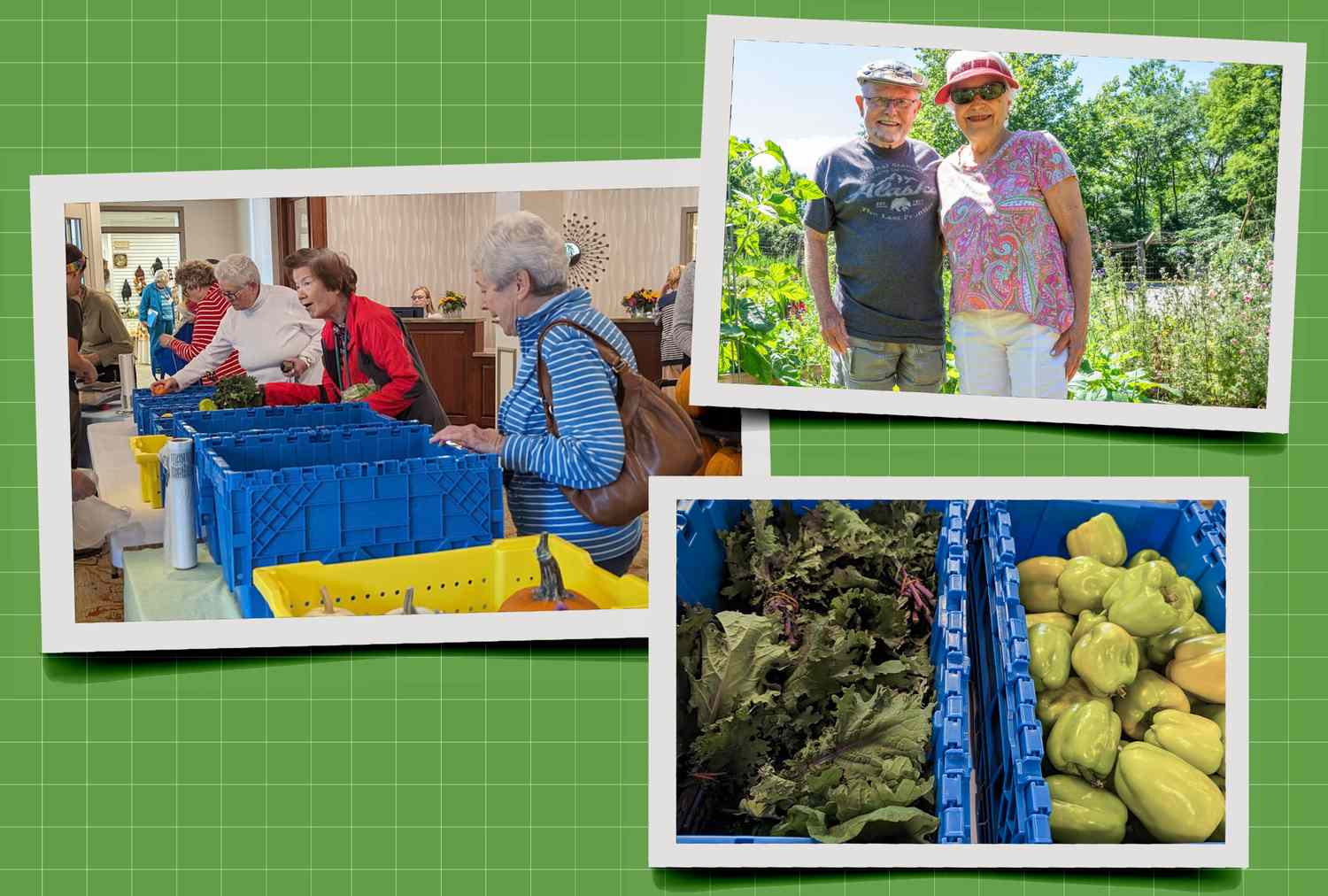
“The day that their leadership took me to see the site where they wanted to build the farm, I had to laugh to myself, because it was bare ground,” says Jeff Tkach, CEO at Rodale Institute. The sloping, rocky parcel wasn’t exactly the ideal place to grow vegetables, but the team at Cornwall Manor was willing to put in the work. With the backing of the board of trustees, the site was graded and rehabilitated; Rodale consulted on the project and employs the farm staff. Four years later, in 2025, staff and volunteers harvested more than 13,000 pounds of produce.
“Today, that two-acre patch of ground is now a thriving ecosystem,” Tkach says. “It’s got healthy soil. It’s growing healthy food.”
Courtesy
Studies have long shown positive correlations between consuming a nutrient-dense diet and healthy aging. For example, consuming organic food can significantly reduce the incidence of mild cognitive impairment in middle-aged and older women. Tkach noted that research also connects senior wellness with aspects of gardening itself—such as physical activity, spending time in nature and connecting with others. “Getting their hands in the soil is very, very good for mental health and mental acuity and mental sharpness,” he says. Older adults who garden at home or in a community garden report positive social and physical enhancements, too.
Benefits Beyond Nutrition
Seniors are increasingly seeking out continuing care communities that offer amenities designed to support wellness—not just for those in independent living, but for those in personal care and skilled nursing care as well. That means considering healthy living holistically, not just in the dining room.
“When you work in senior living, one of the first things you learn is that the resident population wants to be active,” Deitzler says. “They want to be engaged. They want experiences. They want to continue to learn and thrive.” That means offering amenities like walkable environments, access to nature, fitness programs and facilities, art programs and mindfulness and meditation classes. Getting the chance to dine from, and maybe even help grow in, an organic farm or a garden fits right into that active lifestyle.
Courtesy
For Christine Dixon, a 73-year-old resident who moved into Cornwall Manor in 2023, the farm program was a key factor in choosing a continuing care community. “Having maintained a large vegetable and flower garden at my previous home, I was reluctant to leave that part of my life behind,” she says. “Knowing I would still have the chance to dig in the dirt was essential to me.”
Dixon volunteers with the farm year-round, helping with planning and prep in the spring, washing and packing harvests throughout the growing season, and greenhouse tasks to prepare for the next season in winter. “It provides the opportunity to work outdoors, stay physically active, and connect with fellow gardeners who share a love for growing things,” she says. “The sense of community that develops through this shared work is incredibly meaningful.”
Trailside Organic Farm helps residents stay active not only through volunteer opportunities that allow residents of all ability levels to participate—whether harvesting vegetables, packaging produce or ringing up customers at the weekly residents-only farmers’ market—but by creating a venue for social events and other opportunities for residents to enjoy themselves and connect. The farm’s barn hosts square dancing sessions, art classes and even an annual harvest festival each September complete with a pumpkin decorating competition—featuring gourds grown on the farm, of course. “It’s been great to see how creative people get,” Deitzler says.
Strengthening Local Communities
In addition to supporting social and physical health at Cornwall Manor, Trailside Organic Farm provides ample opportunity to engage nearby institutions and non-resident neighbors. They’ve hosted students from area schools and universities and members of local gardening clubs; residents help lead tours of the farm. “As a country, we’re challenged with who will be our next generation of farmers, so giving students an experience of farming has been terrific,” Deitzler says.
Cornwall Manor’s dining and farm staff collaborate closely on aspects of the program like crop selection and harvest schedules, but during peak season, there’s often an abundance of certain items that’s more than the kitchen or residents can use themselves. In that case, excess produce is donated to two food access organizations in nearby Lebanon, the Chestnut Street Community Center and Lebanon County Christian Ministries. In 2025, Trailside Organic Farm donated more than 4,500 pounds of its homegrown produce.
Rodale Institute has also collaborated with another organization close by in Pennsylvania to expand access to the benefits of fresh, nutrient-dense organic produce to more seniors. Phoebe Ministries, a nonprofit senior housing provider in the area, worked with Rodale Institute to create Phoebe Organic Farm on the grounds of Rodale’s Founder’s Farm. The organic produce grown there is used for resident meals at Chestnut Ridge, a Phoebe Ministries senior living community in nearby Emmaus, with excess sold to residents for personal use. Produce from the farm is also provided at no cost to Phoebe Apartments residents, one of the senior housing provider’s affordable housing developments in the region.
The Future of Senior Wellness
As future generations age, Deitzler anticipates that demand for amenities like onsite farm programs and fresh, organic ingredients will only increase. She’s already hearing from other senior communities who want to do something similar—though many aren’t so lucky to possess land suitable for farming—and Cornwall Manor has presented about the program at state and national conferences.
As more seniors plan for and transition into this new phase of life in the coming years, Deitzler believes that amenities like onsite farms that support the hallmarks of a healthy, active lifestyle—accessible outdoor spaces, walkable layouts, opportunities to stay active and pursue interests like gardening—will only become more in demand.
“As we see each new generation of seniors coming up, it’s more and more important,” she says. “The big thing is healthy longevity. ‘We want to live here as long as we can, but we want to do it in the healthiest way.’ Our organic farm and all our wellness programs support that.”