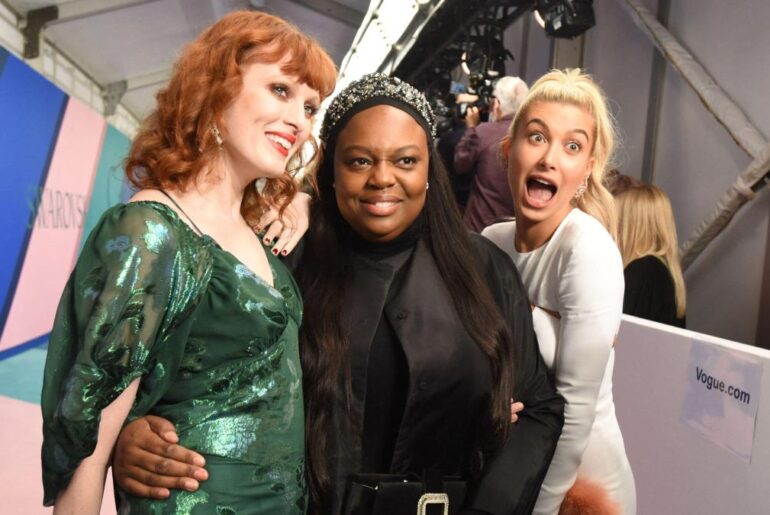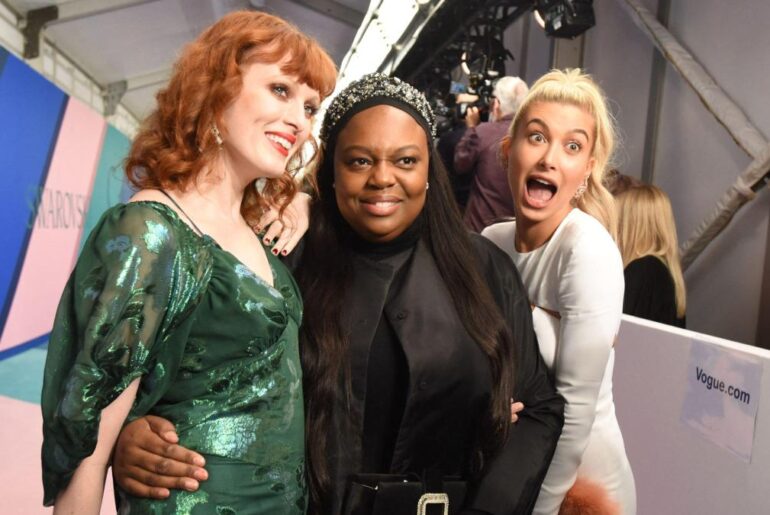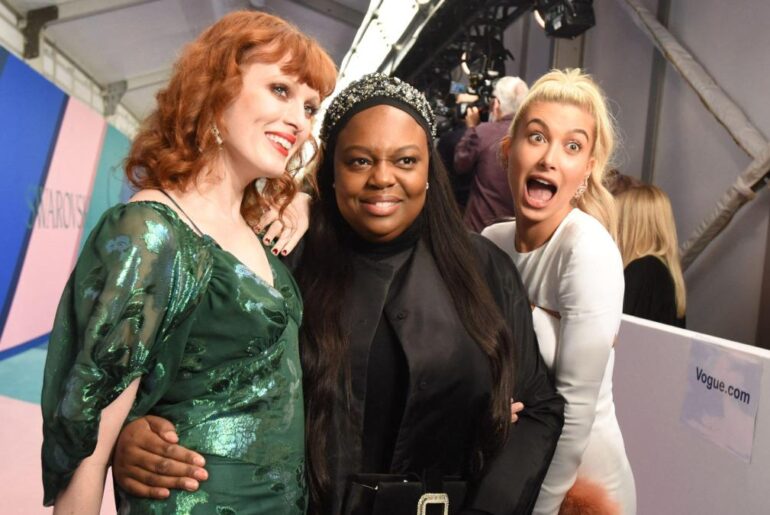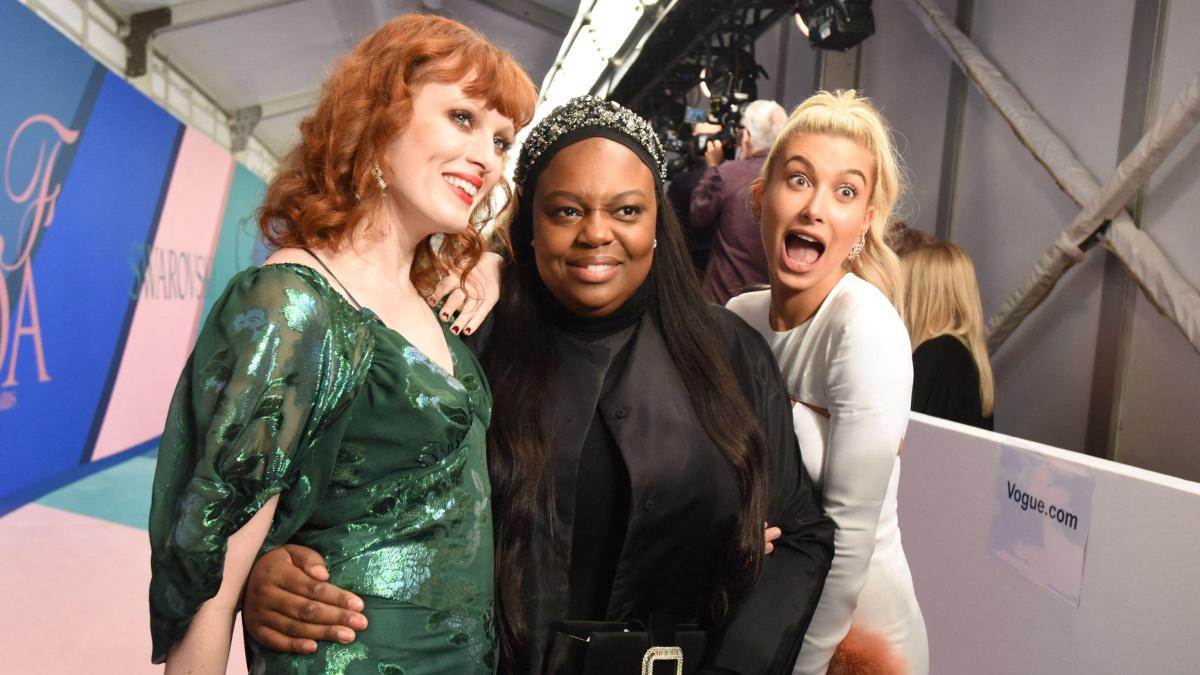
A decade ago, all that Pat McGrath touched turned to gold — sometimes literally, in the case of her gold-flecked pop-up shop in Selfridges.
The Northampton-born make-up artist moved to London after school, started off working on magazine shoots, and went on to create sought-after make-up for catwalk models. Along the way, she made cosmetics for Giorgio Armani, Max Factor and Dolce & Gabbana; transformed celebrities from Madonna and Naomi Campbell to Taylor Swift for red carpets; and was named the “most influential make-up artist in the world” by Vogue.
McGrath uses that tagline on her Instagram profile, where she has six million followers. In 2015, she launched Pat McGrath Labs (PML). Its debut product was Gold 001, a £45 metallic paint that buyers unwrapped from a gold sequin-stuffed pouch; it sold out in six minutes.
PML’s valuation hit $1 billion in 2018, when French private equity firm Eurazeo Brands, backer of Accor Hotels and Moncler clothing, invested $60 million for a 5 to 8 per cent stake. At the time, the brand had just launched in the beauty giant Sephora and was bringing in about $60 million a year in sales, giving a sky-high multiple of 17 times sales.

At the Met Gala last year with Jaden Smith, the son of Jada Pinkett-Smith and Will Smith
ARTURO HOLMES/GETTY IMAGES
Initially, the glitz kept shining. McGrath opened her pop-up shop in Selfridges in 2019. It swiftly became the department store’s biggest-selling beauty brand. PML became famous for its £115 Mothership eye-shadow palettes — so named as McGrath’s Instagram followers called her “mother” — and £30 lipsticks for every skin tone. The brand showed that embracing diversity was commercially savvy. In 2021, McGrath was awarded a damehood in the new year’s honours list.
But the lucre wasn’t to last. Last week, Pat McGrath Labs was due to be put up for auction as part of a restructuring, but instead it filed for Chapter 11 bankruptcy in a Florida court. Behind its glitzy visage — this week McGrath’s Instagram has featured reams of backstage footage from Paris Fashion Week — its own behind-the-scenes looked far less glamorous.
McGrath “was one of the first to do limited edition collections — at one point having complete virality and selling out immediately”, said Francesca Elliott, chief executive of THG’s Cult Beauty and Look Fantastic. “But her brand faltered after others ran with her strategy. Amid the huge explosion of celebrity brands in the past three years, like [Selena Gomez’s] Rare Beauty, and socially native brands, such as P.Louise, Pat McGrath Labs didn’t keep up.”
McGrath’s “porcelain doll” skin on the models at John Galliano’s Maison Margiela show in 2024 made global headlines, but customers couldn’t buy the associated “glass glow” spray until 12 months later. Amid TikTok’s “dupe” culture — whereby fans seek out cheaper alternatives to products — shoppers could try other brands in the interim.

The “porcelain doll” look became widely popular. Above, Chappell Roan, the singer-songwriter, at the Grammys last year
AXELLE/BAUER-GRIFFIN/FILMMAGIC
While other big companies offered immediately “buyable” catwalk looks, PML’s “pace of new product development slowed”, Elliott added. “In recent years, we’ve seen fewer launches and less diversification into new categories.”
Inside PML headquarters on New York’s Fifth Avenue, morale dipped. Streams of posts by former employees on review site Glassdoor complained about “toxic” working conditions and poor management. In 2024, one commentator presciently posted: “All major stakeholders stopped … sending money … half of the product development team and the head of art department [was laid off]. 70% of the operation team gone. I guess PM[L] will be bankrupt in 3 years.”
Eurazeo sold its stake to Sienna Investment Managers in 2021. That fund then wrote down the value of its investment by almost 90 per cent a year later. By 2024, Sienna reckoned its stake in the make-up brand to be worth €21.5 million, meaning the one-time beauty unicorn was now valued at just over $170 million.
Industry veteran Marcia Kilgore, founder of Beauty Pie and Bliss, said McGrath failed to secure mass appeal. “Make-up artists loved the Pat McGrath Labs’ creativity and the bold fabulous showgirl shades, but make-up artists get their products free,” Kilgore said. “And the number of civilians using deep blue glitter eyelid paint was probably just not enough to sustain sales. Make-up is a dreamer’s category and a math game.”

Touching up Linda Evangelista’s make-up during a Vogue shoot in 2004. Far left, Amber Valletta, the American model
ARTHUR ELGORT/GETTY IMAGES
Millie Kendall, founder of beauty brand Ruby & Millie and head of the British Beauty Council, points out that McGrath excelled at creating commercially successful products for other brands. Kendall knows McGrath well after first meeting her in Los Angeles in the 1980s; she worked for Japanese brand Shu Uemura and McGrath, on tour with band Soul II Soul as a make-up artist, went shopping in Kendall’s store.
“The brand’s collapse isn’t Pat,” Kendall said. “She’s a genius, she’s developed incredibly successful brands for Procter & Gamble and elsewhere: her creativity does translate to sales. The problem is that the money was coming from elsewhere: you get squeezed out by those holding the purse strings. Being backed by people who want to sell your brand, it’s hard to manage the quality. Financiers often clash with innovation and creativity.
“Obviously the challenging economic times, tariffs and Brexit were difficult to navigate, too. But the pulled auction, then Chapter 11, reeks of a backer who didn’t want to put more money in.”
Dominica Baird, an American beauty brand expert and former innovation director at Maybelline, agreed that McGrath’s brand was a victim of a culture clash between innovation and investors. “Pat’s was a very creatively driven brand, dependent on runway trends and excitement, but investors like things to be predictable,” Baird said.
For now, Pat McGrath Labs, which claimed between $50 million and $100 million in estimated liabilities in its bankruptcy filing, is still operating “while working to restructure [our] balance sheet and to forge a path to thrive”, the brand said.

With Donatella Versace in New York in 2018
ELISE LECLERC/ALAMY
Whatever happens, PML’s founder will not suffer a lack of work. “Pat will be fine: if you’re creative, and clever, like she is, there’s no damage done,” said Kendall.
McGrath, who is 55, was named creative director for La Beauté Louis Vuitton, a new line of make-up from the luxury goods giant, last March, alongside her own brand. She is known for covering as many as 100 global catwalks a year, to the extent that she’s barely in her New York home long enough to unpack, instead travelling around the world’s fashion capitals with as many as 87 trunks of make-up.
The question remains as to how many of those tubes, palettes and sprays will come from McGrath’s own brand in the years to come.