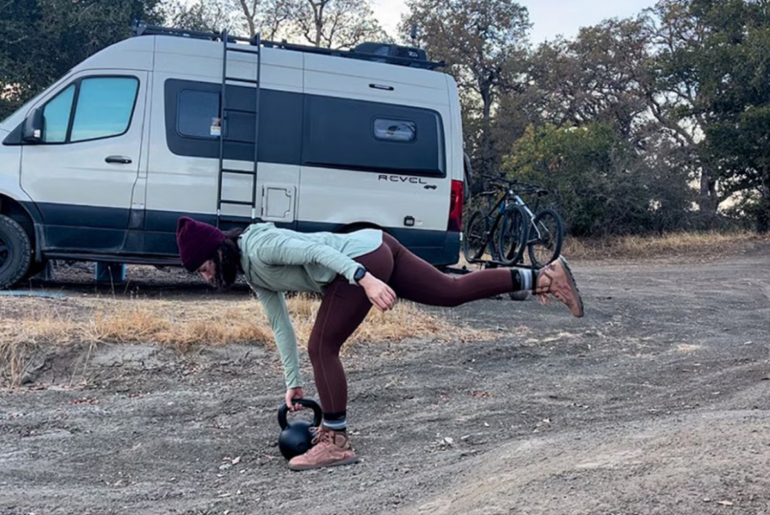
An old-world technique rooted in agricultural labor is quietly redefining how strength and endurance are being built in modern fitness and rehabilitation settings. Once confined to strongman contests and military training, the farmer’s walk has made its way into clinical protocols, athletic conditioning, and general wellness routines.
At first glance, the movement appears simple: carry heavy weights and walk. Yet its physiological impact is anything but basic. From improved cardiovascular health to postural correction, the full-body exercise delivers measurable benefits without the complexity of machines or advanced programming.
Its low barrier to entry and scalable intensity have made it attractive across demographics. In the past year, it has gained notable traction in Latin America, with regional health and fitness professionals identifying its adaptability as a key factor in its spread across different training contexts.
Full-body gains with every step
The farmer’s walk, also referred to as the farmer’s carry, involves walking for a fixed distance while holding heavy weights in both hands. It is a compound resistance movement that activates multiple large and stabilizing muscle groups in a coordinated manner.
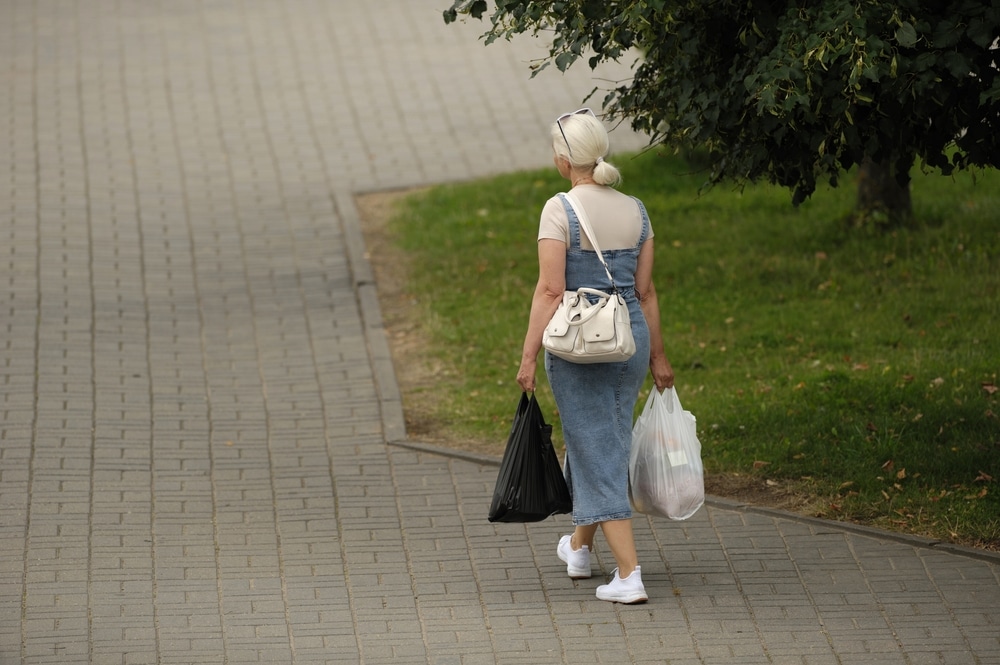 The exercise involves walking while holding a heavy load in each hand. Credit: Shutterstock
As detailed in this comprehensive guide from Healthline, the movement stimulates the quads, glutes, hamstrings, calves, abdominals, trapezius, lats, and forearms. The posture required to perform the walk properly also places significant demand on the erector spinae and core stabilizers.
The cardiovascular system is taxed throughout the effort, placing the exercise within the category of high-intensity functional training. The same Healthline article notes that heavy loaded carries can raise aerobic capacity (VO₂ max), a key indicator of heart and lung efficiency. Improvements in VO₂ max are widely recognized as correlating with reduced cardiovascular disease risk and greater endurance, particularly in older adults or clinical populations.
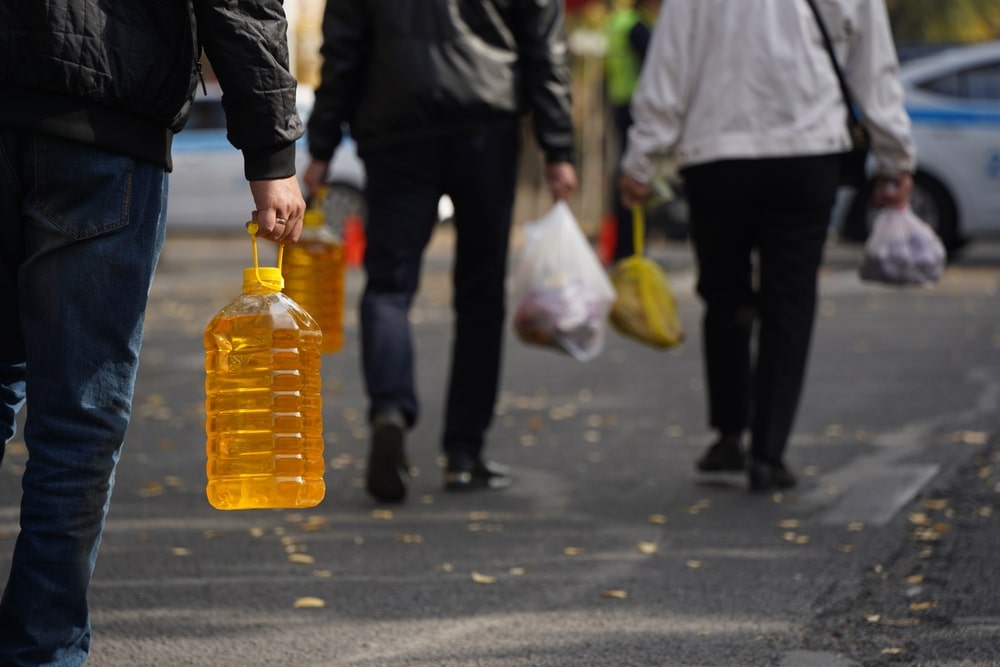 The farmer’s walk works nearly every major muscle group while also boosting heart and lung function. Credit: Shutterstock
Sports medicine practitioners have highlighted additional benefits beyond conditioning. One noted physician referred to the movement as a “moving plank,” emphasizing its effects on postural control, balance, and coordination. These attributes are essential not only for athletes, but also for those undergoing functional reconditioning after injury.
From strongman roots to clinical routines
Initially favored by strength athletes, the farmer’s walk is grounded in real-world movement patterns derived from manual labor. The modern version has been adapted with accessibility in mind, using basic equipment such as dumbbells, kettlebells, or farmer’s handles. These tools allow the user to carry weight at their sides while walking in a controlled line for a designated distance.
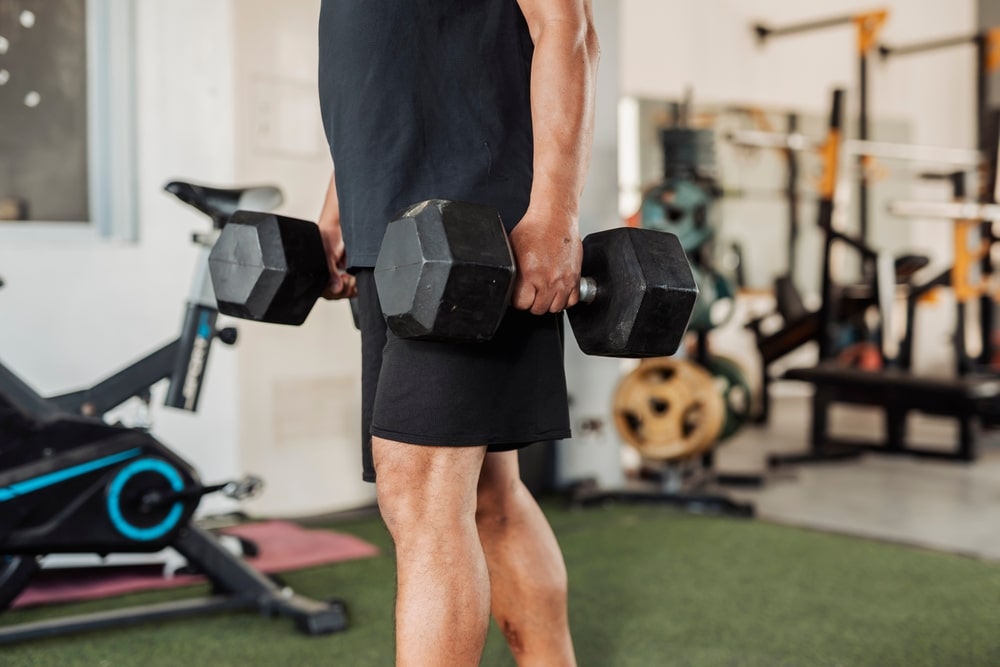 Once a strongman staple, the movement has evolved with variations like the suitcase or trap bar carry. Credit: Shutterstock
Different loading strategies produce different outcomes. For instance, the suitcase carry, where weight is held on only one side, increases lateral core activation and anti-rotational control. In contrast, the trap bar carry and rickshaw carry offer greater load stability and reduced grip complexity, making them suitable for higher-volume or rehabilitative programming.
Detailed analysis of these techniques can be found in Healthline’s breakdown of farmer’s walk variations, which outlines how each tool or configuration shifts muscle engagement and postural demand. These variations allow for progressive difficulty and offer practitioners the flexibility to tailor the movement to a user’s ability level or therapeutic needs.
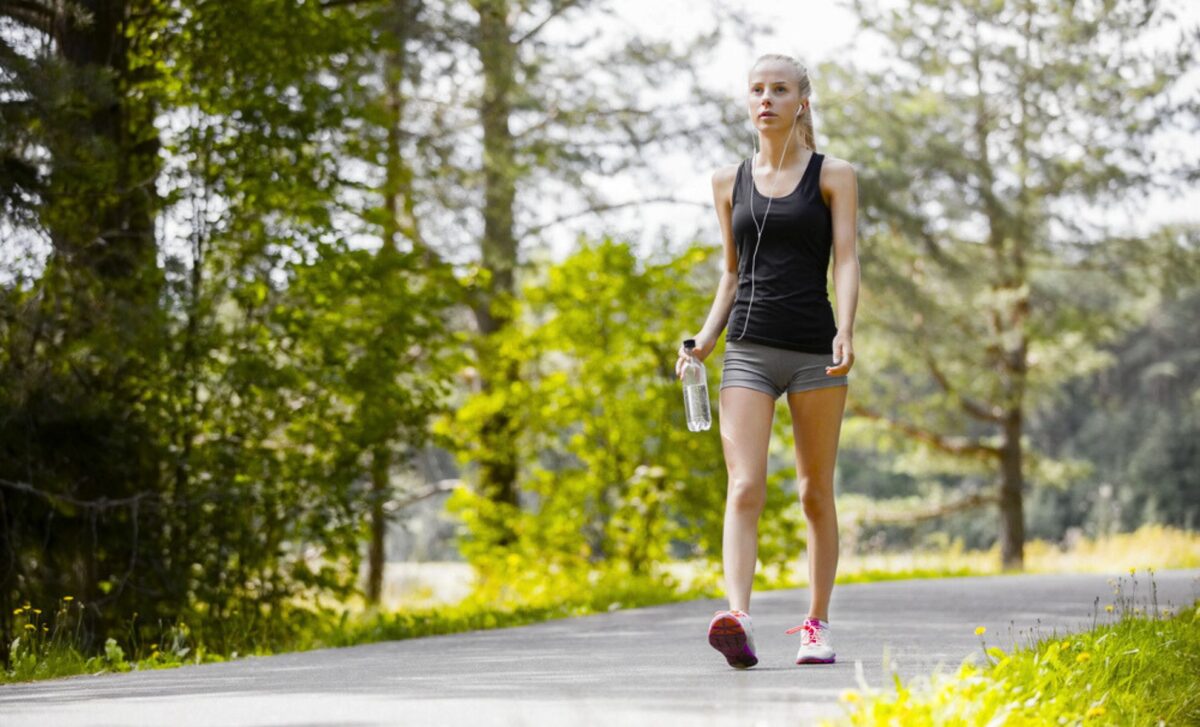
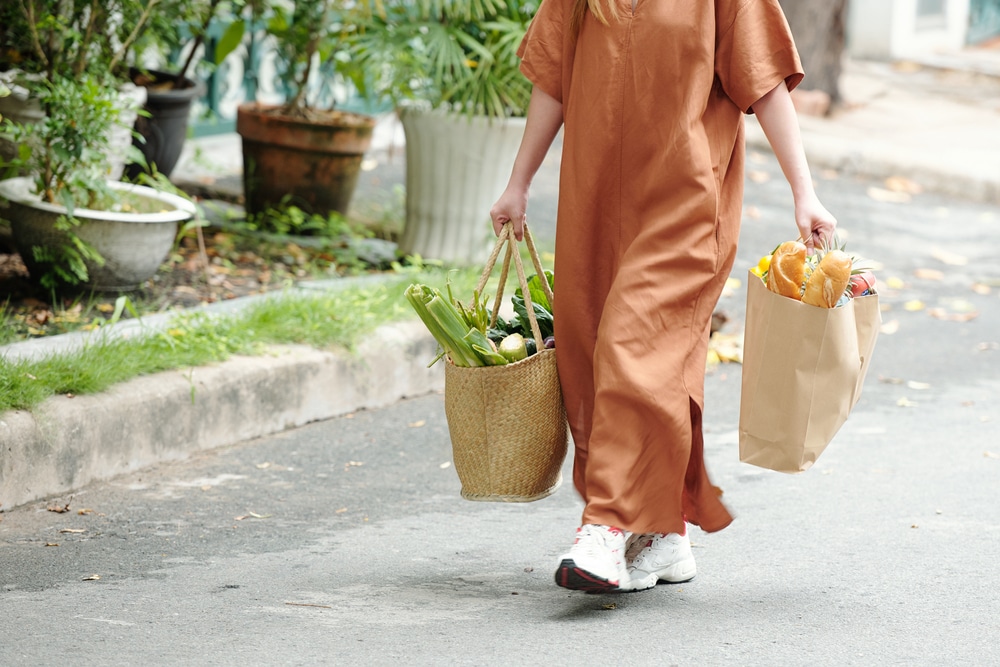 Walking increases aerobic capacity and endurance. Credit: Shutterstock
Despite its versatility, correct form remains critical. Maintaining a neutral spine, bracing the core, and controlling gait speed help reduce injury risk, particularly in untrained populations or when using heavier weights. Misalignment during walking or liftoff can result in lumbar strain or cervical tension, especially when fatigue sets in.
The rehab world is taking notice
In clinical and sports rehabilitation, the farmer’s walk has become a foundational component of load-based retraining. It is often used to support postural alignment, restore joint integrity, and rebuild muscle coordination following periods of disuse or surgical recovery. Emphasis is placed on gradual progression in both weight and distance, allowing controlled exposure to load-bearing movements.
The inclusion of the farmer’s walk in high-intensity training formats has been supported by peer-reviewed findings. For instance, a study in the World Journal of Cardiology, cited in relevant health reporting, linked interval-based resistance movements to improvements in VO₂ max and cardiovascular performance, reinforcing the value of these functional exercises in endurance programming.
@fitness__kaykay Enhance your performance with the power of KB carry variations! 🙌🏼🔥 From farmer walks to overhead strolls, these kettlebell exercises are your secret weapon for a • stronger core, • improved posture, • and elevated overall performance. No complex routines, just simple moves to level up your strength game. Ready to boost your performance? Let’s carry our way to success! 🚀 Include them for example as a superset with a compound exercise or finisher: HOW TO INCORPORATE: Day 1: KB Farmer Walk 3 x 30 Seconds Day 2: Dual Overhead 3 x 50 m Day 3: Front-Rack 1 x 400 m (only pause when needed) Thank me later. 😘🤝🏼 #corestrength #farmercarry #loadedcarries #coreworkout #kbcarries #kettlebellworkout #functionaltraining ♬ original sound – Beyoncé (FP)
Another key benefit emphasized in Healthline’s coverage is the improvement of grip strength, which is a strong predictor of overall muscular health and has been linked in clinical research to mobility, mortality risk, and cognitive performance in aging populations. The repetitive act of carrying a weighted object over time enhances forearm and hand musculature, often neglected in conventional gym programs.
Early-stage integration of the farmer’s walk into fall prevention training for older adults is also underway in several outpatient clinics. Therapists are using it to retrain balance, gait stability, and core control, particularly in patients at risk of functional decline or recovering from orthopedic injuries.