Roshni Ram
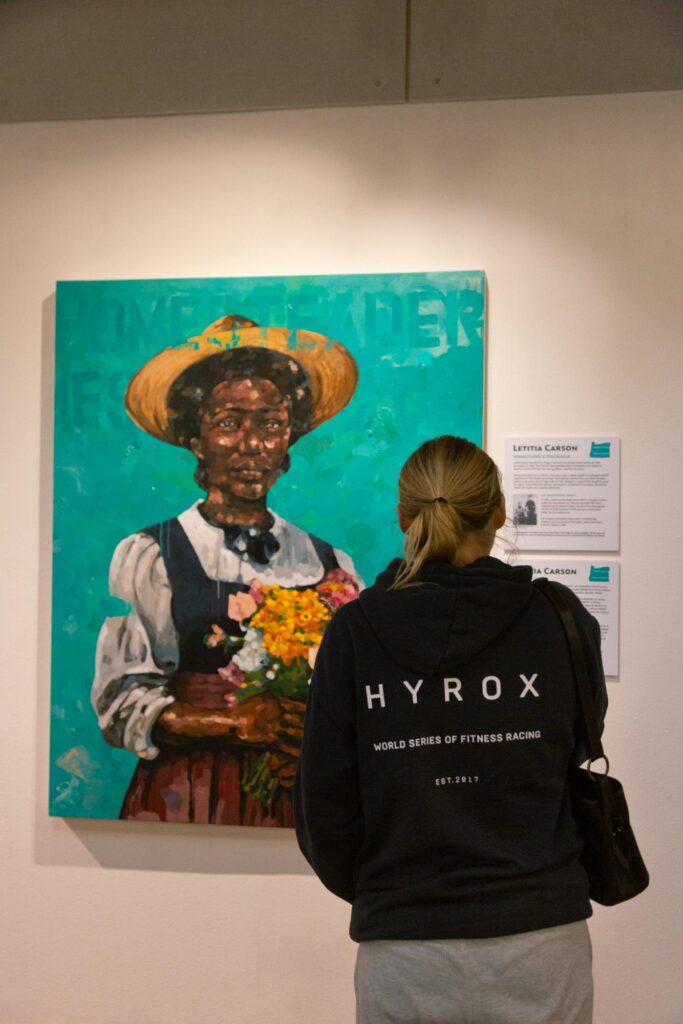
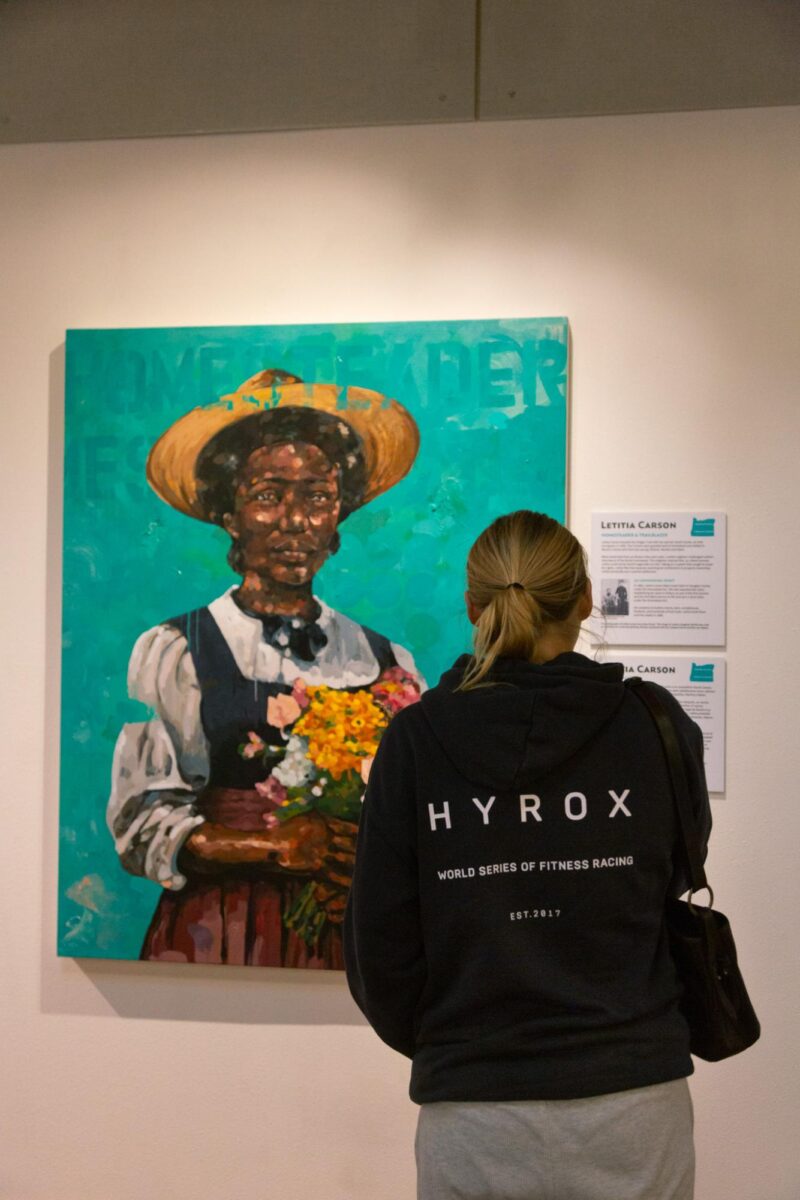
Museum of Natural and Cultural History’s new exhibit: Re-evnisioned: Contemporary Portraits of Our Black Ancestors. (Roshni Ram/Emerald)
The Museum of Natural and Cultural History’s new “Re-Envisioned” exhibit shines a light on the reality of Black history in Oregon for students on campus. With the help of the Salem Art Association, Bush House Museum and artist Jeremy Okai Davis, the museum successfully created an exhibit showcasing the beauty of how art and history overlap, running until June 21, 2026.
During the exhibits’ opening weekend, MNCH displayed 10 portraits of different Black pioneers who each had a strong historical mark in Oregon. Ranging in time and accomplishments, these colorful portraits are meant to honor and educate people about the significance of these pioneers in shaping our state. Black Oregonian pioneers were long overlooked, which is something that was stressed by the museum.
The artist was commissioned by the Salem Art Association to paint said portraits. Davis made an art career based around figure and portrait painting. He has a unique and fascinating personal style of almost pixelated color blending, creating a realistic and eye-catching portrait from afar, and an almost abstract style up close.
Davis also had an interest in painting African American individuals who weren’t spotlighted in history, leading him toward this project. The goal of Davis’s work was for the 10 paintings to migrate around the Northwest, but now at the MNCH, all 10 are displayed together for the first time.
The art was only one aspect of this collection. Gwen Carr, director of the Bush House Museum in Salem, worked alongside Davis to gather research and stories of the people depicted in the paintings. In the museum, every painting is paired with a small clip of information about the individual and their contribution to Oregon history.
“It’s the combination of art and history, and that’s why I was attracted to it. Frankly, in today’s environment, a lot of organizations and museums are kind of running away from that,” Carr said. “What I liked about this organization and why I agreed to be a part of it was because I felt this organization was running toward it.”
Carr was connected to Davis because of their shared historical knowledge on the subject, and helped gather information and photographs for Davis to use for his paintings. Both Davis and Carr described it as the hardest part of the process, due to the lack of photographs of African Americans in Oregon; they were able to collect nine out of the 10 photographs of the Black pioneers.
One of the pioneers, Letitia Carson, however, didn’t have a picture reference. Davis used pictures of Carson’s daughter and, with the help of his background in graphic art, he was able to create a rendition of what she would have looked like.
The process was difficult, but prosperous, as Davis and Carr said. The painting of Carson is their personal favorite. With all the information on display in the “ReEnvisoned” exhibit, Carr and Davis hope students walk away with questions about African Americans’ history in shaping Oregon, inspiring them to dig deeper into why there aren’t more Black people in Oregon.
“Forefathers and foremothers of people who lived here were Black and had lives and prospered,” Davis said. “And I think it’s important for people to see that from the jump when they get to campus or when they get to Oregon. Just to know that the narrative that’s been painted a lot of the time isn’t as whitewashed as many people lead you to believe.”
Oregon has a history of forcing Black people out of the state’s narrative, with the Oregon black exclusion laws vin place between 1844 and 1926. But even in spite of those, African Americans were still here. “Largely, the stories in the exhibit aren’t told, and a lot of people don’t realize there is Black history in Oregon,” Carr said. “It is significant because they were community members who lived in the cities and rural areas in spite of Oregon’s famous Black exclusion laws.”
Davis also expressed his appreciation for the MNCH giving this source of information to its students, which is something he didn’t have when he attended university. “We are not newcomers here, and we shouldn’t be treated as newcomers,” Carr said. “Come to learn something I bet you didn’t know anything about.”