I have a memory that I frequently find myself returning to these days.
I’m in high school and we’re in the change room at the local pool for the dreaded stint of swimming. Like most of my peers, I am embarrassed by my body and am therefore changing into my swimmers under a towel.
The changing room is filled with older women – in my memory, they’re elderly, which means in reality they were likely all somewhere between 40 and 60 – and they’re naked. I am horrified by this, but not because I am awkward about witnessing their nudity. Instead (and I acutely remember this being my thought at the time), I feel sad and disgusted by the complete lack of care these women have at the impression their bodies will make on the rest of us.
They walk calmly between the showers and the mirrors, bodies on display, jiggling, sagging, flopping. Didn’t they realise they were meant to be ashamed to look like that?
At the very least, I thought, they should quietly fade into the background, or make their bodies occupy as little space as possible. It was the logical survival strategy that I imagined I would one day follow.
Now, in the classic Uno reverse card of life, the revulsion I had for those women has morphed into pitying shame for my younger self. I can see now I was held hostage then, and 20 years after, by the patriarchal obsession with youth and beauty standards, and that I thought occupying the world without care for how you were perceived in accordance with these was a sign you had given up.
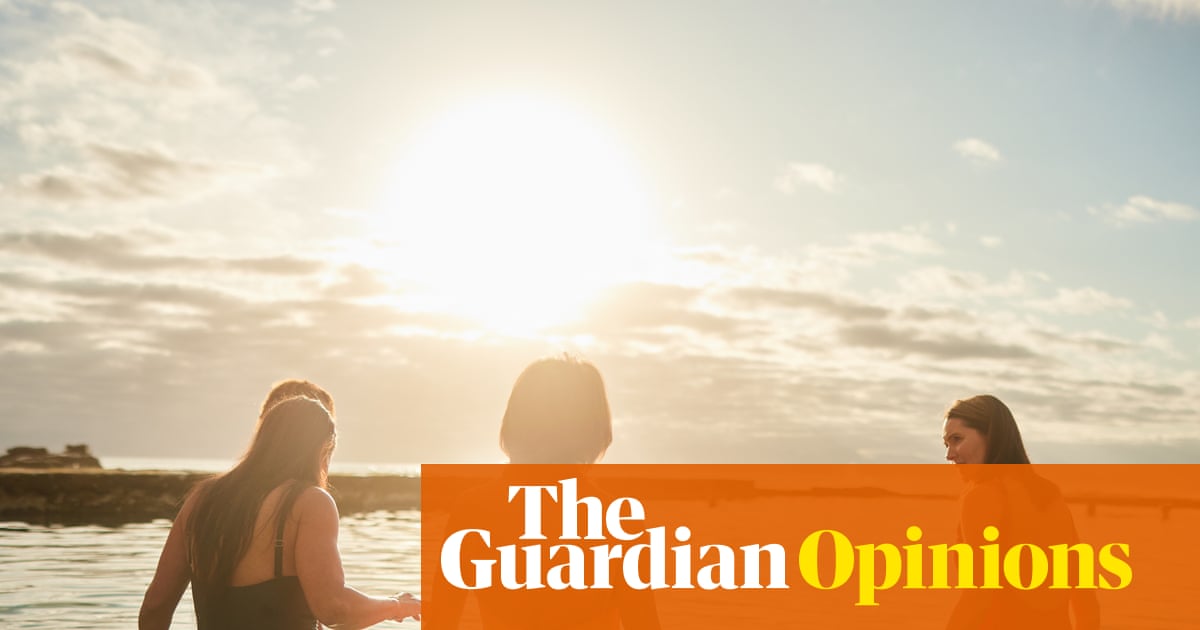
I’m now 36 years old and recently I was at the beach. I looked down and saw my own dimply, cellulite-ridden thighs, stubbly legs, and considered my makeup-free, increasingly puffy and lined face.
“Huh. Would you look at that? I literally could not care less what I look like right now,” I thought. I had arrived, swum in the ocean, played with my son and not thought once about how others might perceive me. It was liberating.
Yet hours before I had been researching whether a lymphatic drainage brush could help reduce my under-eye bags, and had spent the better part of the two years since giving birth trying and failing to starve my body down 3kg. The contradiction perplexes me.
I can see now I was held hostage then, and 20 years after, by the patriarchal obsession with youth and beauty standardsZoya Patel
How can I be both aware of the endless drain that beauty standards place on my mental and physical energy, and simultaneously unable to escape their clutches? As a feminist, I am critically conscious of the patriarchal construct of women’s attractiveness being inherently linked to our social value. As a heterosexual woman, I am forever aware of the role male attention plays in our self-regard, how we regard each other as women, and how society more broadly categorises our relevance.
And yet I swing wildly from wanting to eschew any sense of striving for some ideal physical appearance and convincing myself there is some golden ratio of weight/clothing/haircut/skincare that will finally satisfy the part of me that has been desperately trying to attain attractiveness since I was in that changing room decades ago.
Here’s what I’m starting to realise about being considered beautiful as a woman: it must be very tiring. I imagine once you’ve had the experience of being told you’re attractive, you want to hold on to that status, but as standards continue to escalate past what is normal this is increasingly hard to do.
In contrast, when you’ve never really been considered conventionally attractive, you’re forced to find other ways to value yourself. Even as I’ve spent my entire adult life wanting to look different, I’ve also on a more practical level found and cultivated other parts of myself that have nothing to do with appearance.
I am confident of my intellect, my empathy, my friendships, my creativity. I’ve witnessed other women – especially those who are beautiful and have been consistently told they’re beautiful – correspondingly doubt these other parts of their personhood. It’s as though we’ve accepted the rule that we can’t possibly have it all and swapped insecurities accordingly.
I can’t help but wonder what would happen if looks were never part of the equation on a more fundamental, societal level.
When we can no longer conform to the increasingly unattainable beauty standards, perhaps a freedom to be ourselves can emerge. Age provides a wonderful, and inevitable, opportunity to embrace this shift, if only we stop trying to surgically forestall its effects.
I think of those women in the swimming pool changing room now and recognise in their display of their normal, strong, useful bodies the choice to see themselves as more than just ornamental vessels; those bodies swam. They created waves, and shifted tides, and undoubtedly were misdirected by the rips of gender norms, and sometimes found themselves limited to the swimming pool when they wanted the whole ocean. But they were undoubtedly, unapologetically alive.
Zoya Patel is a writer and editor based in Canberra