In June 2025, two women were convicted of forced labor conspiracy in the Eastern District of New York. No one was physically restrained. No one was threatened with violence. No substantive crime of forced labor was charged. Nine out of 35,000 former participants in a meditation and wellness company testified that they had consented to their experiences at the time, but came to regret them years later. The jury convicted on a theory of psychological coercion.
The prosecutors are seeking 14 to 20 years for each defendant.
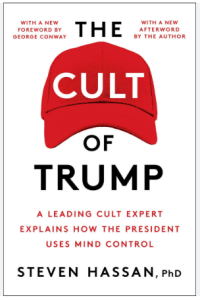
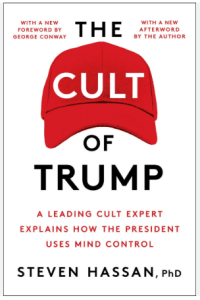
That conviction created a precedent. The precedent is now available to any federal or state prosecutor in the country. And the framework behind it — a psychological model called the BITE model, published in the FBI Law Enforcement Bulletin and taught to federal agents by its creator — has already been applied, in a bestselling book, to the President of the United States. The book is called the Cult of Trump. Its author is Steven Hassan.
What the Prosecutors Actually Argued
The case is US v. Cherwitz. The defendants are Nicole Daedone and Rachel Cherwitz, founder and executive of OneTaste, a San Francisco-based company that offered classes in meditation and orgasmic practices. The government charged a single count: conspiracy to commit forced labor.
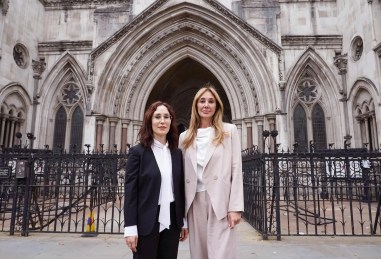 Rachel Cherwitz and Nicole Daedone
This was the first stand-alone forced labor conspiracy charge in US history with no underlying substantive crime. It was the first federal human trafficking prosecution based on psychological coercion alone. And it was the first conviction secured using the theory of “coercive control” — a concept borrowed from domestic violence psychology and never before tested in a trafficking case.
The government’s theory, as stated to the judge by AUSA Kaitlin Farrell:
“I think, as your Honor understands, our theory of the case is that the defendants put some of the testifying witnesses, our victims, in psychological distress and also taught them concepts that taught them basically to consent to everything and to be willing to engage in certain sexual activities that even at the time they would have viewed as something they wouldn’t consent to, but they did so because they were taught this was a philosophy or a religious practice that was good for them, and if they continued to do it they would reach enlightenment.”
Read that again. The crime, as articulated by the federal prosecutor, is that the defendants taught a belief system. The witnesses consented. They consented because they were taught a philosophy. The philosophy is the crime.
In closing arguments, prosecutors addressed the fact that every witness was a college-educated adult who had freely chosen to participate:
“The Defendants argue that these were grown women, these were adults. And they were educated, they were smart. They did walk in here with degrees and careers and they were clearly thoughtful, conscientious people. Members of the Jury, that just shows how powerful the coercion was in this case.”
 The nine complainants all college educated white women
Under this theory, competence is evidence of coercion. Education is proof of manipulation. Consent proves the brainwashing worked. There is no fact pattern that results in acquittal.
The prosecution’s rebuttal made the framework explicit:
“In their closing arguments, defense counsel have focused on the idea that the Government has to prove that the defendants’ victims had no choice. I submit to you that is a mischaracterization both of the Government’s burden and the Court’s instructions.”
Choice is irrelevant. Consent is irrelevant. The government need only prove that two or more people agreed to a plan — and that psychological harm resulted.
What the Supreme Court Said in 1988
The Supreme Court addressed this exact scenario 37 years ago. In United States v. Kozminski (1988), Justice O’Connor’s majority opinion held that involuntary servitude requires compulsion through physical force, threats of physical injury, or abuse of legal process. The Court explicitly rejected an open-ended psychological coercion standard:
“Such an interpretation could criminalize a broad range of day-to-day activity and would delegate to prosecutors and juries the inherently legislative task of determining what type of coercive activities are so morally reprehensible that they should be punished as crimes.”
Even Justice Brennan, who advocated for a broader reading, insisted that non-physical coercion should only apply where it creates “slavelike conditions” — conditions “resembling that in which slaves were held before the Civil War.” Justice Stevens, also advocating expansion, cautioned that “the statutes should not be read to criminalize every form of influence or control over another’s behavior, lest they sweep too broadly into areas of ordinary human interaction.”
None of the nine OneTaste witnesses described anything resembling slavery. They described a demanding organizational culture they chose to join and later regretted.
The Legal Warnings the EDNY Exploited
Congress acknowledged the Kozminski concerns when it passed the Trafficking Victims Protection Act in 2000 and its 2008 reauthorization, which added “psychological harm” to the definition of “serious harm.” But the legislative history makes clear what Congress had in mind: a nanny “led to believe that children in her care will be harmed if she leaves the home,” or a victim made to believe “her family will face harms such as banishment, starvation, or bankruptcy in their home country.” Domestic workers under threat. Immigrants facing deportation. Not college-educated Americans who attended meditation workshops.
The conferees were concerned enough that they noted “the Department of Justice may seek additional statutory changes in future years to further address the issues raised in Kozminski, as courts and prosecutors develop experience with the new crimes created by this Act.” That additional care was never taken. Instead, 25 years later, the EDNY prosecutors drove a truck through the gap the conferees worried about by convicting Cherwitz and Daedone under this coercive control/brainwashing theory.
The bridge to this unique and potentially dangerous prosecution is Steven Hassan. He has created something called the BITE model and the FBI has adopted it wholesale and even published it on their website.
The Theory That Makes Anyone a Potential Defendant
The BITE model can be applied to any political leader. Campaign rallies become recruitment. Volunteer hours become coerced labor. Donations become financial exploitation. Supporters who later experience regret or psychological distress become trafficking victims. The BITE model checklist — information control, behavior control, thought control, emotional control — maps onto any political movement with passionate followers.

This is not speculation. The creator of the BITE model, Steven Hassan, has already published the application. His book is called The Cult of Trump, published by Simon & Schuster. It argues that Donald Trump is a cult leader psychologically identical to Jim Jones and David Koresh, and that millions of his ardent supporters are brainwashed (even if they’ve never met him).
On a September 2025 livestream, Hassan stated: “People will see him in his trafficking glory, which we already have overwhelming evidence that he liked underage girls. He was a trafficker himself.” On the same broadcast: “I’m criticizing Donald Trump as being a malignant narcissist, which is the stereotypical profile of all destructive cult leaders based on Adolf Hitler’s profile.”
The man making these statements has trained FBI agents, DOJ prosecutors, DHS personnel, and Department of Labor trafficking coordinators in this framework since 2009. His model is published in the FBI Law Enforcement Bulletin. His theory just produced a federal conviction.
And the president has no power to stop a state attorney general from using it.

The Legal Scholars Sounding the Alarm
Alan Dershowitz, writing in Newsmax in October 2025 about the OneTaste case verdict:
“The stakes are far greater than one case. Today the defendants were leaders of OneTaste, an organization few Americans have heard of. Tomorrow, the targets could be evangelical ministries, Catholic dioceses, Hasidic Jewish communities, or Muslim institutions. Once prosecutors are allowed to criminalize belief, no faith tradition is secure.”
James Lawrence, former deputy general counsel at HHS under the Trump administration, writing in The American Conservative in May 2025 said of the case:
“Against conservative Christians, the playbook would be straightforward. Evangelization becomes recruitment. Labor is extracted through church ministries. Holding others accountable for sin and instructing the faithful to avoid temptation is control. Church discipline and excommunication become the last steps in a campaign of shame and humiliation. There is no limiting principle.”
The chief of staff for the Civil Rights Division of the Department of Justice, when these statutes were enacted, described their intended scope: “While we discuss this problem using such terms as ‘trafficking’ and ‘forced labor,’ we should make no mistake about it: we are talking about slavery, slavery in its modern manifestations.”
Nine college-educated white women out of 35,000 participants who voluntarily attended meditation and sexual wellness classes and events and later regretted it are not slaves in any modern manifestation. But they are now the foundation of a legal precedent that treats regret as a federal crime.

Frank Parlato is an investigative journalist, media strategist, publisher, and legal consultant.

Frank Parlato is an investigative journalist, media strategist, publisher, and legal consultant.