For decades, co-workers and patients have asked Nutritionist Jean M. Copeland, RDN, LD, the same question: What can I bring or serve at a Super Bowl party that is tasty, nutritious. and healthy for your heart?
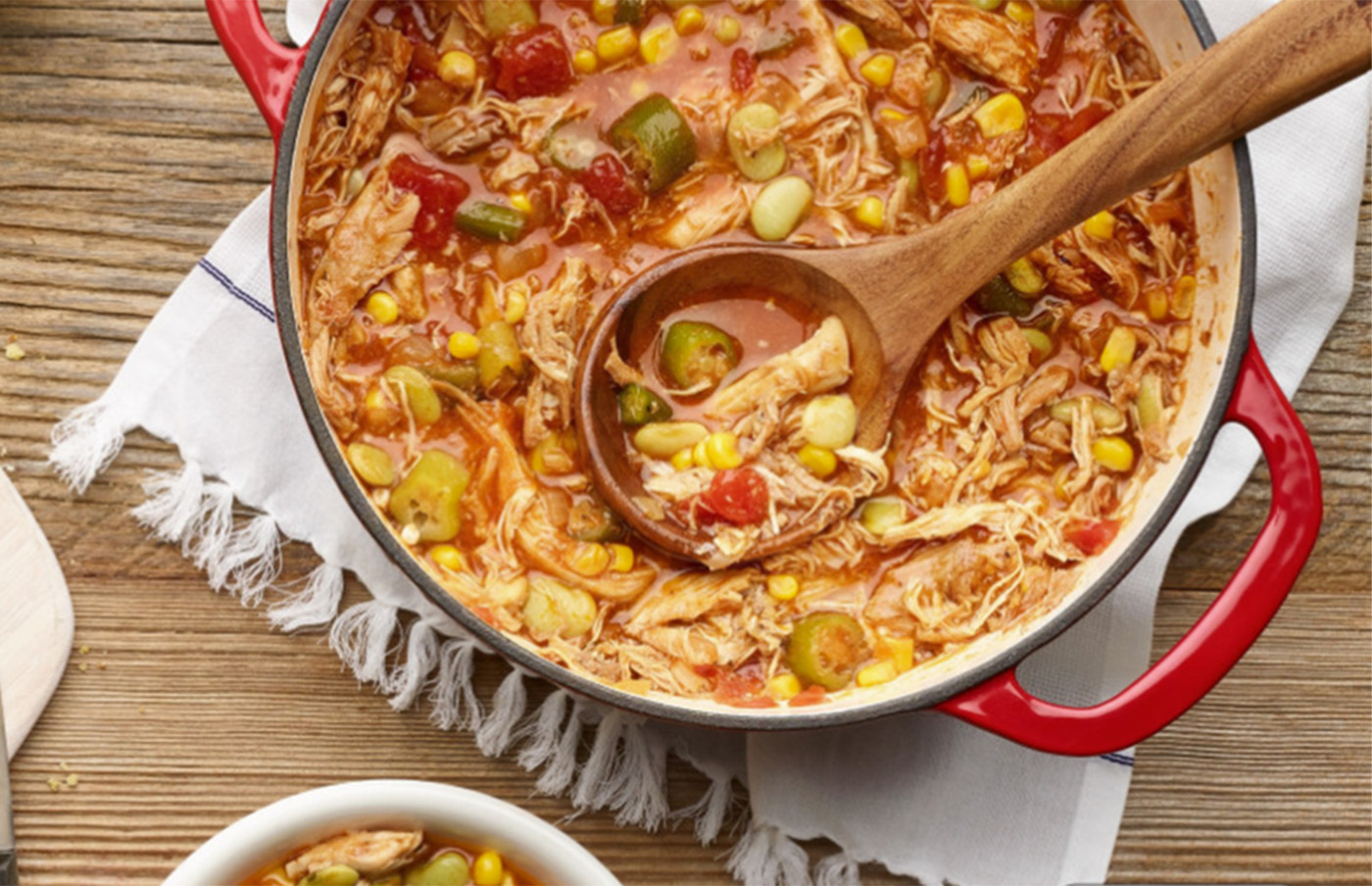
Copeland, a registered dietitian and nutritionist at Dartmouth Health’s Heart and Vascular Center, recommends a USDA recipe for Brunswick Stew.
The dish has plenty of phytonutrients, fiber, and potassium—all of which are good for your heart, she says. The poultry also has the essential amino acids that your body needs.
Here, she explains the reason it could be a healthy choice for watching this year’s football celebration.
Brunswick Stew
Makes 8 servings of about 1 cup each
Ingredients
1 tablespoon vegetable oil
1 onion (medium, chopped)
2 cups chicken broth, low-sodium
2 cups chicken or turkey (cooked, diced and boned)
2 cups tomatoes, canned or cooked (low sodium)
2 cups lima beans, canned or cooked
2 cups whole kernel corn, canned or cooked
Directions
Wash hands with soap and water.
Heat oil in a large pan. Add onion and cook in oil until tender.
Add all remaining ingredients. Bring to a simmer for 30 minutes at medium-low.
Nutrition Information:
Total Calories 177
Total Fat 4 g
Saturated Fat 1 g
Monounsaturated Fat 1 g
Polyunsaturated Fat 1 g
Cholesterol 33 mg
Carbohydrates 21 g
Dietary Fiber 4
Total Sugars 5 g
Protein 16 g
Calcium 44 mg
Potassium 618 mg
Sodium 54 mg
Copper 0 mg
Iron 2 mg
Magnesium 56 mg
Phosphorus 187 mg
Selenium 12 mg
Zinc 1 mg
Vitamin A 23 mcg
Vitamin B6 0.5 mg
Vitamin B12 0.1 mcg
Vitamin C 14 mg
Vitamin D 0 mcg
Vitamin E 1 mg
Vitamin K 6 mcg
Folate 37 mcg
Thiamin 0.5 mg
Riboflavin 0.2 mg
Niacin 6 mg
Choline 60 mg
Why you want phytonutrients
This recipe has a phytonutrient rainbow, says Copeland. Phytonutrients are the plant chemicals which create the colors, scents, and flavors in such ingredients as corn, beans, tomatoes, onions, and olive oil (if you are use using extra-virgin oil instead of standard vegetable oil).
“In humans, phytonutrients help to regulate inflammation and feed a diversity of microbes in your intestines,” she points out.
The benefits of fiber
Fiber from corn, beans, tomatoes, and onions softens the stool, gives intestinal muscles a workout, and feeds a diversity of microbes in your intestines, Copeland notes.
“All of these actions are important to heart health,” she says.
Potassium, potassium, potassium
An important hidden detail of this recipe is the potassium-to-sodium ratio, says Copeland. Generally, Americans consume more sodium than potassium daily. But the Dietary Approaches to Stop Hypertension (DASH) studies have demonstrated that to support a healthier blood pressure, you should consume at least twice as much potassium daily as sodium. This recipe helps you do that by using lower-sodium ingredients and naturally high-potassium ones.
To reduce sodium further, use frozen corn, frozen lima beans, fresh tomatoes, and your own homemade broth, then season to taste. Remember, one teaspoon of salt has 2,300 mg of sodium.
Amino acids
The poultry provides all essential amino acids needed by humans. Combined with the other ingredients, the recipe gives you ‘complete protein’. That’s because the corn is low in the amino acid lysine and contains the amino acid methionine, while the beans contain the amino acid lysine and are low in the amino acid methionine. In other words, each provides the amino acids lacking in the other, hence the recipe’s ‘complete protein’.
Adjustments if you’re on a tight budget
Canned vegetables and standard vegetable oil are used in this recipe to meet the food budgets of low-income Americans. If you can afford fresh or frozen vegetables and extra-virgin olive oil, that can make this recipe even more robust.
Also, chicken breast is not an option for some. That’s why this recipe makes use of other chicken parts. One of those options could be chicken left on the bones from a roasted chicken served earlier.