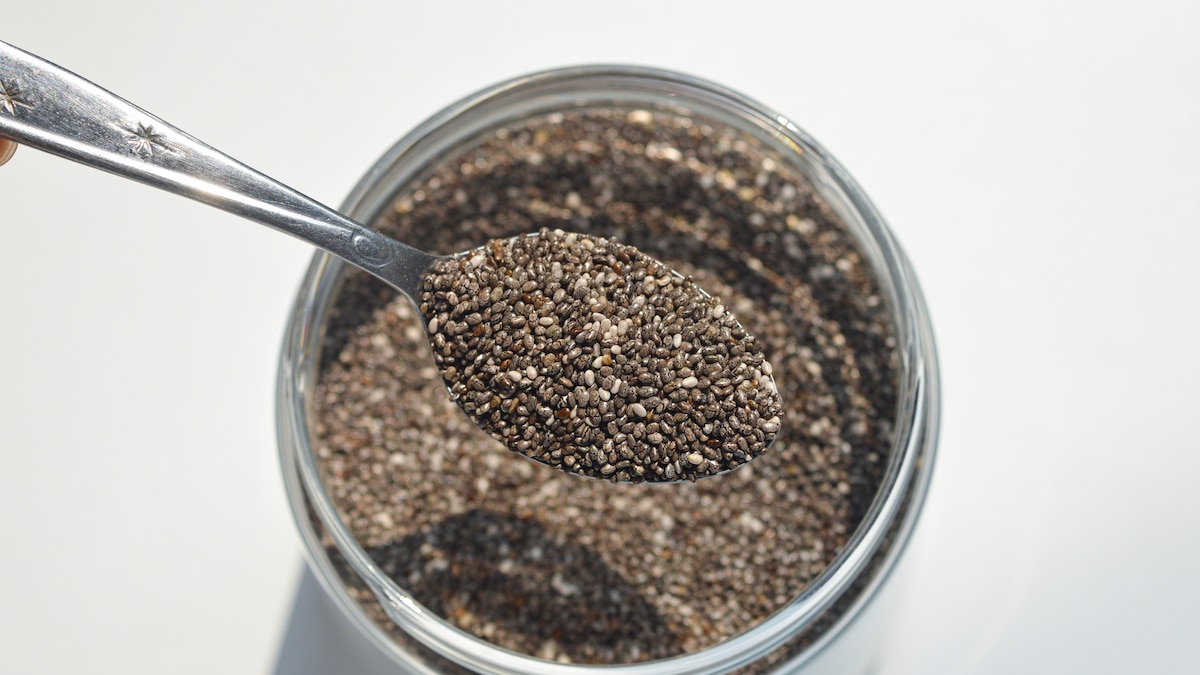
In lieu of soaking, you can sprinkle dry chia seeds on yogurt, cereal, salads, or vegetables. Just be sure to drink plenty of fluids as you consume them—otherwise, “they’re going to swell up somewhere down the GI tract,” Ayoob says. “Because they’re high in fiber, add them gradually to your diet to get your system used to them.”
Soaked chia seedsIncorporating chia seeds into your diet is as easy as mixing them into yogurt with berries and other toppings.
You can also incorporate the seeds in smoothies, soups, and stews, in which case they’ll absorb liquid naturally and thicken the food. Consider adding chia seeds to batter for muffins, pancakes, or bread. And if you want to use them as an egg substitute, Blatner says, you can mix one tablespoon of chia seeds with three tablespoons of water and let the mixture soak for 10 to 15 minutes.
Other possibilities include making chia pudding by soaking ¼ cup chia seeds in one cup milk of choice in a lidded jar in the refrigerator for a few hours or overnight; or jam, by cooking and mashing two cups of berries or other fruit on the stove, then stirring in two tablespoons of chia seeds, Blatner says. “[It] develops a jam-like consistency, and you can put it in the fridge for up to a week.”
If you do decide to add chia seeds to your diet, it’s important to consume them regularly.
“A superfood can’t be a one-trick pony,” Bazilian says. “You need to be able to eat enough of it, and chia seeds are versatile.”