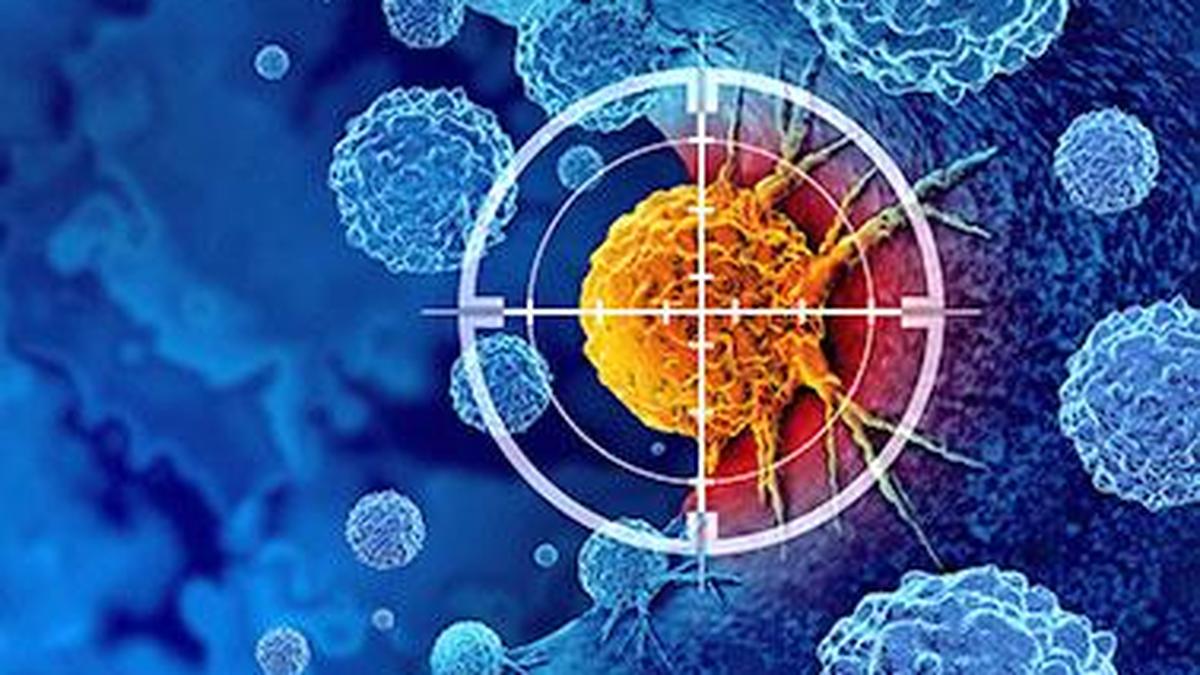

Many mechanisms involved in breast cancer metastasis focus on tumour cell activities. Image used for representational purposes only
| Photo Credit: Getty Images
A growing body of research is reshaping how scientists understand breast cancer—not just as a disease of rogue tumour cells, but as one that cleverly recruits the body’s own immune system to survive and spread.
A new review by researchers from two Indian universities explains how macrophages, a type of white blood cell meant to protect the body at sites of infection, can be “reprogrammed” by breast tumours to aid cancer growth and metastasis.
The authors of the review are Alisha Sinha of the Jaipur-based Banasthali University’s Department of Biotechnology, and Pranay Punk Pankaj and Ranjit Kumar of Nagaland University’s Department of Zoology. Their review was published in the Breast Global Journal.

Breast cancer, the most common cancer and the leading cause of death in women worldwide, accounts for almost 15% of cancer deaths in women, either due to metastasis or its drug-resistant nature. Many mechanisms involved in breast cancer metastasis focus on tumour cell activities. Macrophages normally act as the body’s clean-up crew, destroying harmful cells through phagocytosis, a process in which unwanted cells are engulfed and digested. However, within breast tumours, these cells often change their behaviour and become tumour-associated macrophages (TAMs)—immune cells that now work in favour of the cancer rather than against it.
 What the study found
The study explains that macrophages can exist in different “moods” or states. One form, the M1 macrophages, attacks tumours and triggers inflammation to destroy abnormal cells. Another form, the M2 macrophages, focuses on tissue repair and calming inflammation. Breast cancer cells push macrophages towards this M2 state, which unintentionally helps tumours grow, spread, and hide from the immune system.
Once converted, these M2-type macrophages help tumours in several ways. They release chemical messengers called cytokines (small proteins that allow cells to communicate) that encourage the formation of new blood vessels—a process known as angiogenesis. These blood vessels supply tumours with oxygen and nutrients, allowing them to expand rapidly.
The macrophages also weaken the body’s defences. They suppress T cells, immune cells that would otherwise recognise and kill cancer cells. In addition, tumour cells display “don’t eat me” signals on their surface, preventing macrophages from destroying them and allowing cancer cells to survive unchecked.
Another critical role played by these altered immune cells is in reshaping the extracellular matrix—the supportive tissue surrounding cells. By breaking down this structure, macrophages make it easier for cancer cells to escape the breast and travel to distant organs such as the lungs or bones, a process known as metastasis.
 What next
The authors highlighted that this ‘dangerous partnership’ between tumours and macrophages forms a self-reinforcing cycle: larger tumours attract more macrophages, which further accelerate tumour growth and spread.
Understanding this relationship could open new treatment options. Instead of targeting cancer cells alone, future therapies may aim to re-educate macrophages, switching them back into their tumour-fighting mode or blocking signals that turn them into cancer allies.
Ms. Sinha said checking the “betrayal” of immune cells could be key to slowing breast cancer progression and improving long-term survival.
“The downregulation or reprogramming of M2 macrophage differentiation could emerge as a viable strategy for reducing breast cancer progression and metastasis. Such approaches may support the development of targeted immunotherapies that complement existing treatment modalities, offering more precise and less toxic options for patients,” Prof. Kumar said.
Published – February 05, 2026 07:35 pm IST