Heart disease is the No. 1 cause of death in the U.S., but around 80% of cardiovascular diseases are preventable. While there’s no single food or diet that guarantees a healthy heart, certain dietary choices, like adding more fruits or beans to your diet, can have a powerful impact on heart disease risk factors, such as high blood pressure and high cholesterol. In this article, cardiologists share the foods they personally eat for heart health.
MEDITERRANEAN / Getty Images
Tiffany Di Pietro, DO, board-certified cardiologist, told Health some of her favorite go-to heart-healthy foods are beans and lentils, which are “high in soluble fiber, which lowers LDL cholesterol,” she said.
Soluble fiber binds to cholesterol and prevents it from being absorbed into the bloodstream. Research shows that eating three-fourths of a cup of beans per day may reduce LDL cholesterol levels by 19% and lower heart disease rates by 11%.
Di Pietro also recommends beans and lentils because they’re rich in potassium, which is essential for blood pressure control.
How to add it to your diet: Di Pietro incorporates beans and lentils into her diet by adding them to soups, stews, and salads. “I also suggest using lentils or black beans as a base for meatless meals once or twice a week,” she said.
SimpleImages / Getty Images
Fadi N. Chaaban, MD, director and chief of cardiology at Clara Maass Medical Center, regularly consumes fatty fish for his own heart at least twice a week. “Unlike red or processed meats, fatty fish provide healthy protein without contributing to arterial plaque buildup,” Chaaban told Health.
Fatty fish are also excellent sources of omega-3 fatty acids, which help lower inflammation and reduce blood lipid and blood pressure levels. Omega-3 fats can also improve the flexibility of blood vessels, aiding circulation.
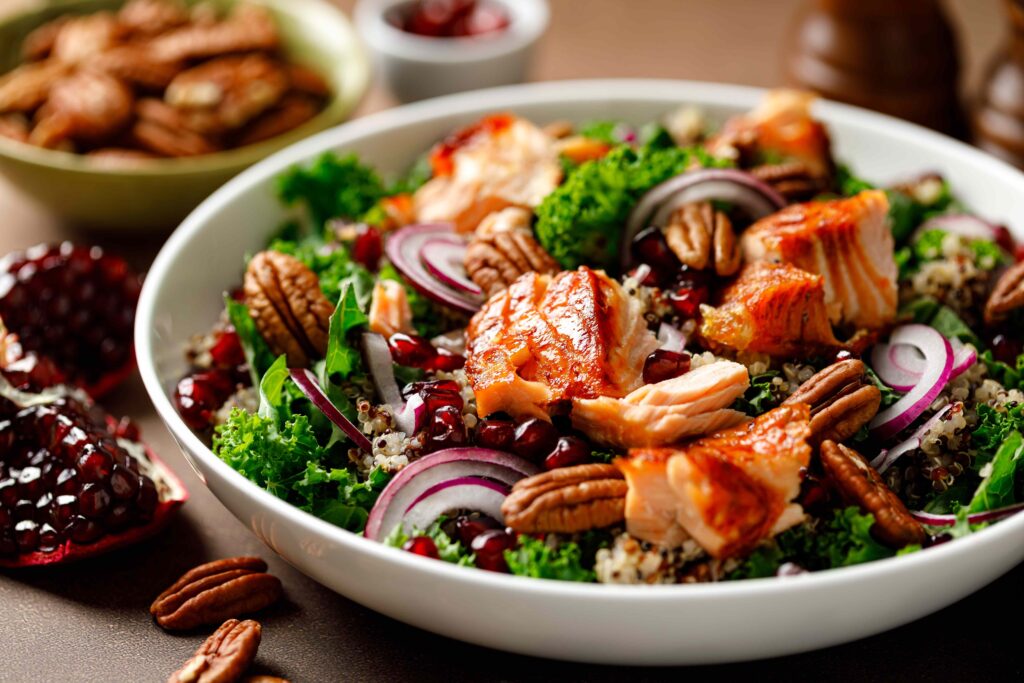
How to add it to your diet: Swap red meat for salmon once or twice a week, or try canned sardines or tuna. Chaaban recommends cooking fatty fish by baking, grilling, or broiling instead of frying. “Throw a salmon fillet on a baking sheet, add a little olive oil, squeeze lemon juice over it, and top it with any herbs you like,” he shared. Serve it with a side of steamed broccoli or over a healthy grain like quinoa.
Olesia Shadrina / Getty Images
For an easy and delicious way to support heart health, incorporate nuts into your diet, recommended John P. Higgins, MD, professor of medicine at the University of Texas McGovern Medical School and senior cardiologist at Lyndon B. Johnson General Hospital.
“They’re nutrient-dense, widely available, and a practical source of unsaturated fats and fiber, which are beneficial for cardiovascular risk reduction,” he told Health.
Studies show that regularly eating nuts, such as almonds, can significantly lower levels of “bad” LDL cholesterol and markers of inflammation, reducing heart disease risk. Snacking on almonds can also improve satiety and glycemic control, which are essential for maintaining a healthy heart.
How to add it to your diet: To make sure he’s getting plenty of heart-healthy nutrients in his diet, Higgins typically eats a small handful of raw almonds mid-morning or adds sliced almonds to his morning oatmeal. He also uses them as a crunchy topping for salads.
Kieran Stone / Getty Images
Joyce Oen-Hsiao, MD, FACC, associate professor of medicine at Yale School of Medicine, recommends snacking on dried fruits when you’re craving something sweet. “Dried fruit is high in antioxidants, fiber, and potassium, all of which benefit heart health,” she told Health. And unlike other candies and cookies, they do not have added sugar.
Oen-Hsiao recommends dried fruits like prunes, apricots, and raisins. These fruits are rich in nutrients that can help lower heart disease risk factors, such as high cholesterol. Just be mindful of portion sizes. “They tend to be higher in sugar than fresh fruits due to the sugar becoming more concentrated in the drying process,” she explained.
How to add it to your diet: Oen-Hsiao likes mixing dried fruit with heart-healthy nuts, like almonds, walnuts, pecans, and pistachios, for a balanced snack.
krisanapong detraphiphat / Getty Images
Swapping refined grains, like white bread and white pasta, for whole grains is an easy way to reduce your risk of heart disease.
Following a diet high in refined carbs can increase your risk of metabolic syndrome, a group of conditions that increases the risk of heart disease, stroke, and several other health issues. People who eat more refined grains are also more likely to gain weight over time compared to people who eat complex carbs.
“Whole grains like oats and brown rice provide fiber, which can help lower ‘bad’ cholesterol levels,” said Bradley Serwer, MD, chief medical officer at VitalSolution. The fiber in whole grains also helps lower high blood pressure, one of the most critical risk factors for heart disease.
How to add it to your diet: Oen-Hsiao recommends keeping whole grains like oats, quinoa, and brown rice in your pantry. “You will always have something healthy to pair with the rest of your meal or snack,” she said.