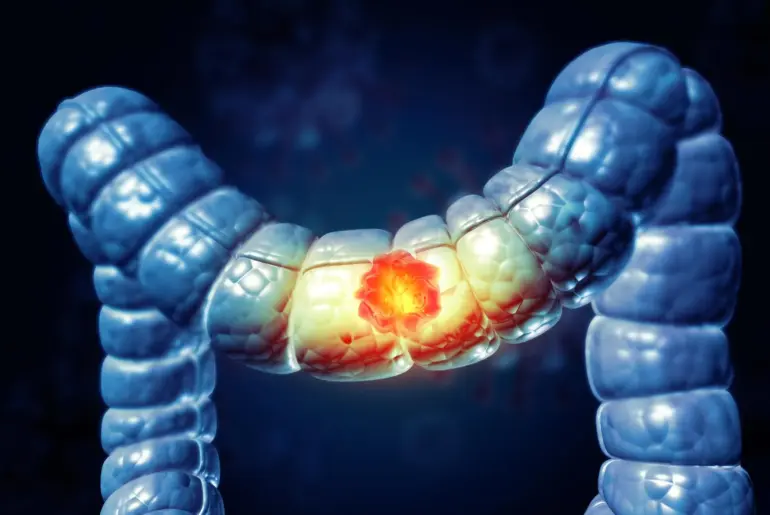

An image representing a tumor in a lung cancer patient. A mechanism has been identified in which neurons connected to a visceral tumor exchange signals with the brain to suppress the activity of immune cells. Provided by Getty Images Bank
A mechanism has been identified in which neurons connected to tumors exchange signals with the brain, suppressing the activity of immune cells. Cancer cells were found to attract and hijack surrounding sensory neurons to promote tumor growth. Deactivating these sensory neurons reduced the tumor growth rate by more than half.
A joint research team led by Professor Qing-Chun Zhen of the University of Pennsylvania School of Medicine and Professor Rui Chang of the Yale School of Medicine discovered through experiments in mice that tumors suppress cancer immunity via sensory neurons. They published their findings in the international academic journal ‘Nature’ on the 4th (local time).
While numerous reports have suggested that an increased number of neurons connected to a tumor worsens the cancer, it was unclear how communication between the tumor and the brain through neural networks specifically affects cancer immunity. Collecting genetic information about neurons during a tumor biopsy is difficult because most of their genetic material is stored far from the tumor.
The research team identified the signaling pathway from the tumor to the brain and from the brain back to the tumor by deactivating specific neurons in mouse models with lung cancer.
The experiments showed that when a tumor hijacks the vagus nerve—a visceral sensory system connecting organs and the brain—neurons extending from the brainstem to the tumor release a signaling substance called norepinephrine, which suppresses immune cells that kill the tumor’s cancer cells.
It was also observed that blocking the vagus nerve pathway between the lungs and the brain enhanced the immune response, inhibiting lung tumor growth by more than 50%.
The research team stated, “Our findings reveal that bi-directional communication between the tumor and the brain via vagal sensory nerves regulates anti-tumor immunity,” adding, “Targeting the neural circuit between the tumor and the brain could offer a new therapeutic approach for cancers that arise in internal organs.”
– doi.org/10.1038/s41586-025-10028-8
Copyright ⓒ DongA Science. All rights reserved.