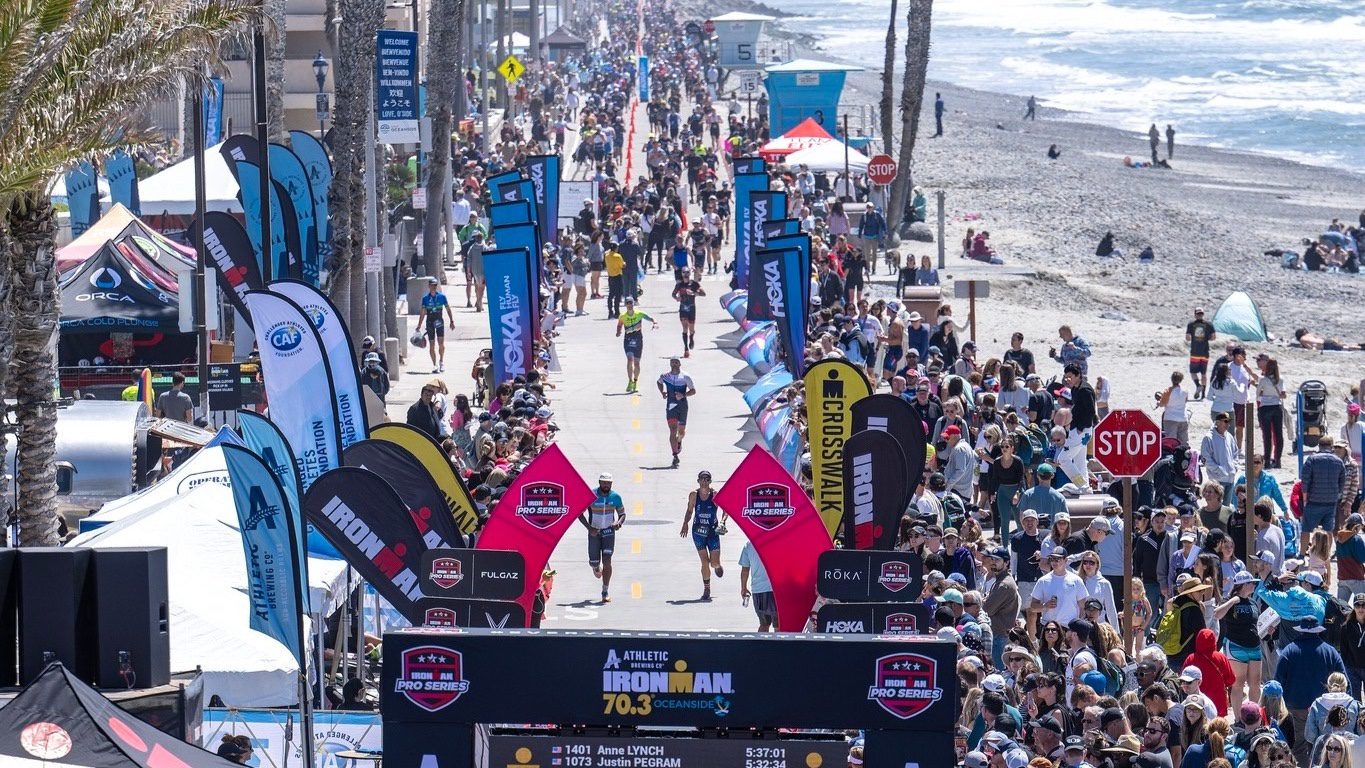
The 2026 calendar wastes no time getting serious. Ironman New Zealand opens the Ironman Pro Series in early March, followed weeks later by Oceanside 70.3 – traditionally the most competitive early-season race in North America – while the women’s T100 season kicks off on Australia’s Gold Coast.
With Oceanside comes an old piece of triathlon folklore: the so-called “Oceanside curse.” The idea is simple. Win big in March, and you may pay for it later in the year. The cost of peaking early, or pushing high intensity too soon, can show up months later, when championship performances truly matter.
Of course, there are exceptions. Taylor Knibb has twice conquered Oceanside and gone on to win the Ironman 70.3 World Championships in the same season, while also claiming the inaugural T100 crown in 2024, proof that early success doesn’t automatically derail long-term goals.
Still, the myth persists because it raises a deeper, more relevant question: how do elite athletes strike the right balance between early-season sharpness and sustainable performance across a long, demanding year?
The Modern Pro Balancing Act
What makes this balance harder is that the competitive calendar has never been denser, and the stakes have never been higher.
With the arrival of both the T100 and Ironman Pro Series in 2024, athletes are now navigating overlapping race pathways, each with its own incentives, rankings, and championship implications. Add to that the PTO World Ranking system changes for 2026 – where an athlete’s top four results now count toward their score instead of three – and the pressure to perform near peak fitness for larger portions of the year is unmistakable.
In practical terms, this means more high-stakes races earlier in the season, and a growing need to think beyond any single start line, all while trying to arrive at championship season with something still left in the tank.
The Strategic Choices Behind Start Lines
For today’s professionals, season planning is less about chasing every opportunity and more about managing trade-offs.
Yes, early results matter. Races on the T100 Triathlon World Tour and Ironman Pro Series carry ranking points, prize money, and visibility. Strong performances can shape an athlete’s entire year. But every hard race also comes with an opportunity cost: time spent sharpening early-season speed is time not spent building the deeper aerobic base and durability required for peak performance months later.
As a result, many pros approach their calendars with a clear hierarchy in mind. Not every race is treated equally. Some are used to test form, some to secure points or prize money. Others are protected as true performance targets. The challenge lies in resisting the temptation to turn every start into a peak effort.
Increasingly, some pros are also moving away from the idea of holding form all season or working toward a single peak. Instead, they’re building intentional pauses into the year – strategic mid-season resets designed to shed fatigue, re-establish training momentum, and protect long-term performance.
In the end, avoiding the “Oceanside curse” isn’t really about Oceanside at all. It’s about resisting the temptation to become an early-season champion at the expense of late-season goals. The athletes who thrive year after year are the ones who understand when to press, when to protect, and how to build toward their biggest performances.