Exercise is an important pillar of health at every age.After 50, the focus should be on functional exercise for longevity and quality of life.Engage in weight-bearing exercise, mind-body activities and outdoor physical activity.
No matter your age, exercise is one of the pillars of wellness for a healthy brain and body. When you’re over 50, the focus of exercise may shift to being about longevity, says Damien Joyner, J.D., an ACE-Certified personal trainer. Longevity doesn’t just mean living longer, but living longer with a quality of life you want and enjoy, he says. It’s a combination of lifespan and healthspan. And some of the best exercises for women over 50 are things you can start doing today.
Joyner states that the focus for women over 50 is to reduce risks of conditions that are a threat to well-being, such as low bone density, falls and heart disease. “A regular exercise routine that is well-rounded will improve and maintain muscular strength, cardiovascular health, agility, coordination, brain health, posture and flexibility,” says Joyner.
So, what exercises will deliver those benefits—and more? “The best type of workouts for people over 50 are the ones that meet them at their current fitness level and challenge them enough to maintain or improve how they move and feel,” says Joyner.
Try at least one of these exercises each day to feel stronger and healthier, inside and out.
Getty Images / kate_sept2004
Fast-Paced Walk for Overall and Heart Health
Walking is frequently recommended as one of the best physical activities. Not only do studies show that hoofing it after meals can lower your blood sugar response to that meal, but it’s also an easy activity to enjoy with a friend, do while listening to a podcast or to enjoy the sights and sounds of nature.
One snag frequently comes up, though. “Often people tell me that walking isn’t as effective as it used to be or they’re bored with it,” says Joyner. He suggests boosting the intensity of your walk so that you are moving at a quick pace—like you’re walking with purpose versus leisurely strolling. You can increase intensity by planning to walk a route with a couple of hills, which will more effectively challenge your heart, lungs and muscles, suggests Joyner. You could also try interval walking, alternating fast and moderate paces to boost intensity.
Weight-Bearing Exercises to Strengthen Bones
After about age 30, bone mass starts to decline. Weight-bearing exercises help to preserve skeletal muscle by loading, or stressing, bones, ultimately stimulating bone-forming cells. This type of exercise is instrumental in helping women maintain bone mineral density.
Any type of weight-bearing activity that provides some impact will boost bone health, too. “Hiking outside, playing sports like tennis, or dancing can be great ways to get ‘extra credit’ to maintain bone mass,” says Joyner. Resistance exercises—including lifting weights, calisthenics and using resistance bands—can also help your bones, as can wearing a weighted vest while walking.
Pool Workouts for Joint Aches and Pains
If exercise is uncomfortable, you may be reluctant to do it, but it’s still important to find ways to stay active. “Aqua classes are a great way to increase strength and cardiovascular health,” says Joyner, adding that water provides a low-impact setting for movements, and warmer water increases joint mobility.
What’s more, these workouts may make everyday movements feel better. “As the saying goes, ‘motion is lotion.’ With patience and sometimes working with an experienced professional, you can come to appreciate and enjoy how exercise can help reduce your pain,” says Joyner. A pair of sporty goggles or aqua fitness barbells can make your water workouts more fun and efficient.
Biking to Boost Your Brain
While there is evidence suggesting that all types of exercise benefit the brain, the combination of being outdoors and physical activity is tops for your cognitive capabilities. In older adults, simply biking outside for 20 minutes may improve the functioning of the hippocampus—the part of the brain responsible for memory, learning and problem-solving.
If traditional biking isn’t your thing, try an electric bike. E-bikes are skyrocketing in popularity for a reason. They allow you to enjoy commuting, running errands, traveling longer distances or biking with less effort, but still keep you outside and active.
Resistance Exercise to Maintain Muscle
Some elderly people experience sarcopenia, progressive muscle loss and weakness. If you’re not already, begin exercising in a way that will maintain muscle mass and keep you mobile and functioning well into your later years, helping you avoid devastating falls. Doing so challenges and strengthens muscles, and resistance training is the most effective method to counter this condition.
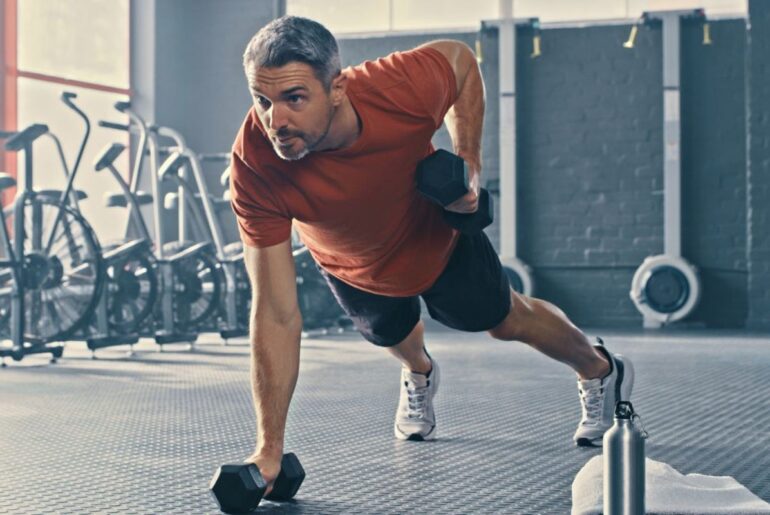
When Joyner coaches clients, he recommends focusing on functional movements, which mimic the way your body moves every day. An example of a resistance exercise that supports your ability to pick things up is a deadlift. Doing pushups—or modified pushups, based on your ability—will help you with your capacity to ”push” in real life. And practicing squats is instrumental in rising from a seated position, something you do multiple times throughout the day, says Joyner. If you feel you have no time for a full resistance training workout, try doing a set of thrusters. It’s a full-body exercise that will work all the major muscle groups in one movement.
Yoga for Balance and Flexibility
You don’t have to be able to bend over and touch your toes to enjoy yoga (and if you can’t, it’s all the more reason to give yoga a try). Research shows that mind-body practice improves physical balance and lower-body flexibility and strength, as well as mental health. In other words, yoga makes you feel better all around. Yoga is low-impact, meaning it is a safe and effective practice to continue as you age. How’s that for a feel-good workout?
Our Expert Take
Exercise after 50 may look similar to what you did when you were younger, just with a few modifications. Maintaining a strong and healthy body means working with functional exercises that promote everyday movement and the ability to perform tasks without strain, falls or injury. Try one—or all—of these six exercises to promote a healthy heart, strong muscles and bones, an active brain, and better balance and flexibility.