The Greek behind Pilates: The untold ancestry of Joseph Pilates. Public Domain
Inspired by his Greek father and Greek heritage and philosophies, Pilates is one of the most well-known and popular exercise regimes in the world, whose roots began over 100 years ago. It aims to evenly distribute the strength in the body by emphasizing one’s core fortitude to improve fitness and well-being.
Greek legacy and debate on ancestry
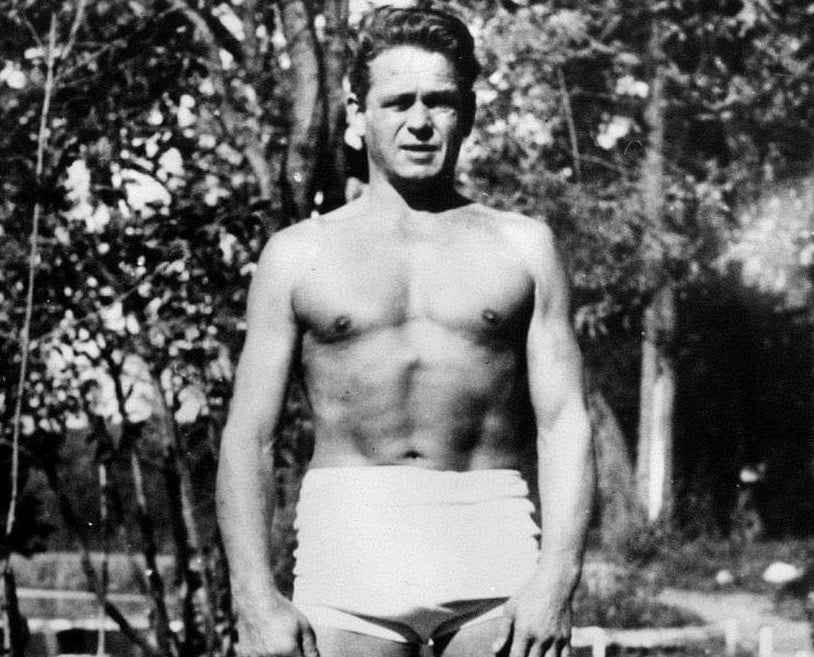
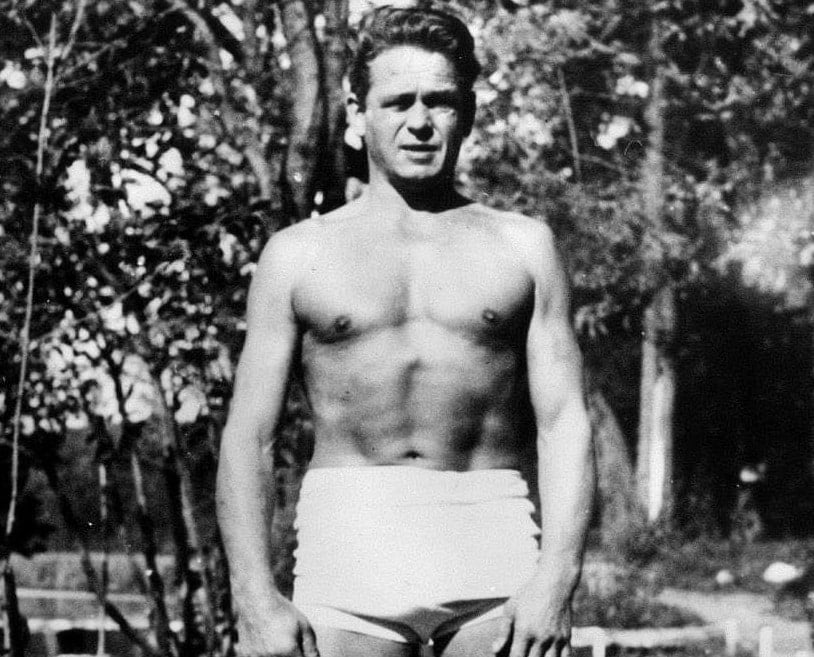
It was Joseph Hubertus Pilates, a German physical trainer, who is credited with developing the Pilates method in the early 20th century. He was born in Germany in 1880, outside of a small town near Düsseldorf.
His father, however, whose last name was originally “Pilatu,” was born in Greece and was an enthusiastic gymnast, while his German-born mother observed the tenets of naturopathy.
Joseph Hubertus Pilates (1883-1967)… my personal trainer, follow him, not me! pic.twitter.com/jU2JqkpwAN
— Ricky_Jo The Queer Bitch (@rickybitchjo) June 7, 2025
While many Pilates organizations and biographers celebrate his Greek “Pilatu” roots, some German historians argue there is no paper trail in German archives showing a “Pilatu” name change.
Regardless of whether his DNA was 100% Greek, Joseph identified with the Greek athletic tradition. He built his entire brand, his equipment, and his philosophy on the foundations of the Greek Gymnasium.
Joseph Pilates was “Greek by choice and conviction.” Even if he was born in the Rhine region of Germany, his heart, his name, and his “Ideal Man” were all undeniably born from the spirit of Ancient Greece.
Pilates designed unique exercises
He was a small child for his age and suffered from asthma, rickets, and rheumatic fever throughout his youth. As he grew older, Pilates became interested in the classical Greek principles of the “ideal man” – who balanced body, mind, and spirit in equal parts.
Pilates taught himself anatomy, bodybuilding, wrestling, yoga, gymnastics, and martial arts, and by the age of 14, had cured himself of his various ailments. He had achieved such physical perfection that he was actually asked to pose for anatomical charts!
As a young man, Pilates believed that bad posture and inefficient breathing were the roots of poor health, when compounded by the modern lifestyle. A study of these problems led him to design a set of unique exercises that helped to correct a muscular imbalance. The original six principles upon which his theories were based dealt with concentration, control, center, flow, precision, and breathing.
Exercises developed for injured soldiers during WWI
Being a native German, he was interned during World War WWI at a camp on the self-governing British Crown Dependency, The Isle of Man. During his time there, doctors sought his assistance to rehabilitate disabled and injured soldiers. He modified hospital beds with pulleys and straps and turned them into equipment that provided resistance exercises to help them build muscle tone. These systems were the beginning of the Pilates equipment we know today.
In 1926, after the war, Pilates returned to Hamburg, and shortly after, the Kaiser invited him to train the local secret police. His success made him well known throughout Germany, eventually drawing the attention of Hitler. It was at this time that Pilates opted to take his life’s work elsewhere and immigrated to America.
On the voyage to New York, he met his future wife, Clara, a teacher. Shortly after arriving, they opened a studio on 8th Avenue in Manhattan and declared the first “Body Contrology Studio.”
It was in a building that also housed other New York dance organizations, such as the NYC Ballet. The studio quickly became well-known on the dance scene, since dancers would seek him out not only for cross-training but also in rehabilitating injuries. At that time, sports medicine was nonexistent, and Pilates’ “Contrology” was one of the only non-surgical treatments available for trauma.
Joseph and Clara Pilates soon established a devoted following in the local dance and performing arts community of New York, teaching Katherine Hepburn, Martha Graham, and George Balanchine and the exercises (but not the name) caught on with the public. Everyone simply called the new regimen “Pilates,” and once people heard that ballerinas were attending the Pilates gym on 8th Avenue for fitness, society followed.
Pilates exercises
Public Domain
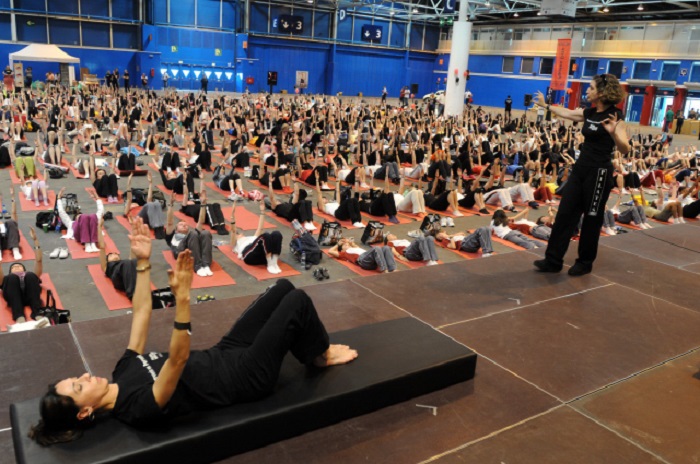
Pilates exercises are performed on a mat or using specific equipment, such as the “Cadillac,” the “Universal Reformer” or the “Wunda Chair.” They sometimes rely on a system of pulleys and springs to create resistance or support, depending on each person’s needs. Pilates exercises have been shown to improve posture, coordination, balance, strength, and flexibility, as well as breathing capacity and organ function.
Injuries are uncommon when performing Pilates exercises as the movements are low-impact and focus on developing whole-body strength with the emphasis on improving balance and joint mobility, as well as relieving stress and tension. Classes can vary in intensity: they can be gentle or dynamic and offer a solid workout.