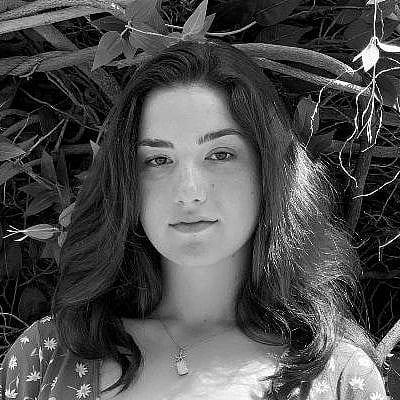
When I was 20, Orthodox Judaism affixed a scarlet “A” to my chest. Or at least that’s what I told myself when I published an article after walking into the YU Beit Midrash. I wore the scorn with pride and derision. Because there’s a certain narcissism to victim mentality. A personality carved from pain. And pain was all I knew.
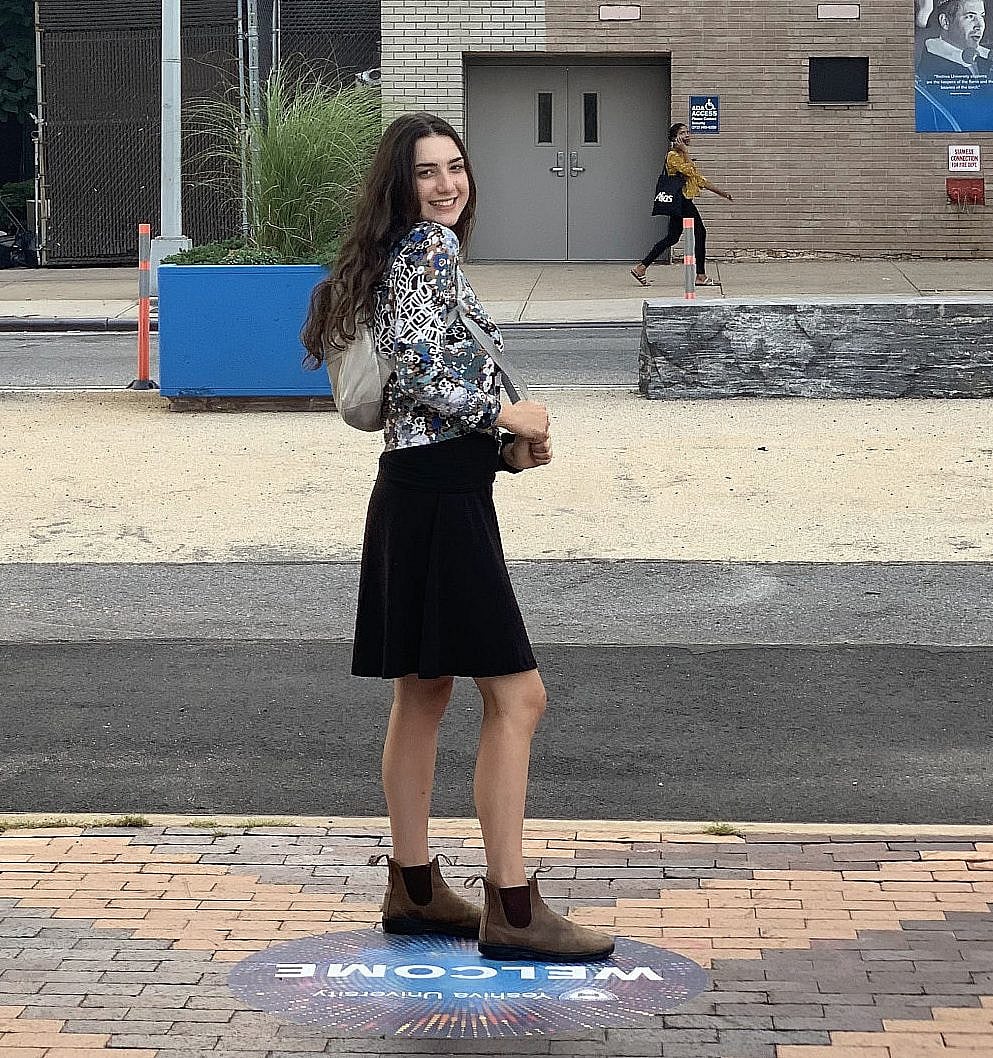
Facetiously posing as a rising Columbia sophomore in front of the YU library after my article about suing the institution became #1 on the Times of Israel blogs.
This past Shabbat, I spoke about that pain to current and future Jewish world leaders. This is how I began, “My story is for the men in this room. The future rabbinical leaders. Because all the women here already are familiar with its pain.”
Pain is a funny thing. My Bais Yaakov ethics teacher once used the familiar analogy about the carrot, egg, and coffee. When under stress, one can become soft, hard, or sweet. But pain just made me angry. The boy who sexually assaulted me as a teenager told me that only he was able to learn in the YU Beit Midrash. “You can’t even look inside, Golda.”
The person who made me feel most impure told me only he had access to holiness. The hypocrisy enraged me. And I directed it to a system that wasn’t truly at fault.
I learned this lesson during my senior year in college. When I went through the unimaginable. When a police investigation and Title IX followed. When my Orthodox Jewish friends left minyan when the perpetrator entered the room. When the pickle-eating, Yiddish speaking, open-toed shoe-wearing, “Halachically” egalitarian spaces welcomed him with open arms.
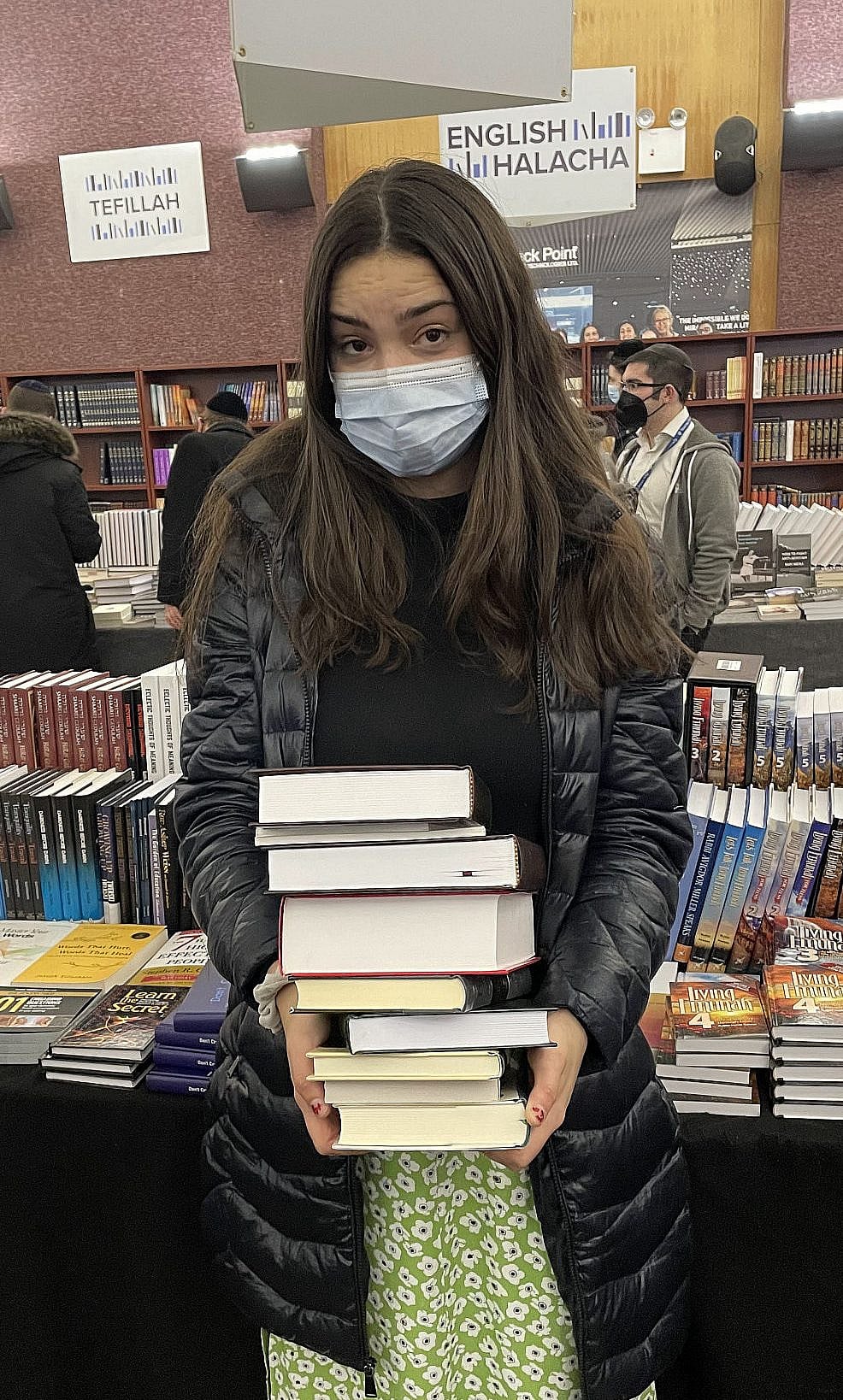
Senior year at the YU seforim sale with my halachically-stringent, mechitza-upholding, velvet kippa-wearing Orthodox Columbia friends, who held spontaneous Farbrengens whenever I got triggered.
When I was a senior, I realized that the men who prayed proudly behind a mechitza three times a day would run six blocks in five minutes as soon as I told them I was triggered. I learned the men who frequented musical hippie egalitarian Kabbalat Shabbats would call them and threaten them into silence.
These same egalitarian men argue that Halacha and over two thousand years of traditions should be subverted to protect women. Include women. They’re allies! Because women are only equal if they’re seen through their eyes. The lens of the patriarchy. The secular. Doing everything a man does. Forced into obligations Halacha had already determined they would not have the time to fulfill, and consequently did not burden them with its demands.
I’ve been learning in Mizrachi’s Lapidot program for almost three months, and we just finished the sugya of אונן. The Halachot of a person in mourning required to bury a dead body. He is not obligated in Mitzvot and consequently cannot be יוצא others. Halacha viewed his predicament with empathy and thus removed the burden of his obligation. Halacha saw motherhood the same. There is something almost abusive about men negating its role in a woman’s life and obligating her in that which she can not always perform.
The girl filled with pain. Scorn. Derision. The girl who walked into the YU Beit Midrash. That girl would never have imagined that she would one day share her story on a Mizrachi leadership Shabbaton. That she’d direct it to men who met the Queen of England. That these same men. Men with black hats, peyos, and M16s. These men would come up to her and ask, “How do we highlight women?” “How do we believe them?” “How do we use social media to empower the youth against the prison of victim mentality?”
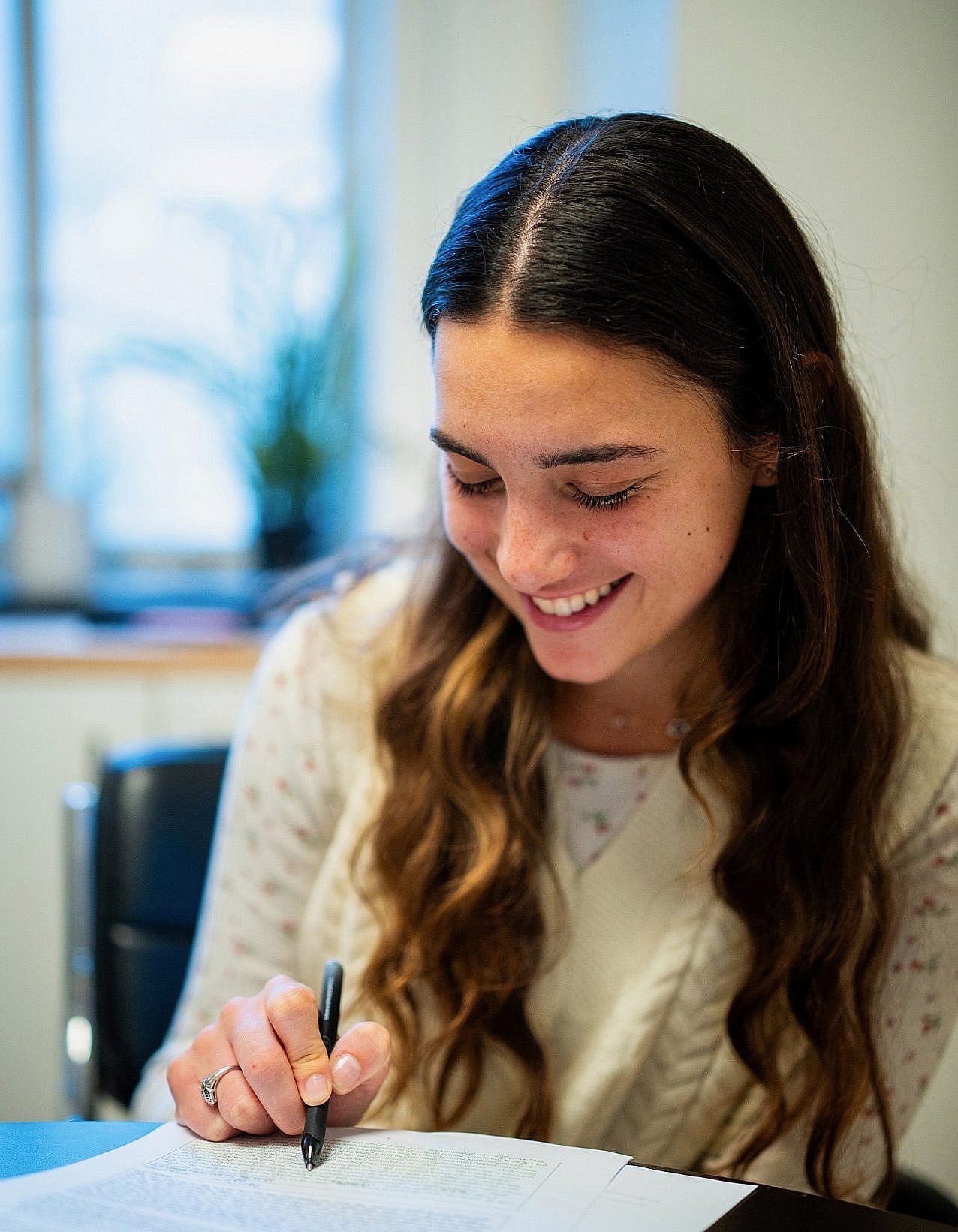
Learning Halacha at Lapidot Mizrachi, where Torah study is driven solely by a genuine love for continuing our Mesorah.
The girl full of pain would have never imagined that the direction of her anguish would become her greatest healing. Pain is hard to let go of. It can give purpose. Direction. Drive. But pain without Torah burns. True Torah believes in protecting women. True Halacha believes in preserving dignity. True allies believe in highlighting women.
I hope my story inspires future Jewish educators to never fault the girl in pain. To never ostracize her. Affix her with a scarlet “A.” To see beyond the rebelliousness and into the little girl who just wants to be heard. I hope my story inspires everyone to keep Halacha. True Halacha. The Halacha of Dovid Hamelech that changed an entire system to protect his daughter.
I hope any girl who has been through what I have can one day have hope. That men in black hats. Men in peyos. Men in M16s. And some with all three. Will one day ask her how to create a world where she is heard and believed. Because בזכות נשים צדקניות נגאלו and the laws which begot Moshiach never deemed her impure or unholy.
I grew up as a Bais Yaakov girl in the Five Towns before I transitioned into a modern-orthodox teenager at Stella K. Abraham High School for Girls. Now, at Columbia University, I write as a Jew who wishes to express problems the collective Jewish world should address.