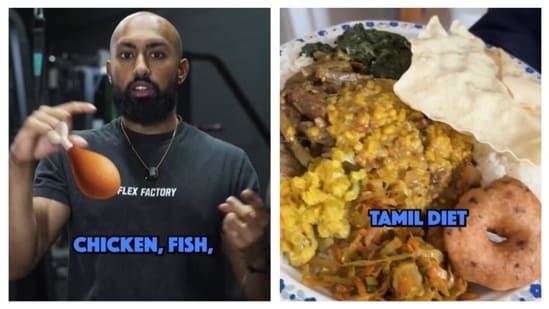
For many in a Tamil household, the path to a six-pack could feel like it requires a choice: your fitness goals or your mother’s cooking. But fitness coach Kagivan Prabaharan is proving that you can have your paruppu (lentils) — or at least a smarter version of it — and eat it too. Also read | How to lose weight with South Indian diet, according to fitness coach: ‘Avoid idli and dosa, switch to low calorie…’
 Kagivan’s approach: no need to abandon traditional food, just make smarter choices. (Instagram/ kagsfit)
In an Instagram post he shared on February 5, Kagivan opened up about the exact nutritional blueprint he used to shed 50 pounds (22.6 kg) and reveal his abs, all while maintaining a diet rooted in his Tamil heritage. His message was clear: the problem isn’t the culture, it’s the ‘system’.
‘Same culture, different system’
Kagivan’s transformation wasn’t fuelled by bland chicken and broccoli. Instead, he overhauled the traditional Tamil plate structure that often leads to what he playfully calls the ‘mama vandi (the uncle belly)’. “I didn’t stop eating Tamil food. I stopped eating it like I was trying to stay overweight. 50 pounds heavier vs six-pack. Same culture, different system,” he wrote in his caption.
The fitness coach said that many traditional Tamil meals are heavily skewed toward carbohydrates while being chronically low in protein. By shifting the ratios, he managed to stay fueled for training without the caloric surplus. In the video he posted, he shared, “This is how I used to eat Tamil food while being 50 pounds overweight. And this is how I eat the same food now while I’m in the best shape of my life. Here are the three things that I changed.”
The three pillars of the ‘Tamil abs’ blueprint
Kagivan outlined three non-negotiable tweaks that allowed him to drop significant weight while staying satiated: “Number one, I made sure to include rice on my plate just with a smaller portion because carbs are essential for you to build muscle while you’re burning that fat.”
He added, “Number two is realising the traditional Tamil diet barely has any protein. So you want to make sure you’re prioritising protein alongside these foods. Chicken, fish, Greek yoghurt are always alongside whatever Tamil foods I have. That way I can make sure I’m feeling full and burning fat at the same time.”
Kagivan further said: “And number three is including the curries like keerai (leafy greens) because these are filled with vegetables and fibre and reducing the other curries like paruppu because they’re loaded with extra calories that don’t necessarily keep you full. My clients and I are living proof that you can eat Tamil food, burn fat, and get into the best shape of your life.”
Breaking the ‘no rice’ myth
Perhaps the most refreshing part of Kagivan’s approach was his defence of white rice. In a fitness world that often demonises grains, he insisted they were a tool, not a hindrance. “Carbs aren’t the enemy,” he explained in his video, adding, “They fuel training, recovery, and muscle. I just stopped drowning my plate in them.”
By opting for fibre-dense curries, he ensured his stomach stayed full even with a smaller rice portion. Conversely, he advised moderation with paruppu, noting that while delicious, it was calorie-dense and less effective at keeping one full, compared to lean protein sources.
Kagivan explained, “Rice stayed. Portions didn’t. Carbs aren’t the enemy. They fuel training, recovery, and muscle. I just stopped drowning my plate in them. Protein became non-negotiable. Traditional Tamil meals are low in protein, so I added what was missing, chicken, fish, Greek yogurt, tofu — every single meal. Curries got smarter. More keerai and beetroot. Less paruppu and katharikai. Same flavors, fewer hidden calories.” He concluded, “My clients and I are living proof: you don’t need to abandon your culture to lose the Mama Vandi. You need a system.”
Note to readers: This report is based on user-generated content from social media. HT.com has not independently verified the claims and does not endorse them.
This article is for informational purposes only and not a substitute for professional medical advice.