The popularity of Pilates shows no signs of fading as the reformer method is has challenging the mat version as the go-to Pilates workout of choice in recent years. Classes are in high demand with devotees eager for the intense, low-impact workout that promises exceptional results.
Last year, I became one of those reformer Pilates fans. Even as a gym regular (I’ve been going ever since discovering the benefits of strength training for women), I’ve never felt as strong as I did after just five weeks of reformer Pilates.
But even when I could bag myself a sought-after spot in a small class, reformer Pilates is expensive: sessions are rarely under £25 each, with classes at the swankiest studios upwards of £50 a go. Factor in the time spent travelling to and from the studio, and that’s quite an investment. Unlike mat Pilates, which can be done at home without any equipment, I assumed there wasn’t a DIY way to do reformer without shelling out for an expensive machine. But then I discovered Pilates boards.
You may like
What is a Pilates board?
A Pilates board – sometimes known as an abs workout board – is a solid panel with an in-built gliding platform or pads, and detachable accessories. Don’t expect a small reformer machine. The best at-home reformers with the full carriage, springs and resistance cords will set you back hundreds, even thousands of pounds. A Pilates board, which you can buy for well under £100, can help you replicate a few basic reformer-style moves. Think of it as ‘reformer-lite’.
“From gentle modifications for beginners to challenging variations for advanced movers, the sliding board meets you where you are and grows with you,” says Gaby Noble, a Pilates instructor whose Exhale Pilates studios are dedicated to reformer equipment based on the classical method.
After a few goes on the Marcy Pilates Core Trainer, I quickly realised that working out on a Pilates board is different to practicing on a solid and robust reformer. But don’t let the relative flimsiness fool you: as with any Pilates workout, what feels easy at first very quickly creeps up on you, setting your muscles on fire just like an in-person reformer class.
Tried and tested
Macy
Pilates Core Trainer
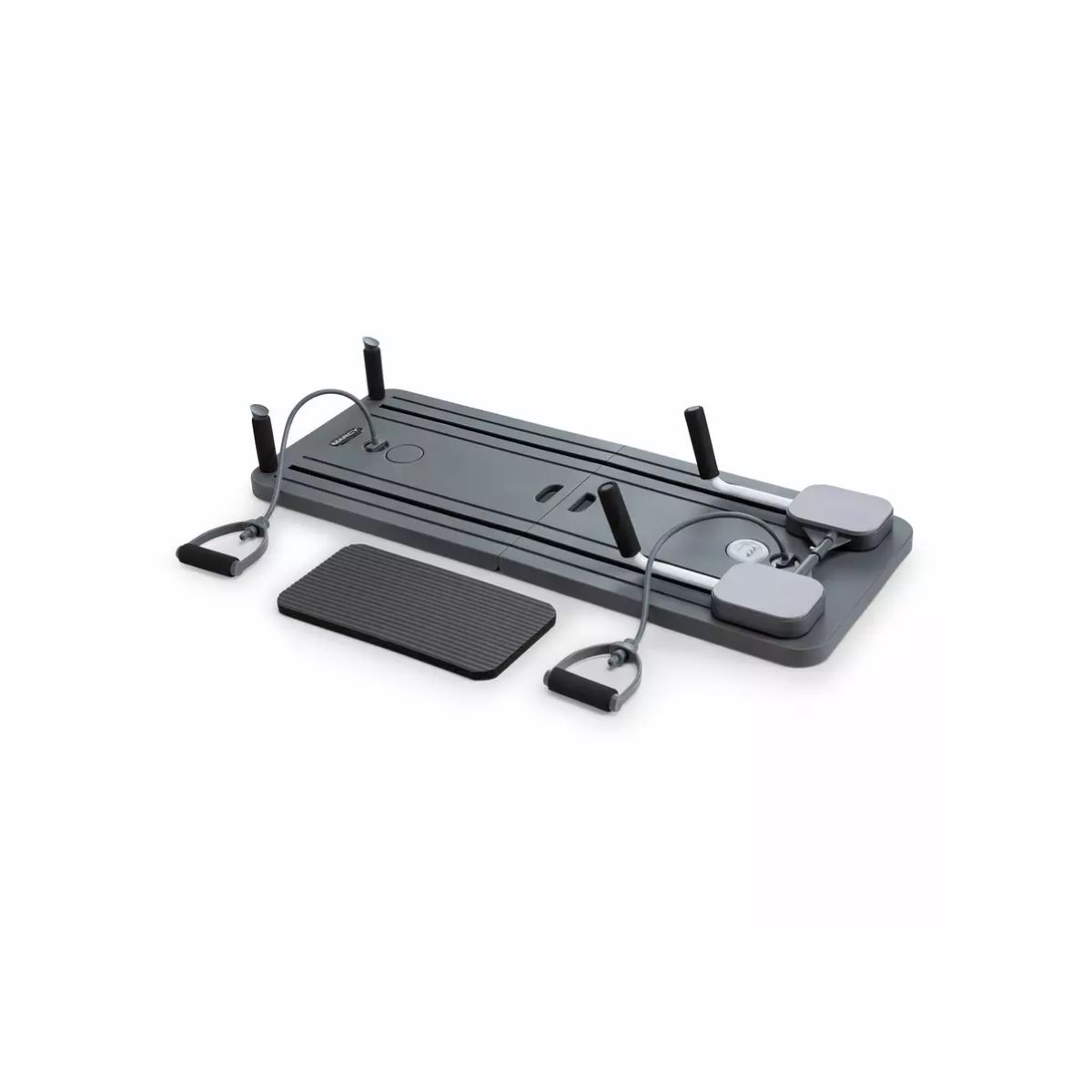
The Macy Pilates Core Trainer is a durable plastic board featuring sliding pads (a version of the gliding carriage of a reformer), detachable resistance cords with handles, a separate kneeling pad, removeable stick handles and a timer.
It folds in half making it quick and easy to store away under furniture when not in use, which is not something you can say about domestic reformer machines.
Best for budget
Taylor & Brown
Pilates Board at Home
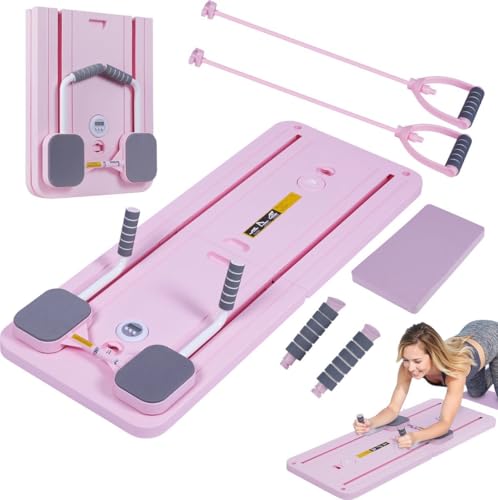
The Taylor & Brown is a versatile and fully customisable Pilates board. Sitting at more than half price than our tried and tested option, it’s a budget-friendly buy for working out at home.
It’s also Amazon’s bestseller in the category, with reviews saying it’s easy to use and compact, folding easily – but like any other board, you need to know how to use it to get the benefits.
Alternative
AMAZINGHOME
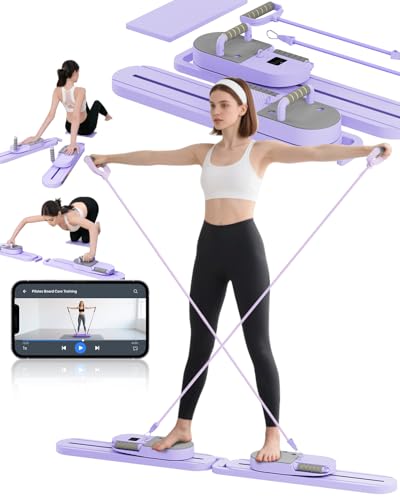
Split-Type Pilates Reformer Board
This board takes this up a level with a split design that makes the design fully adjustable to your body dimensions and chosen workout. While you can still complete all the basic sliding moves in popular workouts with its sliding panels and fixed resistance bands.
Reviewers say it’s lightweight but sturdy, with a clear timer helping you to keep an eye on your movements.
Benefits of using a Pilates board1. Improves core strength
Core strength is probably the first thing every reformer fan mentions when advocating its benefits. Every time I used my Pilates board, it was the number one muscle area guaranteed to ache afterwards (in a good way).
“Pilates boards are highly effective for strengthening the deep core, especially the transverse abdominis. The sliding surface increases instability, requiring constant abdominal engagement to support the spine,” says Gaby. “Moves like ab slides from a kneeling or plank position engage the abs continuously, building strength through control rather than repetition.”
This is why Pilates boards are also called abs boards. The sliding pad replicates an abs roller. Even when standing on it, you must engage your core muscles to maintain good posture and balance throughout the movement.
2. Targets lower-body muscles
After my core, it was my glutes that felt the resulting burn of a few days of Pilates board workouts. For anyone like me with a desk job who ends up sitting down more often than intended, this is very welcome.
You may like
An inactive gluteal area, or ‘sleepy glutes’, can result in numerous health issues by negatively impacting pelvic alignment, hip mobility and posture, to name just a few.
Firing these muscles up with targeted glute exercises on the Pilates board is one way to help improve and maintain musculoskeletal health.
“The board is particularly effective for targeting glutes, hamstrings and quads through lunges, slide backs and unilateral leg work, building strength while improving stability. Always start with feet grounded as this helps stability, before taking a more elevated position to challenge stability and strength even more,” says Gaby.
That’s not to say the upper-body is overlooked. Upper-body strength can also be increased through the controlled push and pull patterns on the sliding bed, and with moves that involve creating tension while holding the resistance cords, says the trainer.
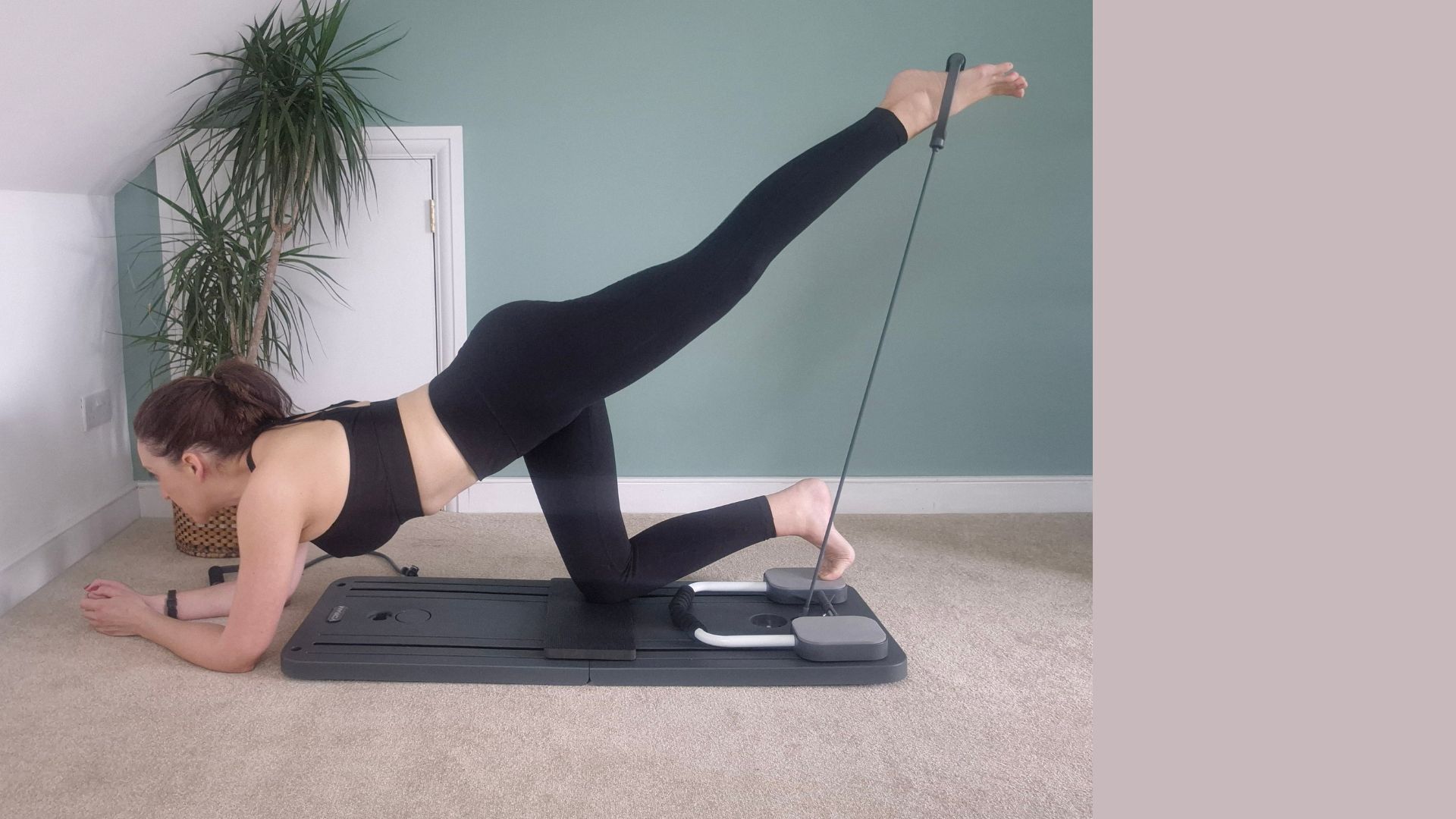
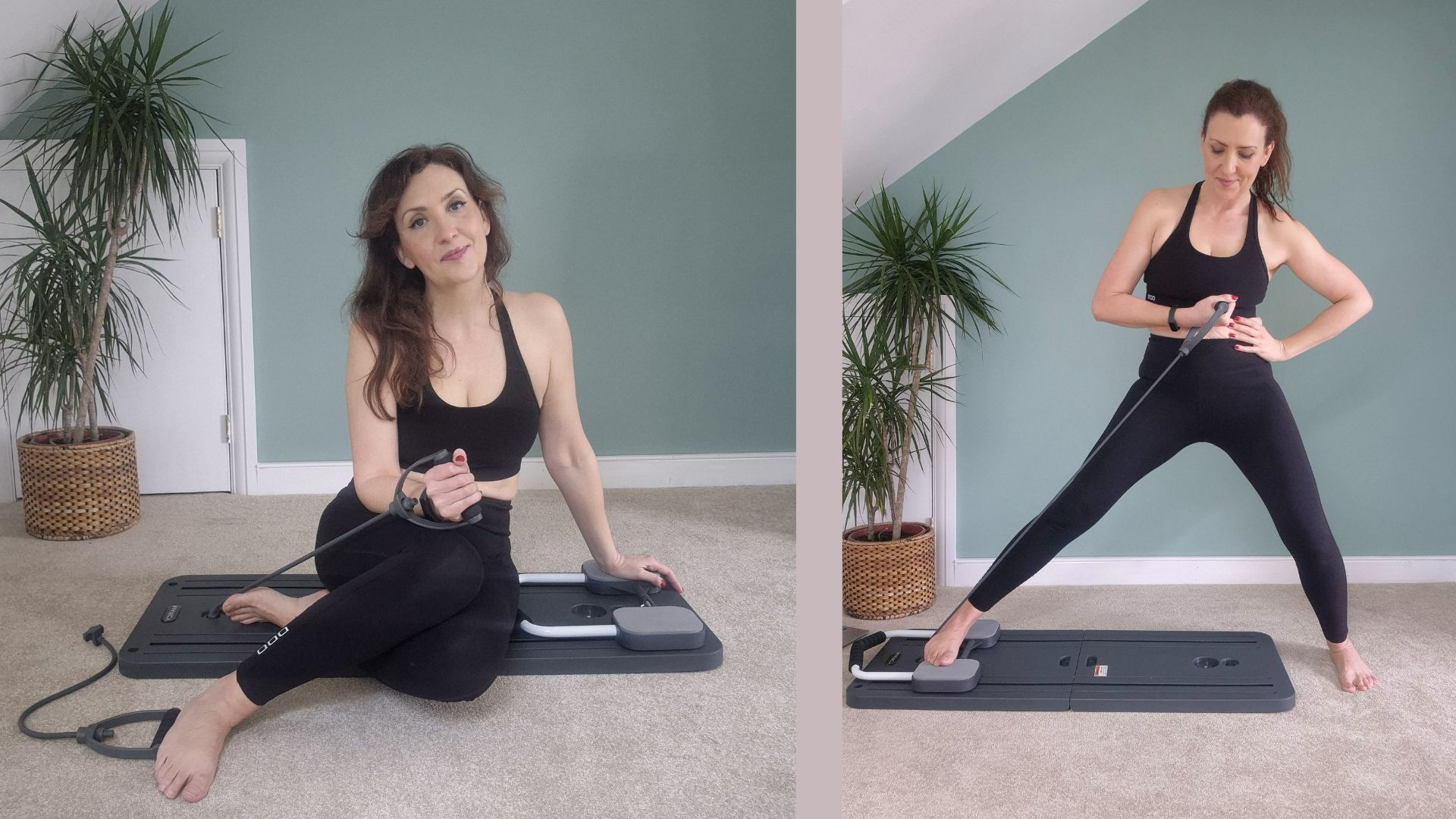
A Pilates board can help fire up sleepy glutes and work underactive muscles if you sit down all day.
(Image credit: Kerry Law / Future)
3. Improve balance and stability
Practicing good balance techniques is important for overall health and longevity at any age. A small, randomised controlled trial found that reformer Pilates performed once a week for 10 weeks resulted in a reduced fall risk, and significant improvements in static and dynamic balance, and functional mobility in adults age 65 and older at risk of falling.
Even without the full function of a reformer machine, Gaby believes the sliding feature on a Pilates board can deliver improvement in this area. “The boards instability challenges balance and coordination, activating smaller stabilising muscles and improving body awareness. Slow, controlled practice steadily builds confidence and is great especially if you [usually] do dynamic reformer classes,” she says.
4. Increased mobility and flexibility
Having practiced yoga since my teens, I’m a fairly flexible person and I’m comfortable bending and stretching in all directions. While that is limited on the Pilates board, I did find myself flexing my hips and triceps – areas I often overlook.
With an awareness of your posture and staying safe, Gaby says a Pilates board can help stretch minus the strain. “The sliding pad supports smooth, controlled mobility, particularly through the hips, shoulders and spine. Exercises such as spinal articulation, hamstring and abs slides allow greater range of motion with support, encouraging flexibility without strain.”
5. Support mind-body connection
The mind-body connection is the heart of Pilates, the board bought me back to this. My mind occasionally wanders during an at-home strength training or bodyweight workout, but sliding on the Pilates board requires focus at all times. You suffer the consequences otherwise!
Once I grew in confidence with one, I found that the rhythmic, repetitive nature of sliding back and forth was almost meditative at times.
Pilates board workouts to follow 25-minute at-home Pilates board workout
Pilates Platform on YouTube also has numerous workouts specifically for Pilates boards, including beginner workouts, ‘booty burn’ workouts, and workouts combining Pilates with dumbbells and HIIT.
This 25-minute flowing sequence is worth trying once you feel more confident on the board. The moves, of around 30 to 60 seconds each, really work your core muscles.
AT HOME PILATES BOARD WORKOUT | Abs & core workout | – YouTube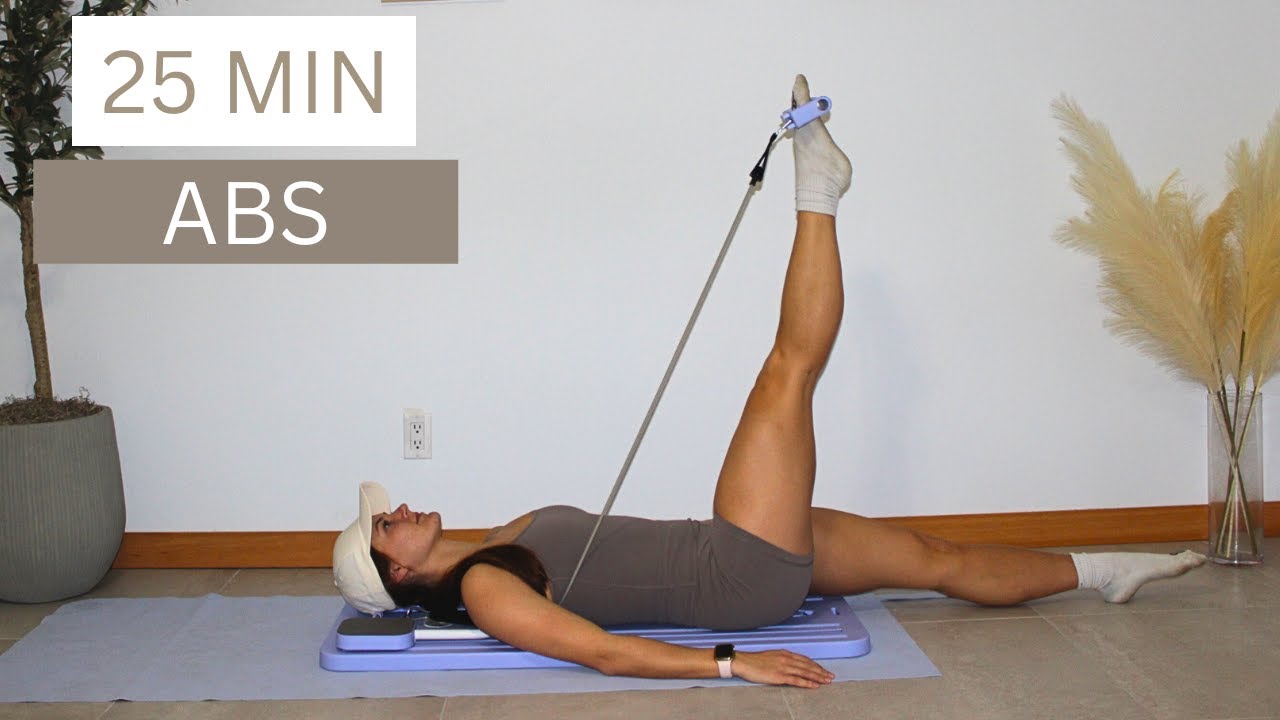
Watch On
15-minute workout for beginners
Search “Pilates board workout” on YouTube and Callie Gualy, founder of Sweaty Studio, is one of the first names to appear. She’s becoming the go-to instructor when it comes to this piece of equipment, and her channel is full of Pilates workouts, including wall Pilates and Pilates for beginners.
15 Min Beginner Pilates Board Workout | Full Body Reformer Board Sculpt – YouTube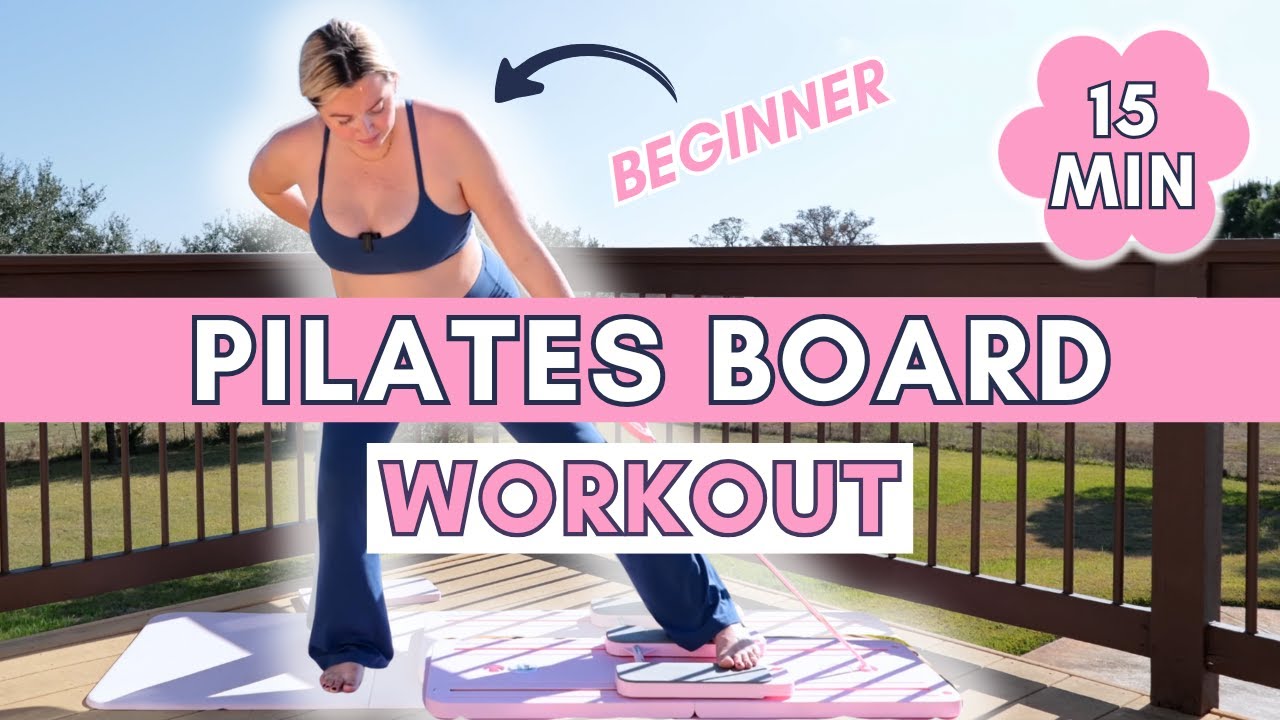
Watch On
5-minute full-body Pilates board workout
Pilates boards are better suited to short routines, making them perfect for exercise snacking. “Around ten to 15 minutes, three to four times per week, is a realistic and sustainable goal for most people. With consistent use, many people begin to notice improvements in core strength, balance, posture and overall body awareness within a few weeks. [They will also feel] more mobile, more stable, and more confident in their movement as well,” says Jodie Myers, mat and reformer Pilates instructor at The Fitness Group.
A quick ‘do anytime’ flow of combined exercises of approximately one minute each:
Full Body Pilates Boar Workout | 5 MIN Quick Routine – YouTube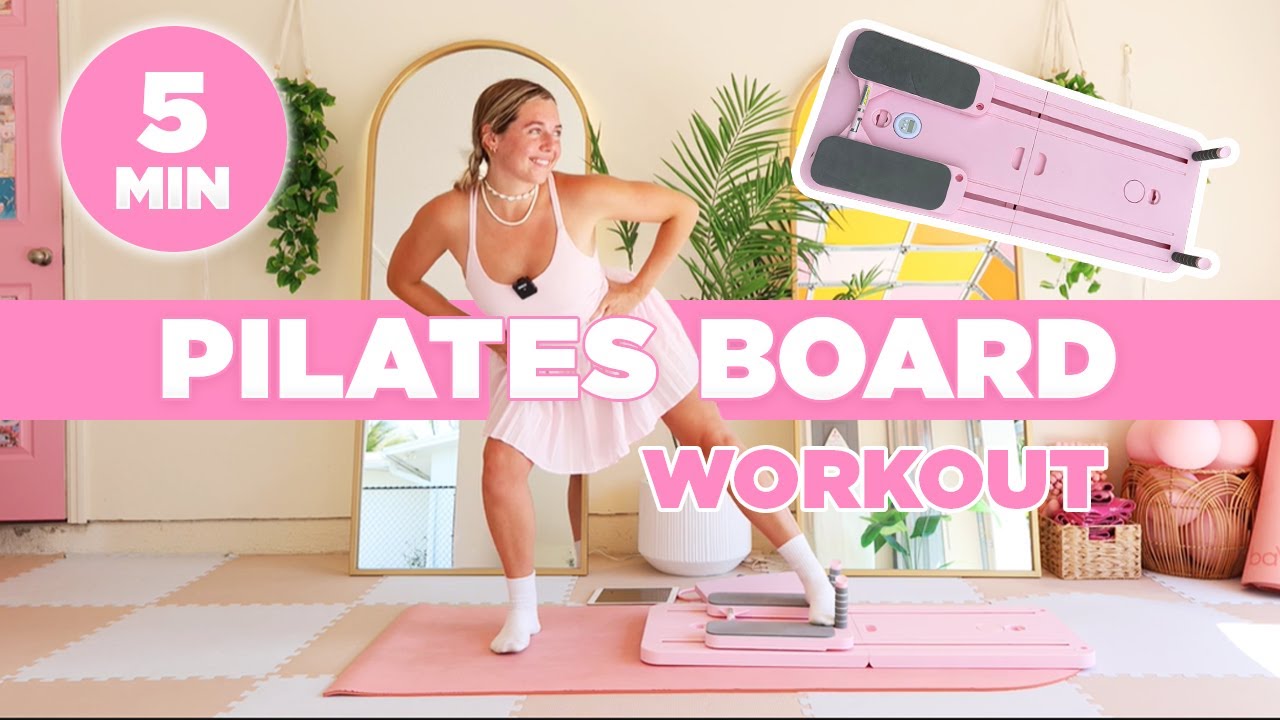
Watch On
Do at-home Pilates boards work?
After using my Marcy Pilates core trainer several times, I can certainly say that my legs, glutes and core know it. But could I get similar results by simply using a mat, resistance bands and some exercise sliders? Possibly, but not with the confidence a board offers.
The key benefit of sliding on the Pilates board track is that it keeps you controlled and in alignment, rather than veering off in different directions as I sometimes find with alternatives like core sliders. Also, the resistance cords connect to handy fixed points on the board, meaning no awkward messing around trying to find suitable bits of furniture on which to anchor a resistance band.
What it can’t do is replicate the full functionality of a reformer machine. The position of the resistance cords and the lack of a larger sliding bed (which is sometimes supplemented by a box) mean some moves just can’t be done with a Pilates board.
All being said, for a small piece of home fitness equipment under £100, the affordability and convenience of a Pilates board cannot be underestimated. Having a simple approximation of a reformer at home meant I was much more inclined to get it out for a quick session a few times a week, rather than save it all for an hour-long class once a week. And as in most cases, building small but frequent bursts of movement into your week can be one of the most effective things you can do to improve your overall fitness.
Tips for using a Pilates boardStart simple: If you’re just getting started, Jodie recommends simple exercises. “These focus on core stability and shoulder strength without being overly complex. You can try controlled standing lunges or squat variations if the board allows, always keeping movements slow and deliberate,” she says.Safety first: Without an experienced instructor in the room with you, it’s important to know how to use the board effectively and safely to avoid injury. “Make sure the board is placed on a flat, non-slip surface and that all moving parts are secure before starting,” says Jodie. “It’s important to move slowly and with control, prioritising alignment over range of motion.”Check your alignment: As you’re without an instructor, she suggests using a mirror or filming yourself to check that your spine stays long and neutral, that your core is gently engaged, and there’s no collapsing through the shoulders or hips.