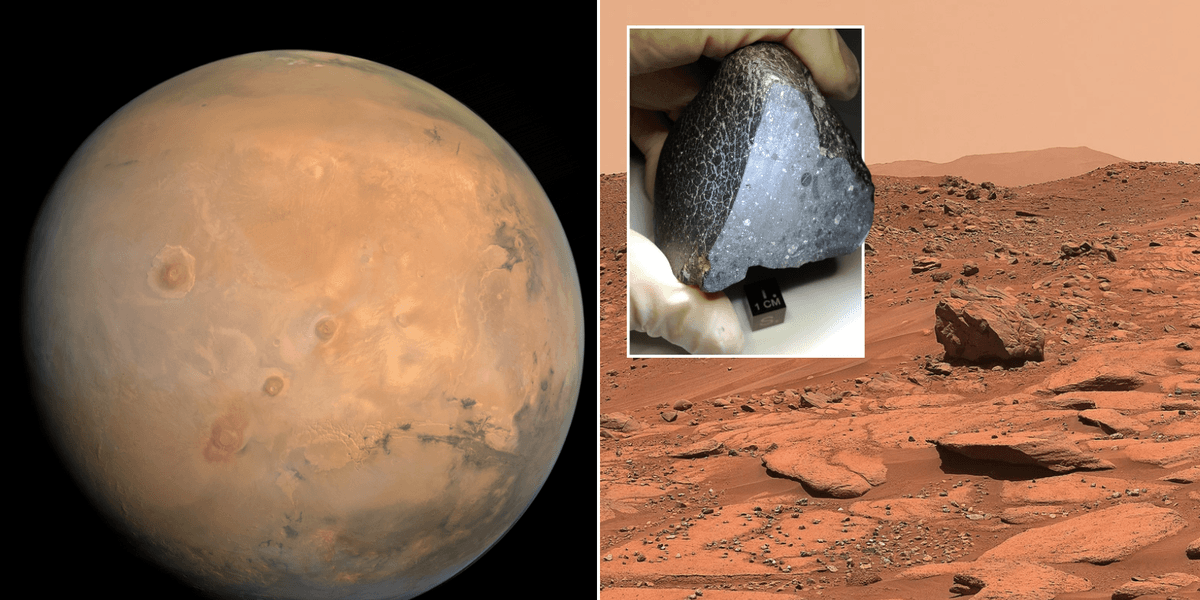
A Martian rock that landed on Earth could hold clues about water on the Red Planet – and the possibility of extraterrestrial life.
Nomads wandering through the Sahara Desert stumbled upon the meteorite in 2011, but after new tests, researchers think they may have found a breakthrough.
The 320g space rock earned the nickname “Black Beauty” due to its distinctive appearance.
Its official scientific designation is Northwest Africa 7034.
Researchers believe a powerful collision on Mars sent the rock hurtling towards Earth – but the precise timing of its arrival remains unknown.
However, scientists estimate the oldest section of the meteorite dates back approximately 4.5 billion years.
Experts have long been intrigued by what lies within the sample.
Studies conducted over a decade ago first detected traces of water within the meteorite.
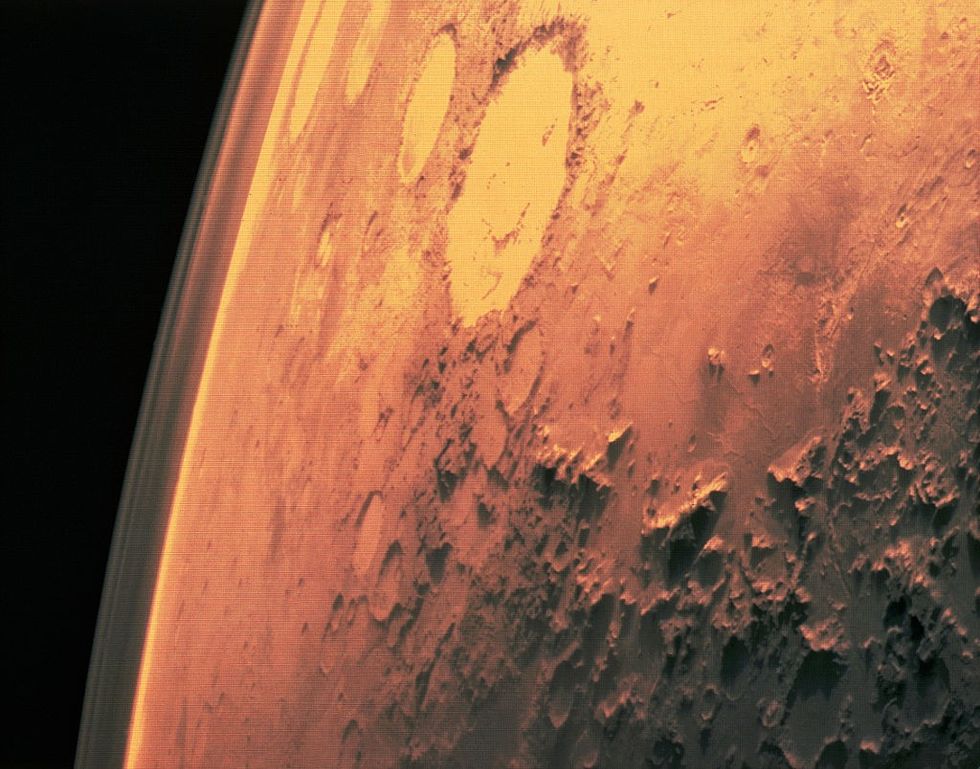
Researchers believe a powerful collision on Mars (pictured) sent the rock hurtling towards Earth
|
GETTY
Advanced neutron scanning technology has now provided fresh insights into this liquid content.
The new analysis found tiny particles of ancient water trapped inside the rock.
A pre-print research paper suggests the water content exceeds earlier estimates.
Scientists examined a fingernail-sized fragment of the meteorite to carry out the study.
READ MORE FROM THE RED PLANET:
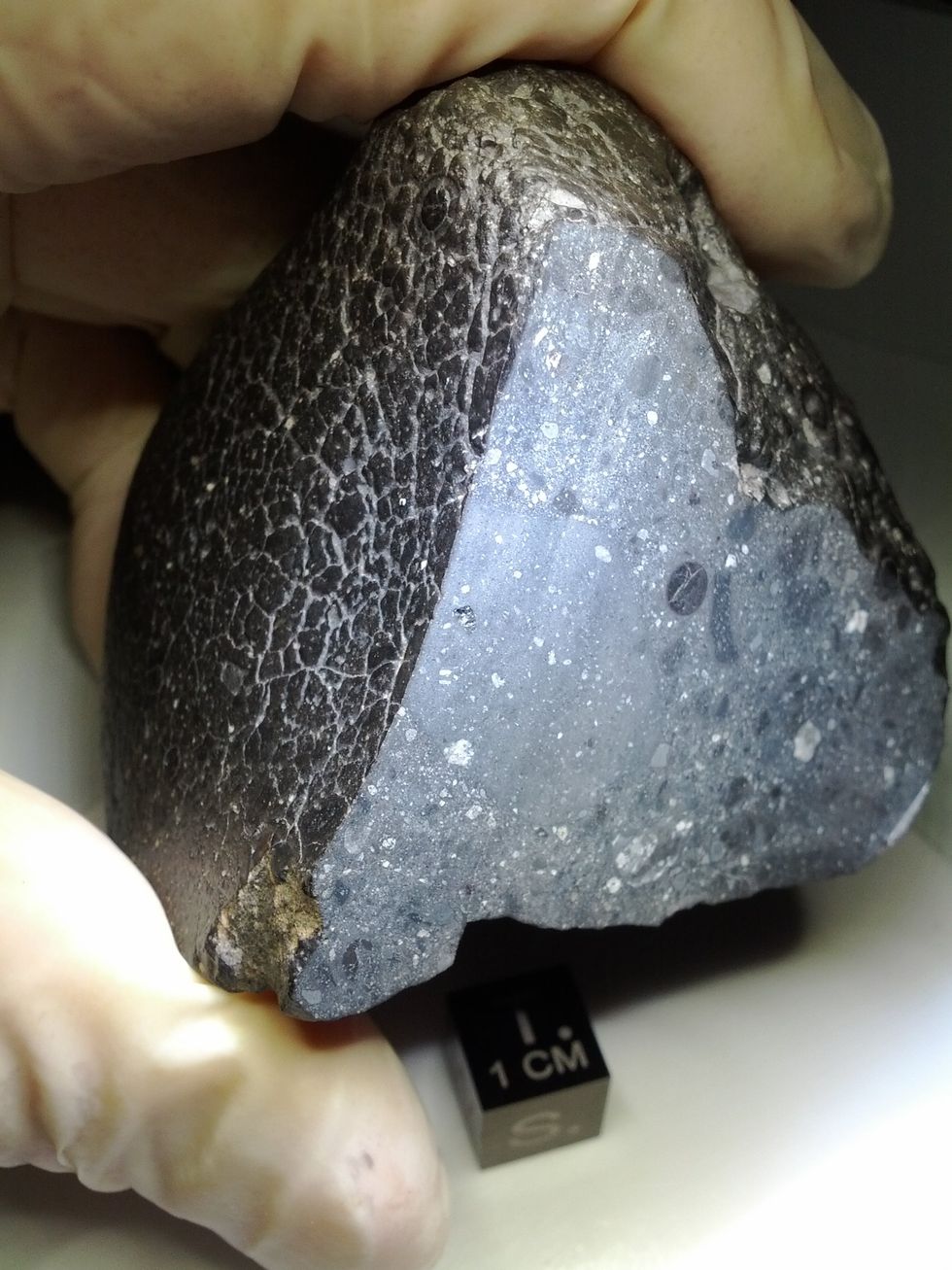
PICTURED: Northwest Africa 7034, nicknamed ‘Black Beauty’, which contains a tiny amount of water
|
NASA
This small sample contained between 0.4 and 0.6 per cent water.
Researchers now aim to learn more about this discovery.
Water remains a key focus for scientists searching for evidence of life beyond our planet.
And our second-closest planetary neighbour has proved a fertile ground for scientists looking for evidence of just that.
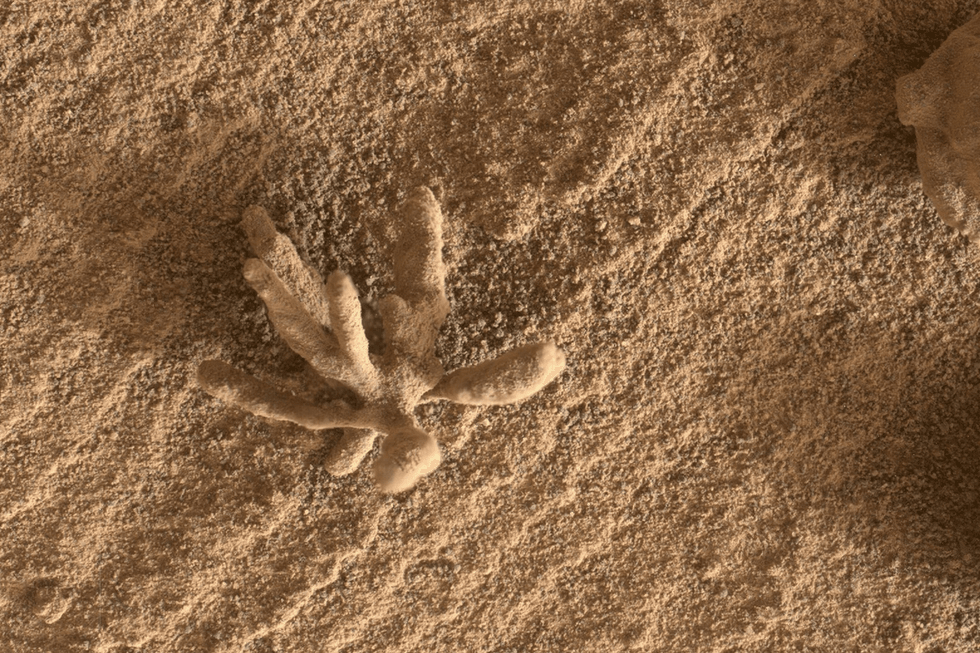
Last summer, new questions were raised over the possibility of life on the Red Planet after Nasa’s Curiosity rover found a coral-shaped rock on its surface
|
NASA
Mounting evidence indicates Mars once contained vast oceans similar to those on Earth.
Last summer, new questions were raised over the possibility of life on the Red Planet after Nasa’s Curiosity rover found a coral-shaped rock on its surface.
The rover, launched in 2011, has captured new images from our near neighbour – sparking a flurry of speculation.
Nasa recently abandoned plans to retrieve rock samples directly from Mars due to excessive costs.
The Black Beauty meteorite may therefore represent the best opportunity to investigate potential Martian life for the foreseeable future.