Shoki Hirano presented about his research project during the Three Minute Thesis (3MT) finale competition last November.
AMES, Iowa – Just as students may experience stress upon arriving at college for their first year, it is not uncommon for cattle to experience stress when moved to a new feedlot or weaned off their mothers.
Shoki Hirano, a graduate student in animal science, said that when cattle are stressed, they eat less and get sick more often. Hirano has been working on a research project to gain insight into the role B vitamin supplements play in preventing illness in cattle.
Hirano discussed his research during the 2025 3MT finale competition last fall. The research was done under the guidance of Stephanie Hansen, professor of animal science, and in collaboration with Jodi McGill, associate dean of research and graduate studies and associate professor in the College of Veterinary Medicine.
Hansen said little research has been done on B vitamins in cattle because rumen microbes in cow stomachs produce the vitamins needed to keep them healthy. However, when cattle are stressed, those microbes do not function as well, negatively impacting their immune system.
Exploring vitamin supplementation
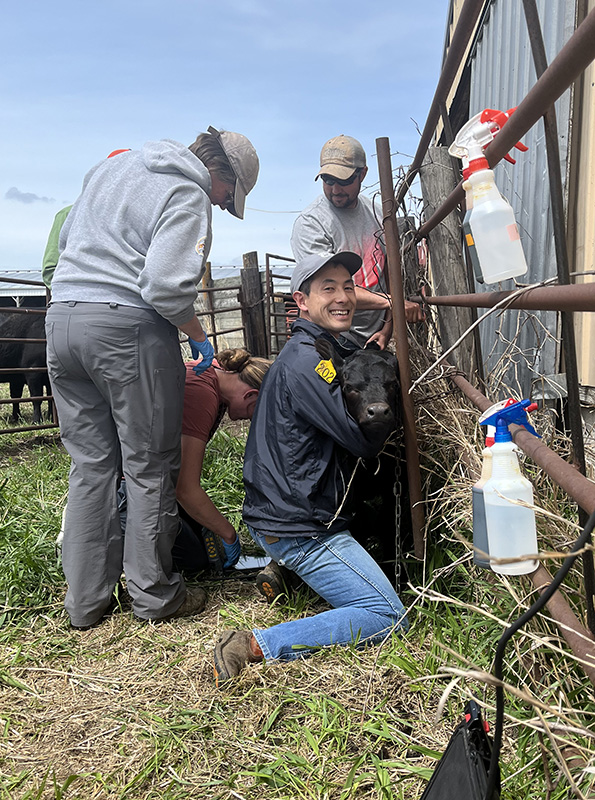
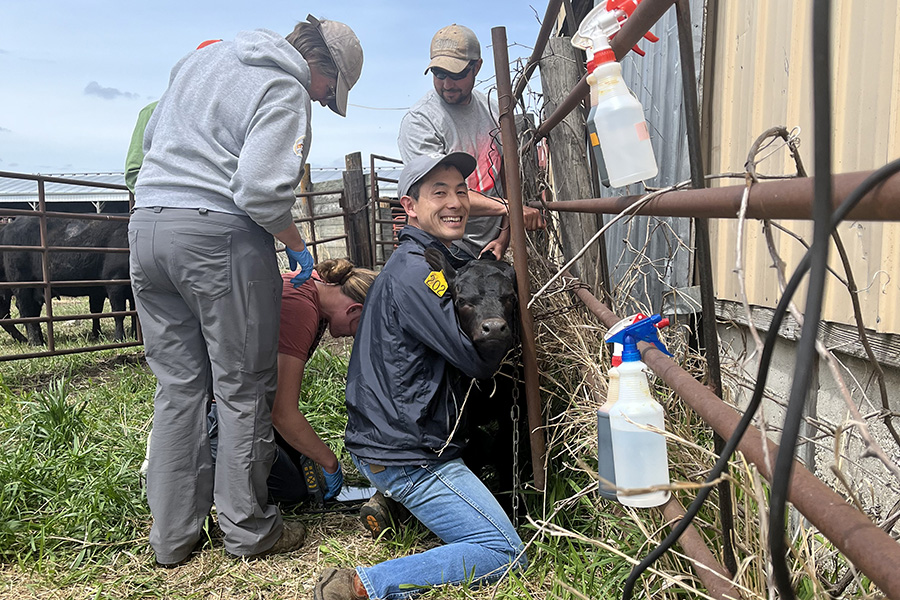
Shoki Hirano holds a calf steady while a team of fellow researchers evaluates it. Hirano has been working on a project to evaluate the effectiveness of vitamin B supplements in preventing illness in cattle.
To explore the impact of B vitamins on cattle health, the researchers partnered with Jefo Nutrition, Inc., a Canadian animal nutrition supplement company that funded the research project. Jefo provided two vitamin blends fed to calves in the project:
Mix of eight B vitamins, except for B2 and B3, plus vitamins A, D3 and E. This blend was available on the market.Mix of all B vitamins, along with higher levels of vitamins A, D3 and E, and fermentation extracts. Jefo is developing this blend.
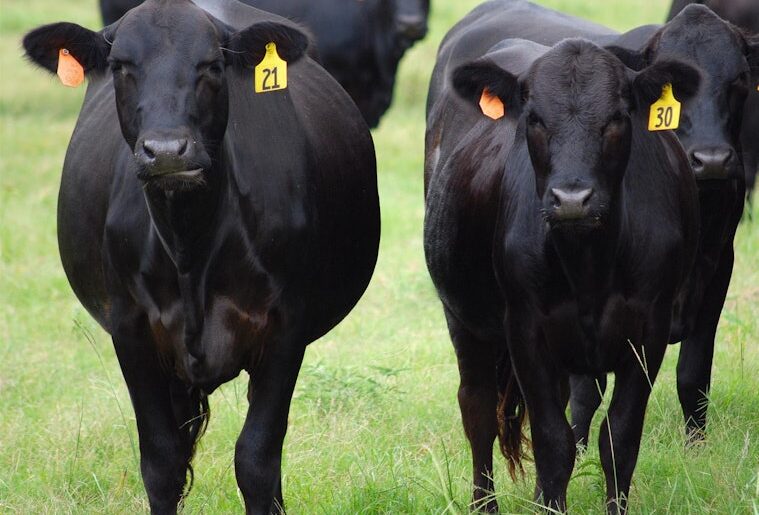
A group of 200 newly-weaned Angus-cross steers was transported from a South Dakota ranch to Iowa State’s Beef Nutrition Farm in Ames. They were divided into 36 pens and fed varying levels of the vitamin blends mixed into corn silage and dried distillers grains during a 56-day period.
The researchers tracked the calves’ body weight and health, paying close attention to their stats during the first 14 days, when they’re most stressed and susceptible to disease. Hirano said previous research has shown that approximately 90% of bovine respiratory disease develops within the first two weeks of being stressed. That disease is estimated to cause approximately $900 million in economic loss to the U.S. beef industry, he said.
What the researchers discovered
“I didn’t really expect to see much in terms of immune side effects,” Hirano said. “However, the results showing improved immune function and reduced inflammation in calves receiving the supplements were the most exciting part of this research.”
Calves that received the on-the-market vitamin blend stayed healthy longer. In fact, they had a 42% delay in the need for medical treatment, and if they did get sick, their care required fewer medical treatments than the control group of calves that did not receive any supplements. By comparison, the group that received the vitamin blend under development had a 14% reduction in required medical treatment compared to control groups but did not show any difference in treatment timing.
The majority of benefits to cattle feed intake and health were observed in the first 28 days of this trial. This suggests that early vitamin supplementation is key to improving calves’ health following a stressful event.
“This work supports hypotheses that precise nutrition is a powerful tool, not just to reduce the financial loss for the industry but to significantly improve the health and welfare of animals,” Hirano said during his 3MT presentation. “By solving this problem for the calf, we are unlocking fundamental knowledge about how nutrients fight stress – knowledge that can eventually lead to better health outcomes for livestock and possibly for humans and other animals.”
Hansen said this research project contributes to an area of study that has not been heavily pursued and highlights the need for strategic nutritional supplementation.
“Shoki’s research is a great opportunity to bring in external sources like vitamins at a time when cattle’s rumen is not up to the task of producing essential nutrients due to stress,” Hansen said. “If animals can’t meet their nutritional needs on their own, we need to explore how we as nutritionists can add to their diet in a way that supports their continued good health.”
Hirano would like to continue studying the effects of B vitamins on animal health, exploring the nutritional impacts of different B vitamins and their potential relation to inflammation.
“Nutrition affects animal and human health from the time we are born, but we don’t necessarily understand it as well as we should,” Hirano said.
Contacts
Shoki Hirano, Department of Animal Science, shirano@iastate.edu
Stephanie Hansen, Department of Animal Science, 515-294-7326, slhansen@iastate.edu
Whitney Baxter, Agriculture and Life Sciences Communications, 515-294-2314, wjsager@iastate.edu