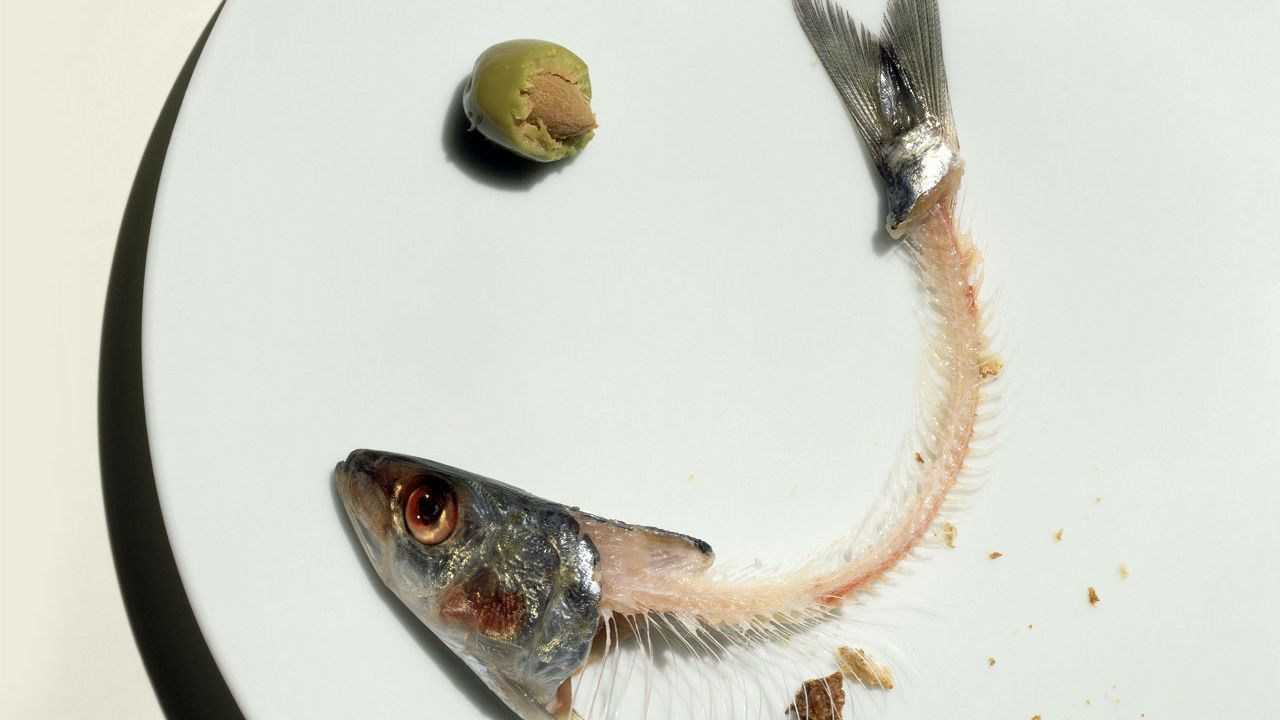
I won’t share my husband’s precise reaction when I told him I was embarking on a “sardine fast,” just know that it wasn’t positive. As someone with a major proclivity for tinned fish—anchovies, sprats, mackerel, you name it—the prospect of eating nothing but sardines for three days, as per the internet’s instructions, didn’t feel especially daunting to me. But I did pity anyone who might encounter me during this time, and as my significant other, he was directly in the firing (or should that be fishing?) line.
The viral dietary trend of the moment, the sardine fast, is currently racking up thousands of views on TikTok. Google reports that searches for both “sardines” and “Dr. Boz sardine fast” have risen by over 5,000% in recent months. So what’s going on? Why so much fuss over such a small and unassuming fish?
What is a sardine fast?
Lasting between one and three days (or more, if you fancy it), a sardine fast simply involves eating tinned sardines… and nothing else. The idea is that it can lower blood sugar, promote rapid fat loss (thanks to supposedly increasing ketone levels), and—most importantly—give you glowing skin. It was the latter side-effect that persuaded me to give it a shot.
This most specific of fasts has gained traction in recent months for two reasons. Dr. Annette Bosworth (also known as “Dr. Boz”), an American physician who specialises in metabolic health, has promoted it as a quick way to raise ketones on TikTok and in podcast appearances. Meanwhile, Dr. Dominic D’Agostino, a researcher in metabolic therapy, in conversation with biohacker Tim Ferriss, claimed his friend, “Dr Squat” went into remission from metastatic prostate cancer after week-long sardine fasts once a month.
While they are all convincing orators, I prefer to tread with caution when it comes to viral wellness trends. It also made me wonder if whether it was really beneficial for anyone to limit their diet to solely fish. The only way to really understand? By trying it myself.
Day 1 of my sardine fast
It’s a dangerous day to be a sardine: I am ready and raring to go with a selection of sardines in olive oil, spring water, and tomato sauce. I open a tin, place the contents in a small bowl and heat them up. I’ve seen some people eat them cold, but since I am not an actual cat, that’s a step too far for me.
It’s breakfast time and I love fish in the morning—often eat mackerel or herring first thing. They’re a great source of protein and rich in omega-3s, particularly EPA and DHA, which nutritionist Dr. Federica Amati tells me act like the body’s natural anti-inflammatories. “They support heart health, help balance cholesterol, and play an important role in brain function, mood, and the appearance of our skin,” she explains. “Add to that high-quality protein, vitamin D, B vitamins, calcium (especially when you eat the soft bones), selenium, and other trace minerals. They’re a complete package.”
They also taste good, and keep me satiated until at least midday, when I begin to ponder my next meal. Spoiler alert: it’s more fish.
I’m already starting to dread it a bit, honestly. Where are the vegetables? And I’d really like some carbs. Instead, I eat my sardines and stay super hydrated with ginger tea and water laced with electrolytes (I am not good at fasting).
Come evening, I’m cranky, low on energy and ravenous. I treat myself to sardines in tomato sauce—a nice departure from olive oil—sprinkle some salt on top, and soldier on. It’s hard to eat sardines while your husband is enjoying a delicious pho, but rules are rules.