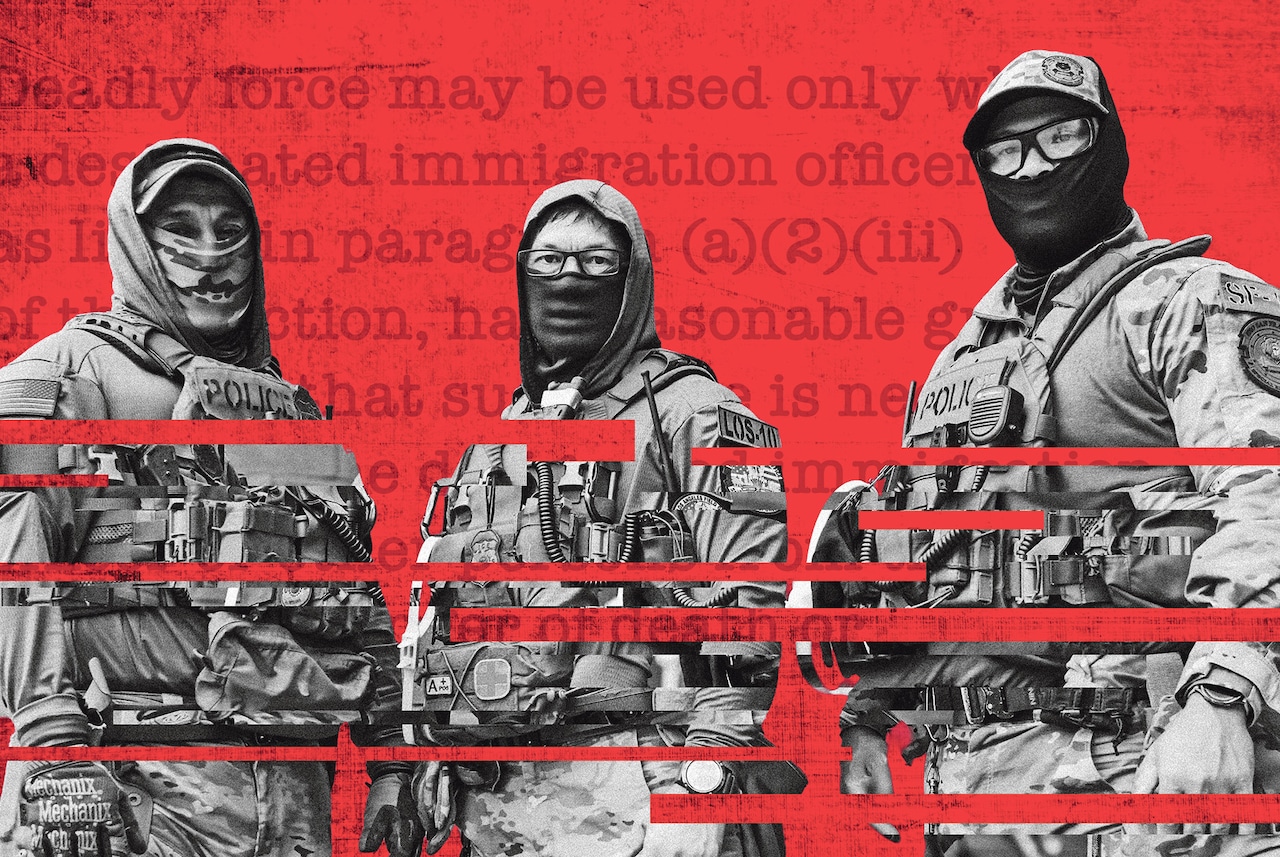
President Donald Trump and members of his administration have wrongly indicated in the media that Immigration agents who shot and killed Renee Good and Alex Pretti have “absolute immunity” from prosecution.
Title 8, Section 287 of the United States Code gives immigration agents authority that includes: to interrogate, without warrant, any alien or person believed to be an alien, concerning his or her right to be, or to remain, in the United States. Presumably, that was the mission of these immigration agents who were sent to Minneapolis — to target known individuals illegally in the United States. As long as they were performing those duties, they were operating within the scope of their authority, and immune from prosecution for doing that job. However, once these federal agents veered away from their specific mission, and took action outside the scope of their authority, the protective cloak of federal immunity can certainly be removed. That means that they should not have been pepper-spraying or physically assaulting noninterfering protesters who were doing nothing more than taking video of the agents in public like Alex Pretti was. Nor should they have used force against the protesters who were simply exercising their First Amendment rights. To do so was to operate outside the scope of their authority.
That is not to say that force can never be used against those in the streets who are protesting. Agents have the right to perform their duties without interference from the public. They have the right to take action and defend themselves if there is an attempt to assault them while performing their duties. It is a federal crime under Title 18 of the United States Code, Section 111 to assault, resist or impede these agents while engaged in the performance of their duties. But that does not mean that an agent can purposely put himself in the way of a vehicle as it is driving off when he does not have the authority to make a legal vehicle stop, and then shoot and kill the driver. It doesn’t mean that lawful non-interfering protesters can be approached and physically assaulted, tackled to the ground and shot because they were lawfully in possession of a holstered firearm.
Federal immunity does offer a high bar for the prosecution of agents, and they are generally given the benefit of the doubt when it is a close call. But it is not an “anything goes free-for-all” either. No one would suggest that a federal agent executing a judicial search warrant of a drug house, finds bags of cash, and decides to keep it for himself would not be subject to criminal prosecution because of federal immunity. Well, neither can an agent conducting an arrest of an illegal alien decide to break away from that arrest and physically assault noninterfering American bystanders. That is conduct outside the scope of their authority and should serve to uncloak those agents of immunity.
Assuming that in three years there is a new administration that adheres to the dictates of our Constitution and the oath of office, the landscape for the agents who are now engaging in conduct outside the scope of their authority could look very different. While there are statutes of limitations for most crimes, there is no such limitation for prosecuting murder in Minnesota. There will be nothing to prevent a principled, objective investigation, and these agents may then face criminal charges for their lawless conduct. Whether or not they are ultimately prosecuted, unless they are devoid of a conscience, at the very least, they will be forever haunted by the action they took that resulted in innocent young Americans being killed, children losing their mother, and parents losing their child. There is no immunity from that.
Cleveland lawyer Michael Rendon, an Army veteran and Mexican American, previously served as an assistant county prosecutor, special assistant U.S. attorney and special agent for the U.S. Departments of Justice and Homeland Security.
Have something to say about this topic?
* Send a letter to the editor, which will be considered for print publication.
* Email general questions about our editorial board or comments or corrections on this opinion column to Elizabeth Sullivan, director of opinion, at esullivan@cleveland.com.