BJP bosses seem to be convinced that since the people have voted them to power, they have a magical license to do just what they like. But such is not the character of democracy.
For ages, the functions and powers of rulers in a democracy have been strictly defined by a Constitution. It is clear that the Constitution sets strict limits to the powers that a President, a Prime Minister, and all other functionaries of the state—who hold power for a fixed number of years—may exercise. The Supreme Court is called upon from time to time to interpret the Articles of the Constitution so as to determine whether those holding power have, by any act, crossed such sacrosanct limits.
However, for years the Prime Minister has cocked a snook at such binding restrictions, with blatant violations of these norms. For example, during election time he has indulged in barely veiled hate speech against Muslims, as when in 2024 he warned women voters at a Rajasthan rally that, if elected, the Opposition would snatch their mangalsutras from their necks to benefit Muslims. Despite several protests, the ECI, in its wisdom, has remained silent on such occasions.
It is also certain that the Supreme Court, in its interpretation, has no unbounded authority. Its interpretation cannot go against certain basic principles of the Constitution, such as the rule of law, fundamental rights, and equal access to justice for all. But the Prime Minister’s immunity from prosecution in such incidents has emboldened other office-holders to blithely defy similar limits on their powers.
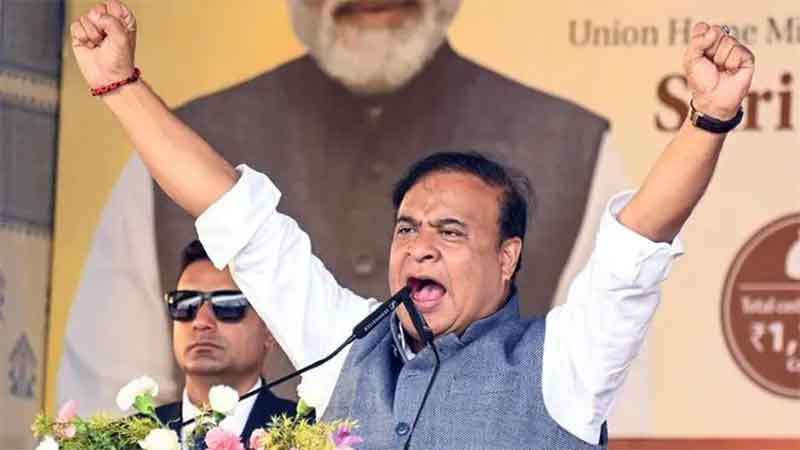
The Assam Chief Minister, who has been quite reckless in such violations, has further increased his culpability with his incredible rhetoric on several occasions.
Forty leading citizens of the state have at long last approached the Gauhati High Court to take up suo motu cognisance of what they see as an act against the Constitution by the Assam Chief Minister. He has not only spilled his hatred of the immigrant Muslim community in spiteful words, but has reportedly incited ordinary citizens to harass them and chase them away. An individual citizen who indulged in such hatred and violations would at once attract the notice of law-enforcing authorities.
How, then, can a Chief Minister—whose business is to maintain social harmony and peace among citizens—get away with such an outrage?
Six elderly and respected citizens found this intolerable and approached the Chief Justice of the Gauhati High Court to take up the matter suo motu and call the Chief Minister to order.
This gained some publicity in the national media, and perhaps for the first time Himanta Biswa Sarma was rattled. He has since been trying to escape the consequences of his misadventure by claiming that he meant by “Miyans” those who had entered Assam after 1951. But it is patent that his inflammatory statements did not make such a qualification in his use of that term. Nor has he done so until after the damage was done.
Besides, it may well be argued that he has aggravated his culpability as head of the state administration by declaring 1951 the base year for determining the citizenship of migrants from East Pakistan (now Bangladesh). The Assam Accord of 1985 had determined the base year as 1971 for such purposes. It was approved by Parliament and incorporated into the Citizenship Act of India, 1955 (as amended).
A Chief Minister of the state—and one very much associated with the Assam Movement when the Assam Accord was signed—could hardly be ignorant of this elementary fact about Assam.
His guilt is, in my opinion, as if written in blazing red ink. And now it is for the honourable judiciary to speak truth to power, when many lesser voices have plucked up the courage to do so.
Subscribe to Our Newsletter
Get the latest CounterCurrents updates delivered straight to your inbox.
Hiren Gohain is a political commentator