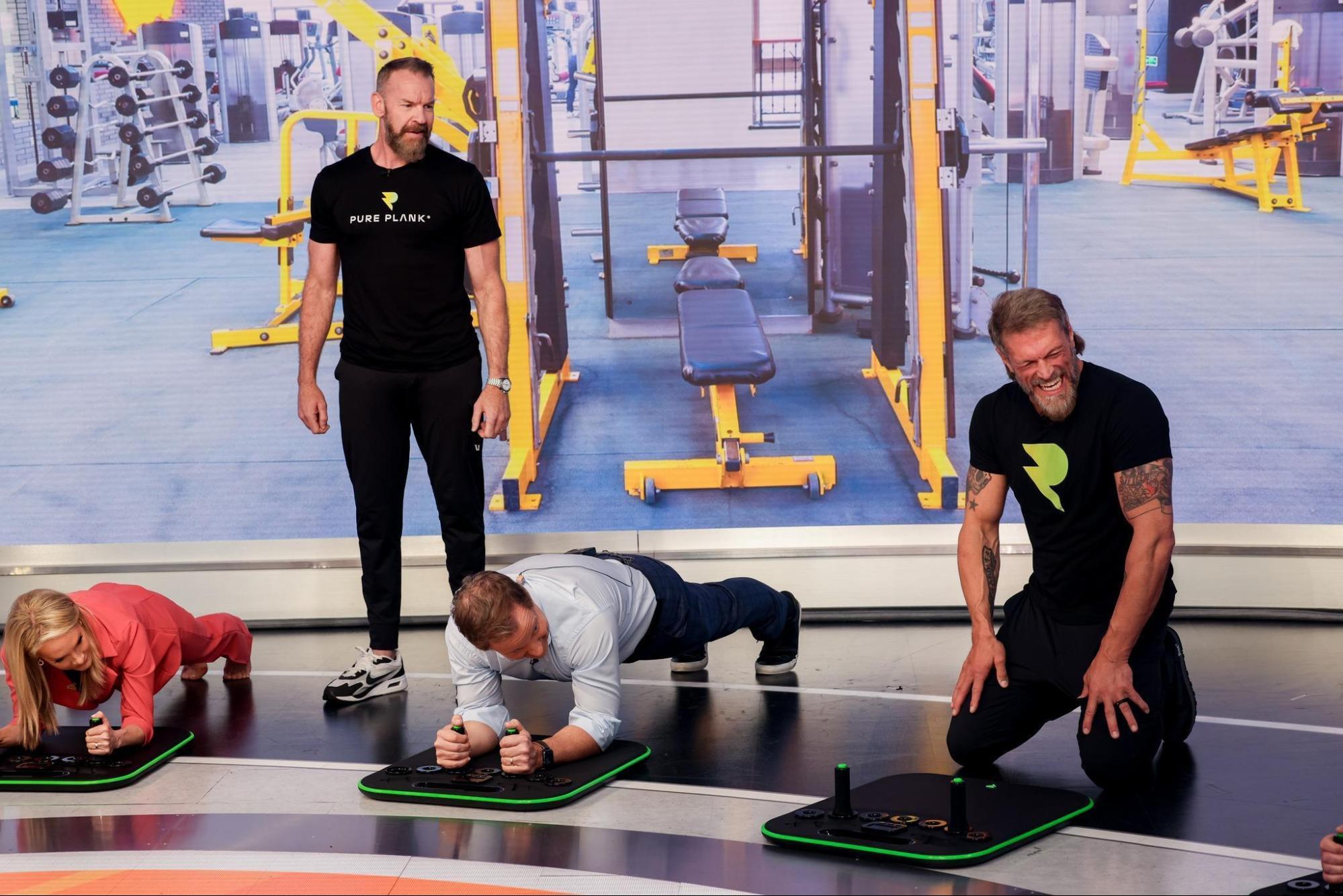
In a fitness industry crowded with fast trends, flashy promises, and short product life cycles, Pure Plank has taken a noticeably different approach. The company, known for its patented core training board and app-guided workouts, has grown quietly but deliberately, more focused on consistency and product integrity than viral moments. Now entering 2026 with renewed momentum, Pure Plank stands as a case study in how modern startups can blend credibility, patience, and disciplined entrepreneurship to build something meant to last.
Pure Plank began not as a celebrity endorsement play, but as a genuine solution to a problem experienced firsthand by its founders, Adam Copeland and Jay Reso. Known globally for their long careers in professional wrestling, the two lifelong friends spent decades training at elite levels, pushing their bodies through intense physical demands. Over time, they became acutely aware of how foundational core strength was—not just for performance, but for longevity and injury prevention. Traditional ab workouts, they found, were often repetitive, hard on the body, or ineffective at building functional strength.
Rather than attaching their names to an existing product, Copeland and Reso chose the harder path: building something new from the ground up. The result was the Pure Plank board, a uniquely designed platform that introduces controlled instability, forcing deeper core engagement while remaining accessible to everyday users. It wasn’t created for spectacle. It was created to be used—daily, consistently, and safely.
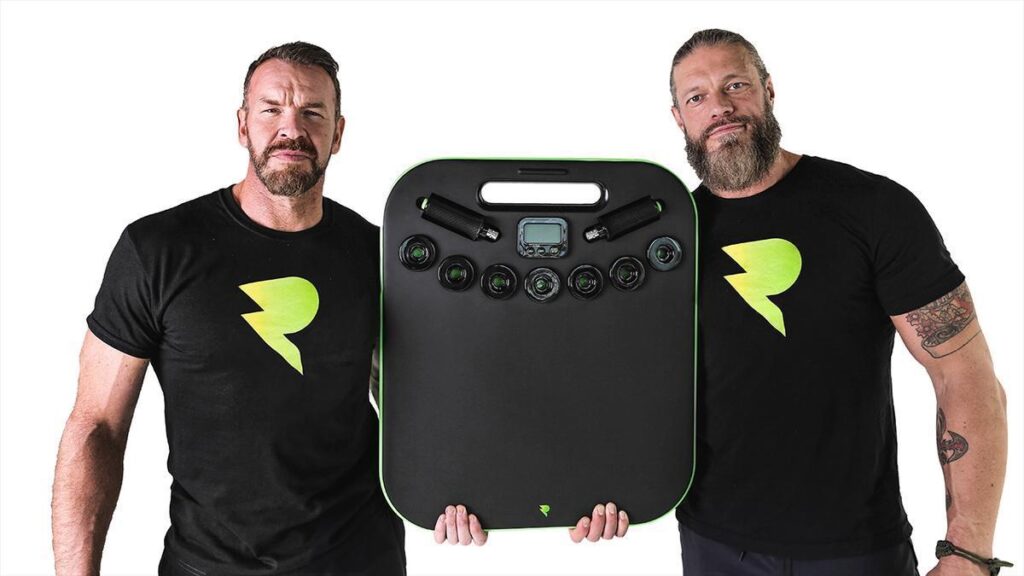
From the start, the company operated with a lean startup philosophy. Manufacturing was carefully managed, distribution was intentional, and product decisions were guided by user feedback rather than market hype. That mindset has continued as Pure Plank transitioned from idea to operating business, with CEO Ryan Carter helping steer the company through its next phase of growth.
Now, a couple of months into the new year, the company is seeing the payoff of that approach. “We started 2026 strong,” Carter said. “January showed healthier demand than the same period last year, with better conversion and stronger customer engagement. What matters most is that growth is coming from people actually using the product and staying consistent, which is the foundation we care about long term.”
That emphasis on real usage over raw sales metrics reflects a broader philosophy inside Pure Plank. In an era where startups often chase explosive growth at the expense of retention, the company has prioritized habit-building and long-term customer trust. The Pure Plank board is designed to integrate into everyday routines, and the accompanying app reinforces that by offering structured, progressive workouts rather than one-size-fits-all programs.
As the business has matured, Pure Plank has resisted the temptation to overextend. Expansion, when it comes, is ecosystem-driven rather than scattershot. “We’re expanding the ecosystem around the board with complementary accessories,” Carter explained. “Our Pure Plank exercise mat, launching soon, is designed to make floor work more comfortable and training more consistent. We’re also continuing to build structured routines inside the app to guide people through smarter core training.”

This measured product roadmap speaks to a startup that understands its core value proposition. Rather than chasing unrelated categories, Pure Plank is deepening its relationship with existing customers—adding tools that support consistency and enhance the original experience.
That discipline also extends to how the company thinks about its own identity. While Pure Plank has moved past the fragility of its earliest days, it hasn’t abandoned the mindset that helped it get here. “We operate with a startup mindset, but the business itself has matured quickly,” Carter said. “We’ve proven demand, now the focus is on expanding thoughtfully, and turning early momentum into something durable.”
In today’s funding environment, where capital is often treated as validation, Pure Plank’s approach to investment stands out. The company has remained founder-led, with Copeland and Reso deeply involved in shaping both the brand and the product. Outside capital, if and when it comes, will be carefully considered. “Pure Plank has been built lean and intentionally, with founders deeply involved in shaping the brand and product,” Carter said. “We’re selective about capital and partnerships because alignment matters more to us than speed. Any future investment decisions will be about supporting long-term growth, not short-term optics.”
That long-term thinking is evident in how the company views its place in the fitness market. Rather than positioning Pure Plank as a trend or a quick fix, leadership sees it as a foundational tool—something people return to year after year. The goal isn’t to dominate headlines, but to quietly become indispensable.
Looking ahead, the company’s ambitions are clear but grounded. “The next phase is about scale with intention,” Carter said. “That means broader distribution, deeper digital content, and products that make functional core training part of everyday life. Our goal is to build a brand people trust for the long run, not just a moment in fitness culture.”

For entrepreneurs, Pure Plank offers a compelling reminder that not every successful startup follows the same script. There was no blitz of venture funding, no rush to over-diversify, and no attempt to trade authenticity for attention. Instead, the company leaned on real-world experience, founder credibility earned through decades of discipline, and a willingness to grow at a sustainable pace.
In a market often driven by noise, Pure Plank’s story is refreshingly quiet and increasingly hard to ignore.
Spencer Hulse is the Editorial Director at Grit Daily. He is responsible for overseeing other editors and writers, day-to-day operations, and covering breaking news.