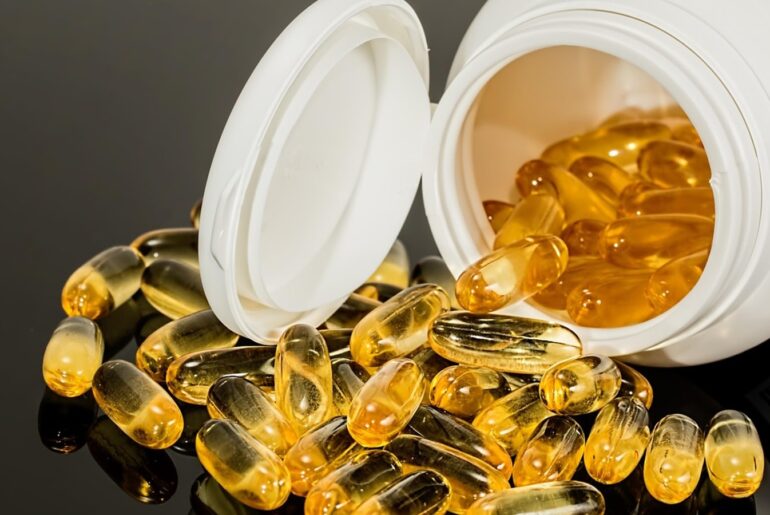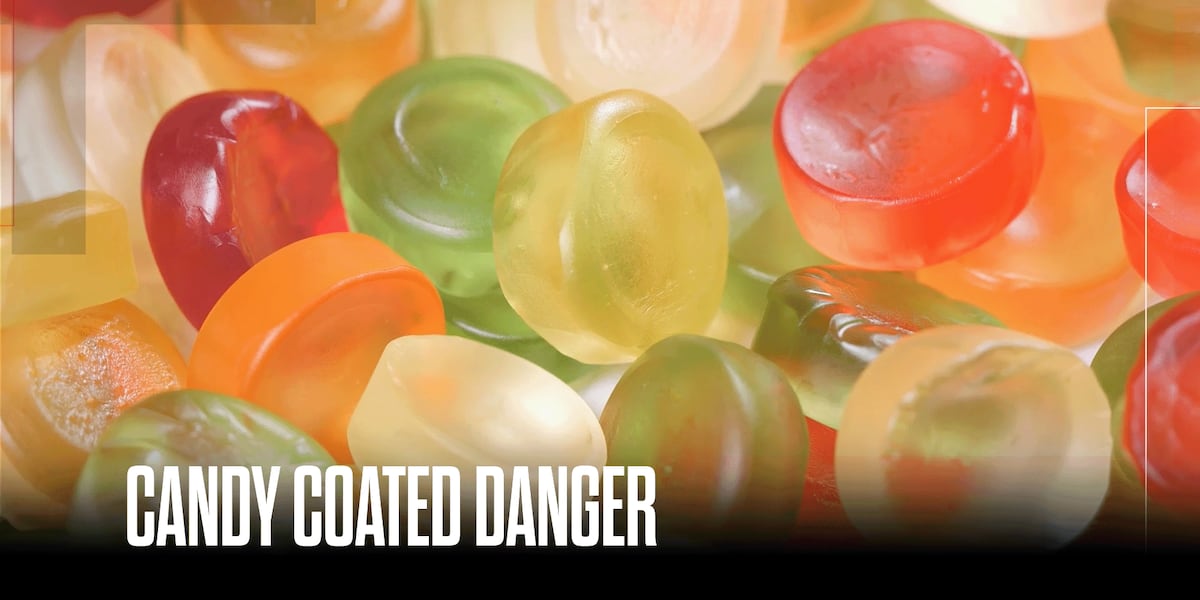
(InvestigateTV) — They look like fruit-flavored pills, sugary gummies and imitation ice cream cones, but these products contain a chemical compound commonly known as 7-OH.
The products are sold legally at gas stations and convenience stores, often marketed as natural supplements. But the Food and Drug Administration warns 7-OH could drive the next wave of the opioid crisis.
7-OH is a concentrated byproduct of kratom, a tropical tree native to Southeast Asia. Kratom’s leaves are dried or powdered and used in teas or capsules.
According to the Mayo Clinic, at lower doses, kratom can act as a stimulant, making the user feel more alert. At high doses, it’s more like a sedative, and users claim it reduces pain and anxiety.
The FDA says, “7-OH products are concentrated derivatives often falsely marketed as kratom.”
While the two are connected, addiction experts say 7-OH carries far stronger effects and higher risks of dependence.
South Carolina man’s addiction nearly fatal
Brendon Burke, of South Carolina, said his use of 7-OH wasn’t about getting high.
“It was literally just for sleep,” said Burke, who struggles with insomnia.
He turned to a South Carolina wellness shop to find relief.
“In the wellness shop, specifically it was in the sleeping section. It was a sleeping anxiety focus. That was the selling points,” he said.
The pills in the package were 7-OH, commonly advertised as concentrated or synthetic kratom.
“It looks nice. They did a really good job with the marketing on the packaging on it, you know, big old tangerine picture,” Burke said.
At first, Burke said the tablets did help him sleep, but he quickly felt like he needed more.
“It just started creeping up at one point. I don’t even know how I got from an eighth to, you know, a whole package in a day,” he said.
When he tried to cut back, he started having body aches and sweating, symptoms of withdrawal.
“I wasn’t really prepared for how strong it had a hold of me at the time. I knew that there was something wrong,” he said.
Less than nine weeks after starting the tablets, Burke was struggling to escape the drug’s grip, so he quit cold turkey. Sixty hours later, he had a seizure.
“Felt like I got hit by a train. That’s how hard I seized. Every muscle, every fiber in my body hurt from that and that’s why I started asking for help,” he said.
Burke checked himself into the emergency room and ended up in the ICU. Lying in a hospital bed, he said facing his daughter was worse than the pain of withdrawal.
“She just looked at me and saw. I could tell in her eyes. She looked disappointed,” he said. “I wouldn’t want anybody else’s kids to have them see them like that, you know? It’s easy to see how if I didn’t have a reason to fight, this could easily destroy my life.”
Thinking about her safety, his pain turned to anger.
“This stuff is just sitting at arm’s reach from her. The average person walking in there, looking for something to help them with sleep, stress, focus, anything is not going to know,” he said.
Expert warns of deceptive marketing
7-OH is made of concentrated mitragynine, a compound found in only trace amounts in whole-leaf kratom. Unlike natural kratom, it’s an opioid-like substance with a high potential for abuse.
Dr. C. Michael White, chair of pharmacy practice at the University of Connecticut, said the marketing is deceptive.
“Just imagine that you have morphine, but you’re going to be selling it and you put it in sugar-encrusted gummies. A lot of the products are fruit flavored. Some are mint flavored. A lot of the products are brightly colored. Some products have mascots that are associated with them. And all of those things look like the candy that’s to the left and to the right of where they’re selling the products in the gas station,” White said.
White said you can’t predict how 7-OH will affect you and that’s why you should check with your doctor before trying a new medication or supplement.
“It can really sneak up on you. Just because you can handle this other product, or you can handle this other ingredient, and that you generally did well doesn’t mean that when you try an opioid, doesn’t mean you are not going to be susceptible to having an opioid-related issue. And if you do, it can literally ruin your life,” he said.
Treatment centers see increase in cases
Phoenix Center, an addiction treatment facility in Greenville, South Carolina, said Burke is not alone.
“A lot of times when something is readily available, people assume that it’s safe, just like alcohol. So, it is important that we provide education that just because this is available in smoke shops and gas stations does not mean it’s automatically safe. It is not FDA approved,” said Jessica Owens, chief operating officer of Phoenix Center.
The center is seeing increasing numbers of people coming in for addiction to drugs marketed as kratom.
“Kratom has been around for over 10 years, but definitely in the last three to five years we’ve seen an increase,” Owens said.
Burke is working with his doctor on a treatment plan and taking Suboxone, a medication prescribed for opioid addiction. It’s a habit he never meant to form, which is why he’s warning others.
“If any good can come from this, I suppose it will be worth it. Something’s got it has got to come from it. Somebody’s kid’s got to not take this. Somebody’s dad’s got to not take this for it to make any sense to me as to why it happened to me. That’s why I’m here telling you what happened,” he said.
FDA takes action against manufacturers
In July 2025, the FDA issued warning letters to seven companies it said were illegally marketing 7-OH products.
The letter requested a written response within 15 working days, outlining specific steps the companies have taken to correct any violations.
During that same month, the FDA pushed for a ban on 7-OH, calling it “highly addictive” and “unregulated.”
Todd Underwood, president and CEO of MitWellness, which makes and markets products containing kratom, said the goods his company sells are all natural, unlike 7-OH.
Underwood agrees with federal public health officials who have called for a total ban on 7-OH.
“It’s something we could easily do. It’s something we refuse to do. Personal accountability comes into play here,” Underwood said.
If you or someone you know is struggling with addiction, resources are available at findtreatment.gov to locate a substance use disorder treatment facility near you.
Copyright 2026 Gray Media Group, Inc. All Rights Reserved.