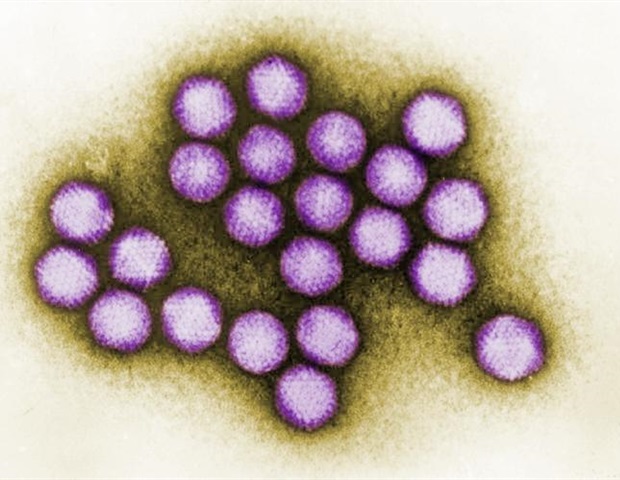
A global research collaboration of scientists from McMaster University (Canada), Flinders University (Australia) and Universitätsmedizin Greifswald (Germany) uncovered why a small number of people developed dangerous blood clots after either receiving certain COVID‑19 vaccines or experiencing a natural adenovirus infection, and the answer lies in an unexpected case of misdirected targeting by the immune system.
The discovery, published Feb. 12, 2026 in the New England Journal of Medicine, explains how and why the body occasionally generates dangerous antibodies against its own blood proteins causing vaccine-induced immune thrombocytopenia and thrombosis (VITT). Specifically, the study identifies the exact viral component that can, in rare circumstances, trigger this immune misdirection. Further, the study identifies a novel mechanism by which an immune reaction can go wrong, giving scientists a roadmap for explaining other rare, antibody-driven adverse reactions to certain infections, medications, or environmental exposures.
This study shows, with molecular precision, how a normal immune response to an adenovirus can very rarely go off‑track. By identifying the exact viral protein involved and the specific antibody change that drives this misdirection, we now understand not only what happens in VITT but why.”
Theodore Warkentin, corresponding author of the study and professor emeritus, Department of Pathology & Molecular Medicine, McMaster University
“What’s exciting is that we can now point to a specific viral component that can be redesigned. It means future adenoviral vaccines can keep all their advantages while sidestepping the rare immune misfire that causes VITT,” he adds.
The discovery
The researchers found that VITT can happen after a repeat exposure to adenovirus, whether from a vaccine or a natural infection, but only in people who have a certain inherited version of an antibody gene (IGLV3‑21*02 or *03). Because this gene variant is found in up to 60 per cent of the population, it cannot by itself account for the ultrarare complication.
However, the immune response that sets the stage for VITT is aimed at an adenovirus protein called protein VII (pVII), which happens to closely resemble a region of a human blood protein, platelet factor 4 (PF4). In very rare cases, while the immune system is responding to pVII, a single, specific mutation can arise in one of the antibody‑producing cells. That mutation (called K31E) changes just one positively-charged amino acid to a negatively-charged amino acid, and that tiny shift is enough to redirect the antibody targeting away from pVII and toward PF4 instead. Once the antibody binds PF4, it activates platelets and triggers the clotting and low platelet counts seen in VITT.
Crucially, the study detected this same K31E mutation in all VITT patient antibodies examined. When researchers reversed the mutation in lab‑engineered antibodies, their dangerous activity disappeared, proving that this specific change is required for the complication to occur.
The team uncovered the mechanism using cutting‑edge tools: they sequenced antibodies from patients with VITT, mapped their structures with mass spectrometry, and engineered laboratory versions to watch how they behaved and mutated. They also confirmed the findings in a humanized mouse model, where the VITT antibody caused clotting, but the “back‑mutated” version did not.
“Many people know that mutations in DNA explain things like congenital abnormalities or cancer, but to have an immune cell that is making its expected antibodies triggered by a virus abruptly change its reactivity against a self-protein due to a specific mutation is a spectacular finding that is unprecedented in the scientific literature,” says Warkentin.
Why it matters
This discovery answers five long‑standing questions about VITT:
why adenoviral‑vector vaccines – and natural adenovirus infection – can trigger it
why PF4 is the target (mimicry between pVII and PF4)
why VITT is extraordinarily rare (it requires a specific, chance mutation in a predisposed person);
why incidence differs between populations (the involved antibody gene is more common in people of European ancestry) and
why many cases occurred after a first vaccine dose (it stems from boosting pre‑existing anti‑pVII immunity from low baseline antibody levels).
Just as importantly, the discovery provides a practical roadmap for vaccine developers to design even safer vaccines without losing the global advantages of adenoviral vaccine technology.
McMaster’s role in the discovery
Over the course of five years, Warkentin has played a central role in unraveling VITT, contributing key insights at every step. In 2021, he co‑authored the first paper that identified the syndrome. In 2023, he led the first study showing that natural adenovirus infection can trigger the same PF4‑reactive antibodies, a pivotal finding that pointed researchers toward adenovirus as the underlying cause. In 2024, he helped reveal that vaccine‑ and virus‑induced cases share an identical antibody “fingerprint.” In 2025, he led a study that expanded the clinical spectrum of blood clotting linked to VITT-like antibodies. These insights helped set the stage for the new NEJM study, which pinpoints pVII and the K31E mutation as the mechanism.
Study leadership and support
The research was led by Jing Jing Wang and Tom Gordon (Flinders University, Australia), Linda Schönborn, Luisa Müller, and Andreas Greinacher (Universitätsmedizin Greifswald, Germany), and Theodore E. Warkentin (McMaster University, Canada), with contributions from international partners.
The study was supported by the American Society of Hematology (Global Research Award), Competence Center for Genomic Analysis (Kiel), Deutsche Forschungsgemeinschaft (DFG), DFG Research Infrastructure Next Generation Sequencing (NGS) Competence Center / NGS Competence Network, Else Kröner‑Fresenius Stiftung, European Medicines Agency, Flinders Foundation (Health Seed Grant), Gates Foundation, National Health and Medical Research Council (Ideas Grant) and Universitätsmedizin Greifswald (Gerhard Domagk Research Program).
Source:
Journal reference:
Wang, J. J., et al. (2026). Adenoviral Inciting Antigen and Somatic Hypermutation in VITT. New England Journal of Medicine. DOI: 10.1056/NEJMoa2514824. https://www.nejm.org/doi/10.1056/NEJMoa2514824