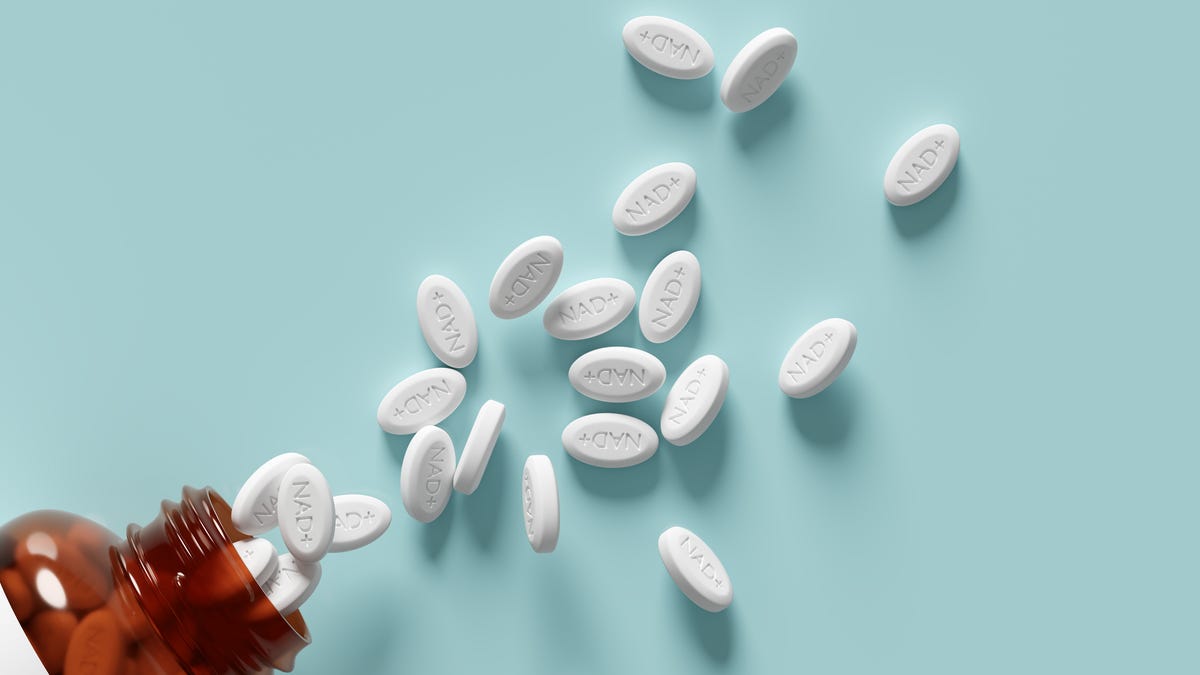
A spotlight has been put on NAD+ supplements in recent years, thanks to claims that they can reverse the aging process and keep skin looking youthful. While NAD+ is a coenzyme that’s naturally produced in the body, and its levels do decrease as we age, are these supplements a reliable replacement? Are they are magical as wellness influencers would have us believe?
To find out exactly what NAD+ is and if NAD+ supplements can reverse the aging process, we spoke with doctors to learn everything there is to know about this popular wellness trend.
What is NAD+, and how is it different from NADH?
NAD+ — nicotinamide adenine dinucleotide — is a coenzyme found in all living cells that keeps “everything running smoothly,” explains Dr. Konstantin Vasyukevich, a New York-based facial plastic surgeon who often discusses aging with patients. It “creates energy and repairs DNA” and also regulates your circadian rhythm.
“It is also involved in the function of sirtuins, proteins that help regulate cell survival and aging processes,” said Nayan Patel, a doctor of pharmacy and founder of Auro Wellness. The coenzyme slightly differs from NADH, which you may also see while looking for NAD+ supplements. NAD+ is oxidized, while NADH is reduced, which means NAD+ has an extra electron; when it loses it, it becomes NADH.
Is NAD+ just vitamin B3?
NAD+ is naturally found in the body, but as you age, its levels drop, which can lead to tiredness and skin aging, Vasyukevich says. An NAD+ supplement can help combat this, as can a vitamin B3 supplement. Although vitamin B3 is not the same as NAD+, your body converts vitamin B3 into NAD+, so these extra supplements can also help your NAD+ levels.
NAD+ benefits
The primary benefit of NAD+ and, in turn, an NAD+ supplement, is that it’s an energy booster. Studies — including this 2023 study — have shown that the coenzyme supports weight management and balances metabolism, as Vasyukevich points out.
“[NAD+] can do a few cool things,” Vasyukevich says. “It can help with skin health by promoting DNA repair and fighting oxidative stress, which is a big reason skin ages. It can also give you more energy by helping your cells make more [adenosine triphosphate or ATP] — that’s the energy your body runs on.”
NAD+ can boost energy, promote skin health and more.
Daniel Llao Calvet/Getty ImagesNAD+ side effects
Dr. Jonathan Jennings, a board-certified internist with Medical Offices of Manhattan and contributor to Lab Finder, tells CNET that NAD+ supplements are mostly viewed as safe — but as with any change to your health care routine, you always want to approach with caution. Especially considering that the Food and Drug Administration doesn’t regulate supplements.
“Most data suggests all versions are safe in most populations and side effect profiles depend on the mode of supplementation,” Jennings says, noting that side effects for the supplement in pill form can differ from those when you take it intravenously, for example. “Common side effects include abdominal pain, nausea, dizziness and flushing.”
Another common side effect, Vasyukevich says, is an interruption to your sleeping pattern. He says this can happen if you take the supplement too late in the day, which can generally be corrected by changing when you take it.
Both doctors, as well as Patel, recommend speaking with your health care provider before starting an NAD+ supplement and if you experience any side effects. If you experience any side effects, you should stop taking the supplement immediately. It may be interacting with another one of your medications, or you may even have an allergy or intolerance to it. This will be up to you and your doctor to discuss.
Who should avoid NAD+ supplements?
While NAD+ supplements are generally considered safe, Jennings cautions that they aren’t for everyone. “It is important to consult your health professional prior to supplementation because safety has not been confirmed for certain populations such as pregnant [people] and children,” he says.
Patel also recommends that people who are nursing avoid NAD+ supplements, as there’s not enough research on these products. He also advises anyone interested in taking the supplement to discuss it with their doctor, as he wouldn’t recommend it for people on certain medications or with specific medical conditions. He didn’t specify which, as that should be left up to each patient and their health care provider.
A 2020 study showed, however, that NAD+ supplements could have adverse effects on those with existing liver or kidney problems because of how the supplement is metabolized. “Factors like age, genetic makeup, diet and health conditions can affect the body’s response to supplementation,” Patel said.
Always consult your doctor before taking a new supplement.
RealPeopleGroup/Getty ImagesDo NAD+ supplements actually slow down aging?
Experts and studies say these supplements can benefit people when used properly and at a dose recommended by a medical professional. Vasyukevich cautions, though, that they’re not a “magic fix” to reverse the aging process.
“NAD+ supplements can help by boosting the body’s repair systems, which may reduce wrinkles and other signs of aging over time,” he says. “They won’t completely stop aging, but they could help your cells stay healthier and function better, which might slow things down a little.”
Patel tells CNET that these supplements are still actively being studied. While some research shows that they can help improve the appearance of skin or give people more energy, he believes more clinical trials are “necessary” to fully establish efficacy in “aging prevention.”
He also stresses that these supplements should never be used as a replacement for healthy habits, as those are among the best ways to keep your body youthful as you age. “Exercise, good nutrition, adequate sleep and stress management are crucial for overall well-being,” he says, adding that if you’re going to try the supplements, take care in choosing them. They’re not all equally effective, and it’s important to pick one that’s high-quality.
NAD+ supplement dosage
“There are different methods of supplementation, which include oral, nasal, intramuscular and intravenous versions,” Jennings said. Studies have examined how these supplements work in the body, though findings are limited.
Patel tells CNET that nicotinamide riboside and nicotinamide mononucleotide supplements have been studied and have been shown to improve the aging process, but should be approached “with caution.” Both types of supplements, also known as NAD+ precursors, are natural compounds that can enhance the body’s production of NAD+.
A 2023 study of nicotinamide riboside and nicotinamide mononucleotide oral supplementation reported some improvement in “cardiovascular, metabolic and physical function” in those who participated. This study examined several groups of people who received different doses of a supplement for varying periods to assess efficacy and safety.
That said, the right dose for you largely depends on what you discuss with your health care provider. It also depends on the method you choose for supplementation. Most supplements in pill or nasal form can be taken daily, but your doctor can advise you on what’s best and adjust as needed.
There are also certain foods you can eat to boost your NAD+ levels.
Tetra Images/Getty ImagesOther ways to increase NAD+ levels
Taking an NAD+ supplement isn’t the only way to boost your body’s NAD+ levels. In fact, medical professionals recommend that you seek other ways to improve your health in addition to taking supplements because it will enhance the efficacy of the supplements themselves.
“You don’t have to rely only on supplements to boost your NAD+ levels. Things like regular exercise, intermittent fasting or even cutting back on calories can naturally increase NAD+ in your body,” Vasyukevich says. Do not make any changes to your diet without first consulting your doctor.
Patel seconded that exercise and a generally healthy lifestyle are highly recommended throughout your life, but especially as you age. “Regular exercise has been shown to boost NAD+ levels by stimulating the production of NAD+ precursors,” he says. “Additionally, lifestyle choices like adequate sleep hygiene and stress management can positively affect NAD+ levels.”
What you eat can also affect your NAD+ levels, especially if you reach for foods rich in vitamin B3 and niacin, which are precursors for NAD+ (meaning the body turns them into NAD+). Foods rich in vitamin B3 and niacin include:
BeefBroccoliCabbageDairyFishFruitNutsPeanutsSeedsTurkeyWhole grainsThe bottom line
As we age, the body’s naturally occurring coenzyme NAD+ decreases, leading to tiredness and skin aging. However, this can be counteracted by a healthy lifestyle, including regular exercise and a diet rich in vitamin B3 and niacin. Lifting weights is also a great way to stay healthy as you age. Adding an NAD+ supplement to your daily routine under the supervision of a medical professional can also help boost NAD+ levels.
Research on NAD+ supplements is limited, so medical professionals urge people to use them with caution and under their doctor’s care. However, these supplements could help tackle signs of aging from decreased NAD+ levels.