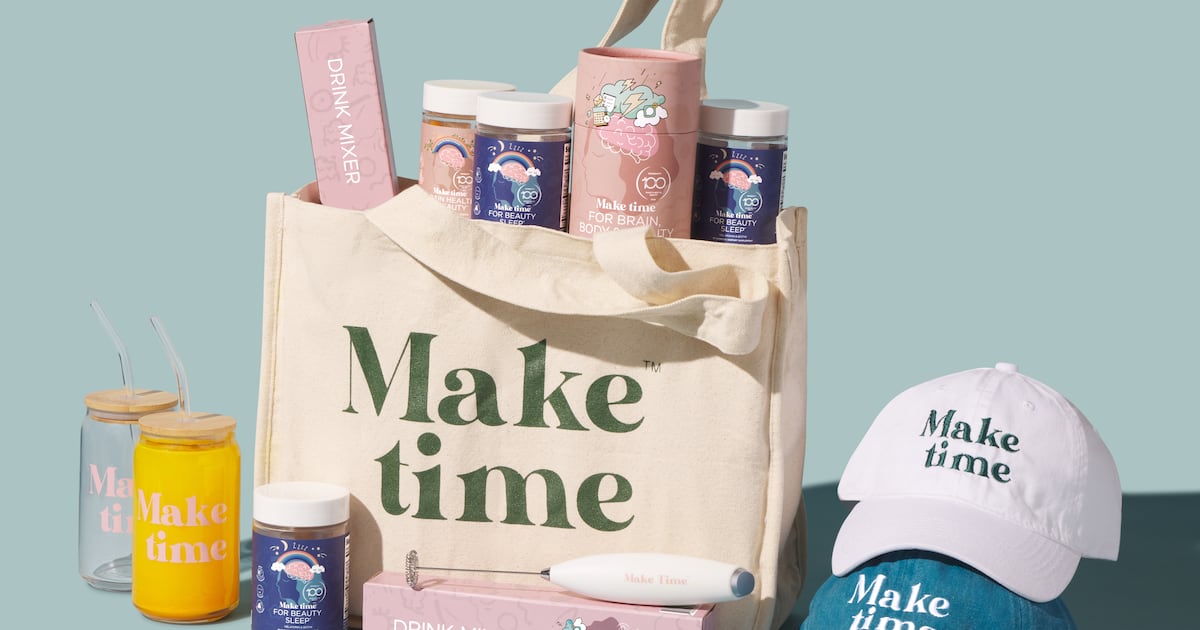
It also highlights an expansion of the definition of beauty-from-within, as U.S. retailers incorporate products positioned for cognitive, energy and sleep support into categories once dominated by collagen, biotin and hair-focused claims.
For supplement manufacturers and ingredient suppliers, that expansion is reshaping expectations around formulation, substantiation and product design.
Beauty retailers broaden the wellness brief
Beauty retailers have increasingly moved beyond topical and aesthetic solutions, creating space for products that address how consumers feel and function day-to-day.
At Ulta alone, recent expansions in the last year include sleep and prenatal offerings from Ritual, fertility support supplements from Bird&Be and some of Nutrafol’s best-sellers, creating space for more holistic products.
“Retailers are playing a key role in advancing this conversation,” Helen Christoni, co-creator of Make Time Wellness, told NutraIngredients. “As beauty retailers expand into wellness, they are creating space for products that support how women think, feel and function—not just how they look.”
That shift carries consequences for brands and suppliers seeking shelf space in beauty channels, where “retailer expectations around substantiation, education and formulation quality are influencing innovation across the supplement industry,” Christoni added. “They are encouraging more responsible, science-led product development.”
Brain health moves into the beauty-from-within conversation
Make Time Wellness was developed to address what its founders view as a persistent gap in women’s wellness. According to the Alzheimer’s Association, women account for nearly two-thirds of Alzheimer’s cases, yet brain health has historically received less attention than heart, metabolic or appearance-driven categories.
“This convergence is exactly why we started Make Time Wellness,” Christoni said. “Women are beginning to understand that stress, cognitive load, sleep quality and hormonal changes affect not just how they feel, but how they look and age.”
The company’s formulation philosophy reflects that understanding, with cognitive support positioned as the starting point rather than an add-on.
“At Make Time, we start with the brain first, then support the body and only then focus on beauty outcomes,” Christoni said. “As consumers demand more credibility, products must do more than promise surface-level results.”
Multi-benefit products raise formulation expectations
Combining brain health and beauty benefits in a single product requires tighter formulation discipline than traditional single-claim supplements, according to Christoni.
“When designing multi-benefit formulations, each ingredient must be clinically studied, dosed appropriately and included for a clear biological reason,” she said. “We do not compromise brain-health efficacy to support secondary claims.”
Cognitive-support ingredients form the foundation of Make Time’s products, she explained, with beauty-focused actives added only when they align biologically.
“Prioritizing Brain, Body and Beauty—in that order—is what allows our products to remain credible and effective,” Christoni said.
For ingredient suppliers, the approach reflects growing demand for multifunctional ingredients that deliver multiple benefits without diluting evidence or dosing.
Manufacturing realities influence format choices
The addition of cognitive-support ingredients also shapes manufacturing and format decisions, particularly for brands targeting the beauty retail channel.
“Many cognitive-support ingredients are sensitive to heat and processing, which directly affects format decisions,” Christoni said. “Powders often provide better stability and allow for accurate dosing.”
Maintaining product consistency across formats requires careful coordination throughout the supply chain, she added.
“Ensuring consistent quality requires trusted ingredient partners, rigorous testing and manufacturers who understand that foundational brain-health ingredients must be protected throughout the entire process,” Christoni said.
Retail momentum pushes the category forward
As beauty retailers continue to broaden their wellness assortments, Christoni expects brain health to become a more established part of women’s daily supplement routines.
“Over the next several years, brain health will become a foundational part of women’s daily wellness routines,” she said. “The brain-health-and-beauty crossover will continue to evolve toward preventative, long-term support rather than quick fixes.”
For suppliers and contract manufacturers, the trend points to where investment may be needed next.
“Ingredient suppliers and manufacturers should be investing now in women-specific research, clinically validated multifunctional ingredients and manufacturing capabilities that support stable, high-quality formulations,” Christoni said.