
image:
Anna Stubbendorf
Credit: Adam Haglund, Apelöga
That eating plenty of vegetables, wholegrains and legumes is beneficial for health is well known. More surprising, however, is that people who eat in a environmentally-friendly way also display nutritional values that are better than researchers had expected. This is shown in a new study from Lund University.
The EAT–Lancet diet is a global dietary guideline developed to promote both human health and a sustainable planet. It is based on plant-based foods rich in wholegrains, legumes, fruit and vegetables, with small amounts of animal products – above all, considerably lower meat consumption than what the Swedish Food Agency recommends.
“There have been concerns that a diet with less meat and other animal products would increase the risk of nutrient deficiencies. But we did not see that. On the contrary, most of those who ate in line with the planetary dietary guidelines had good nutritional status,” says Anna Stubbendorff, who was a doctoral student at the Faculty of Medicine at Lund University and part of the Agenda 2030 Graduate School.
The study has just been published in The Lancet Planetary Health and forms part of the doctoral thesis on the health effects of the planetary dietary recommendations, which she defended on 16 January this year.
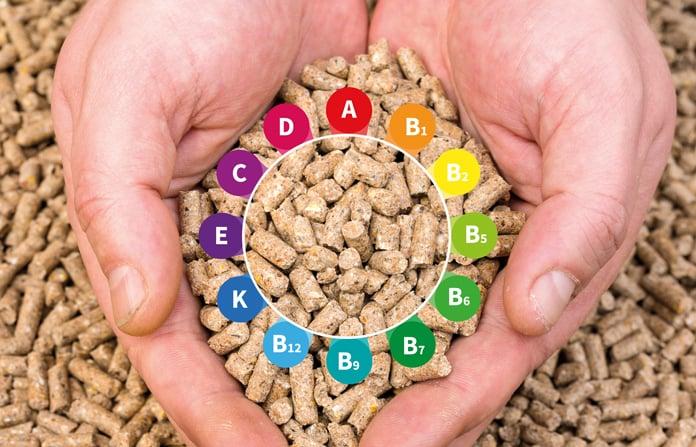
The results of the current study show that the nutrient intake among those who ate a climate‑friendly diet was fully comparable to those who ate the same amount of a “typical” diet with a larger share of animal products. Put differently: the majority of those who ate in a way similar to the new recommendations obtained sufficient amounts of key vitamins and minerals, despite the EAT–Lancet diet containing less meat.
Blood-based measures of nutritional status were also comparable. The researchers are not entirely certain about the reasons, but one explanation may be that the human body adapts its uptake of nutrients to the levels present in the body and therefore absorbs more when needed, she explains.
A couple of deviations were noted among those who ate more climate‑friendly diets. First, levels of the B vitamin folate (folic acid) were higher among them than among the other participants – something that was unexpected and positive. Second, there was an increased risk of anaemia (iron deficiency) among female participants. The difference was small – 4.6 per cent instead of 3.3 per cent – but Anna Stubbendorff nonetheless suggests that foods could be fortified, or that at‑risk groups receive supplements to achieve good blood values.
Her findings are based on analyses of the extensive Malmö Diet and Cancer Study, in which 26,000 people reported their eating habits and were followed for several decades.
Anna Stubbendorff’s answer to the question of whether the EAT–Lancet diet is sustainable for both humans and the environment is therefore a clear yes.
“It is possible to combine an environmentally sustainable diet with good health. The studies show that such dietary patterns can reduce the risk of disease and premature death without compromising nutrient intake among the majority of the population. There are positive synergies between health and sustainability,” says Anna Stubbendorff.
More wholegrains – substantially less meat
Anna Stubbendorff, a trained dietitian, began her doctoral position at the Faculty of Medicine and the Agenda 2030 Graduate School at Lund University in 2019. That same year, the first version of the EAT–Lancet diet was published, and she decided to examine how sustainable the new diet was from a health perspective.
“With the EAT–Lancet dietary advice, two strands were tied together – a diet intended to be sustainable for both humans and the planet. It opened up a completely new field of research. Would what was sustainable for the planet increase or decrease the risk of disease and nutrient deficiencies for those who followed the diet?”
Since then, she has published five scientific articles included in the doctoral thesis Environmentally sustainable diets and human health – Nutritional adequacy, disease risk, and mortality. In addition, during her doctoral studies she has authored and co-authored a further 23 articles related to food and health.
Swedish dietary habits far from sustainable
So how do Swedish eating habits fare from a climate and sustainability perspective? In a global comparison of climate impact, not well. In a ranking of 156 countries, Sweden is 13th from the bottom – just after traditional high‑meat nations such as the USA and New Zealand. The explanation is clear: Swedish consumers eat a lot of meat and dairy products, which drives emissions upward. Today, meat consumption is about 680 grams per person per week.
For Sweden to approach the EAT–Lancet recommended diet, a sharp reduction in both meat and dairy consumption is required. The Nordic Nutrition Recommendations, on which the Swedish Food Agency bases its advice, now take some climate considerations into account. But the differences are notable. According to the Nordic advice, 350–400 grams of red meat per week is acceptable – several times higher than the EAT–Lancet ceiling of 90 grams. At the same time, Sweden lacks guidelines for dairy and poultry consumption, areas where EAT–Lancet specifies a maximum of 250 grams of dairy and 30 grams of chicken per day.
“There is a lot of focus on meat, but other things we can also influence in our part of the world are not eating more than we need and stopping food waste – overproduction of food also depletes the planet’s resources. We can also talk more about what we ought to eat more of, such as wholegrains and legumes. There is great potential for public health there,” says Anna Stubbendorff.
Links between health and environmental impact
Her doctoral thesis also comprises earlier studies, and one of the most important findings was that the people who ate most in line with the EAT–Lancet diet had approximately a 33 per cent lower relative risk of dying from cardiovascular disease compared with those who adhered least to the diet. This does not mean that one third fewer people died, but rather that the probability of dying from cardiovascular disease was about one third lower in the group that followed the dietary pattern most closely. At the same time, the overall relative risk of premature death was around 25 per cent lower, and cancer-related mortality decreased by nearly as much. The results are based on observational data and show associations between dietary patterns and mortality, but they cannot establish direct causal relationships.
Are there uncertainties in the results? Yes – measuring what people eat is generally difficult. “But the Malmö Diet and Cancer Study that we analysed used an unusually advanced method with a food diary, questionnaire and interviews. The study also followed a large group over a long time. So even though there is uncertainty in the material, I consider the results robust,” she says.
She now hopes that experts and decision‑makers will dare to address the issue of our dietary habits, even though it is sensitive. Today, food production globally accounts for about one third of total greenhouse‑gas emissions, uses around 70 per cent of the world’s freshwater and is the single largest driver of biodiversity loss, with agriculture identified as a threat to the majority of species at risk of extinction.
“It is important that this issue is allowed to rest on a scientific foundation. We have a fantastic opportunity if we succeed with these important changes,” she says.
Fact box: Research methods
In the studies included in the doctoral thesis, Anna Stubbendorff primarily used three dietary cohorts, the largest of which was the Malmö Diet and Cancer Study that followed around 26,000 participants for up to 30 years, with participants keeping food diaries, completing questionnaires and being interviewed. The other two cohorts are the Danish Diet, Cancer and Health study with about 52,000 participants and the Mexican Teacher’s Cohort with about 30,000 female participants. The most recently published study on nutrient values is based on the Malmö Diet and Cancer Study.
Stubbendorff used several different dietary index systems to score the extent to which participants’ diets followed the EAT–Lancet recommendations. She then analysed participants’ incidence of common public‑health diseases such as diabetes and cardiovascular disease and related these outcomes to their dietary patterns.
In the latest study on nutrient levels in the body, she calculated intake of various vitamins and minerals and compared this with analyses of blood samples. Several biomarkers were examined, including folate, vitamin D, zinc, selenium and haemoglobin.
Even though the Malmö Diet and Cancer Study reflects the food culture of the 1990s, she deems the results relevant today. She has worked on a similar study in Rwanda, where the results pointed in the same direction.
Fact box: Lower diabetes risk with a climate-friendlydiet
In addition, Anna Stubbendorff assessed the diet’s sustainability by estimating greenhouse‑gas emissions across the entire life cycle of foods, from production to consumption. Those whose dietary habits gave rise to the highest emissions had a 38 per cent higher risk of developing type 2 diabetes compared with those with the lowest emissions – even when social and lifestyle factors were taken into account. Although there is uncertainty in how greenhouse‑gas emissions are calculated, the trend is nevertheless clear, according to Stubbendorff.
Journal
The Lancet Planetary Health
Method of Research
Observational study
Subject of Research
People
Article Title
Nutritional adequacy of the EAT-Lancet diet: a Swedish population-based cohort study
Article Publication Date
12-Feb-2026